Computer Engineering Scope in Pakistan
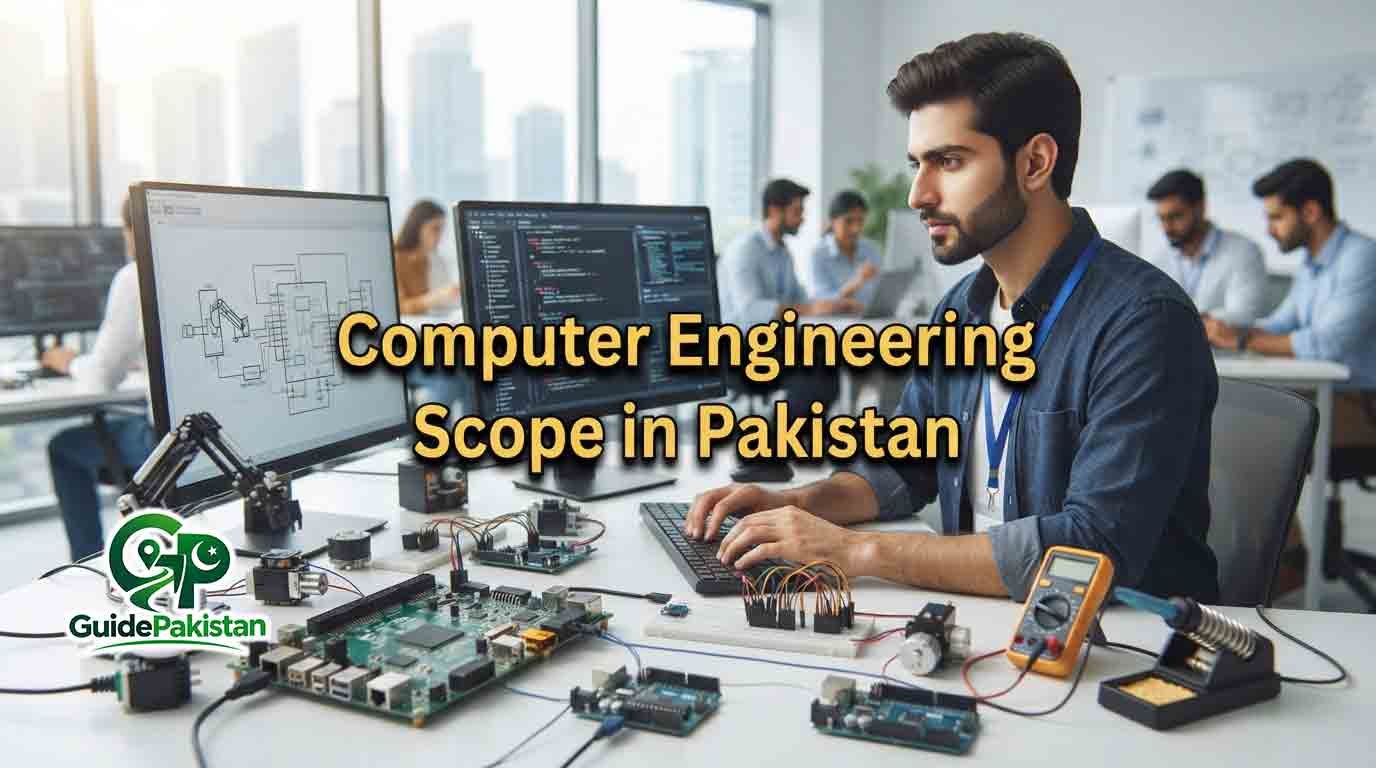
Computer Engineering Scope in Pakistan
Computer Engineering is an important technology and engineering field that combines computer science, electronics, digital systems, hardware and software engineering.
In Pakistan, Computer Engineering can provide career opportunities in embedded systems, computer hardware, networking, telecommunications, automation, robotics, Internet of Things, firmware, digital systems, cybersecurity, software development and many other technology-related areas.
Unlike a purely software-focused degree, Computer Engineering deals with both computing systems and the hardware on which those systems operate. This makes it a particularly interesting field for students who want to understand how computers, electronic devices and intelligent machines work at a deeper technical level.
Pakistan's engineering education system recognizes Computer Engineering as an engineering discipline. The Pakistan Engineering Council includes Computer Engineering in its accredited engineering disciplines and maintains program-level accreditation records for universities and specific student intake batches.
At the same time, Pakistan's higher-education computing ecosystem is becoming increasingly connected with areas such as Artificial Intelligence, Data Science, Cybersecurity, Cloud Computing, Software Engineering and Internet of Things. HEC's revised 2025 Computer Science curriculum specifically highlights these emerging areas and emphasizes practical, project-based and industry-oriented learning.
What Is Computer Engineering?
Computer Engineering is the engineering discipline concerned with designing, developing, integrating and maintaining computer-based systems.
It combines concepts from:
-
Computer Science
-
Electrical Engineering
-
Electronics
-
Digital Logic
-
Computer Architecture
-
Programming
-
Embedded Systems
-
Networking
-
Hardware Design
-
Software Development
A Computer Engineer may work on the hardware and software components of a computing system.
For example, a Computer Engineer could work on:
-
Embedded devices
-
Microcontrollers
-
Computer hardware
-
Digital circuits
-
Firmware
-
Robotics
-
IoT devices
-
Network equipment
-
Automation systems
-
Computer architecture
-
Hardware-software integration
-
Real-time systems
Is Computer Engineering a Good Career in Pakistan?
Yes, Computer Engineering can be a good career option in Pakistan, particularly for students who are interested in both hardware and software.
However, students should understand that Computer Engineering is not simply another name for Software Engineering or Computer Science.
Computer Engineering is particularly suitable for students who enjoy:
-
Computers
-
Electronics
-
Hardware
-
Programming
-
Digital systems
-
Mathematics
-
Circuits
-
Robotics
-
Embedded systems
-
Problem-solving
The field can become especially valuable when a graduate develops a specialization instead of remaining at a basic level.
Scope of Computer Engineering in Pakistan
Computer Engineering has a wide scope because computing technology is used in many industries.
Major areas include:
-
Embedded systems
-
Hardware engineering
-
Firmware development
-
Robotics
-
Automation
-
Internet of Things
-
Computer architecture
-
Digital systems
-
Networking
-
Telecommunications
-
Software development
-
Cybersecurity
-
Artificial Intelligence hardware
-
Edge computing
-
Industrial control systems
-
Electronics
-
Semiconductor-related work
-
Technical research
Computer Engineering and Embedded Systems
Embedded systems are one of the most important areas for Computer Engineers.
An embedded system is a computing system designed to perform a specific function within a larger device or product.
Examples include computing systems used in:
-
Cars
-
Medical equipment
-
Industrial machines
-
Smart appliances
-
Security systems
-
Consumer electronics
-
Robotics
-
Drones
-
Communication equipment
A Computer Engineer may work on the processor, firmware, sensors, communication interfaces and software that control an embedded device.
Firmware Development
Firmware is software that operates closely with hardware.
Firmware professionals may develop code for:
-
Microcontrollers
-
Embedded processors
-
Electronic devices
-
Sensors
-
Communication equipment
-
Industrial systems
This area is particularly suitable for people who enjoy programming but also want to understand electronics and hardware.
Computer Hardware Engineering
Computer Engineering can lead to hardware-related work involving:
-
Processors
-
Memory
-
Digital circuits
-
Computer boards
-
Interfaces
-
Controllers
-
Sensors
-
Hardware testing
In Pakistan, the availability of specialized hardware-design jobs can vary by industry and company, so students interested in this area should develop strong practical and project skills.
Robotics
Robotics combines several technologies:
-
Mechanical systems
-
Electronics
-
Programming
-
Sensors
-
Control systems
-
Artificial Intelligence
-
Embedded computing
Computer Engineers can contribute to the computing and control side of robotics.
They may work on:
-
Robot controllers
-
Sensor integration
-
Embedded programming
-
Computer vision systems
-
Communication
-
Real-time control
Internet of Things
The Internet of Things, or IoT, connects physical devices to networks so that they can collect, process and exchange information.
Examples include:
-
Smart agriculture
-
Industrial monitoring
-
Smart buildings
-
Smart energy systems
-
Connected vehicles
-
Environmental monitoring
-
Healthcare devices
Computer Engineers can work on the hardware, embedded software, networking and communication components of IoT systems.
Automation
Automation is another area where Computer Engineering skills can be useful.
Industrial organizations use computer-controlled systems to monitor and control processes.
A Computer Engineer may work with:
-
Sensors
-
Controllers
-
Embedded systems
-
Industrial computers
-
Communication networks
-
Control software
This creates potential connections between Computer Engineering and industrial automation.
Artificial Intelligence and Computer Engineering
Artificial Intelligence is usually associated with software and data, but AI systems also require computing hardware.
Computer Engineers can work on:
-
Edge AI
-
AI accelerators
-
Embedded AI
-
Computer vision hardware
-
GPU-based systems
-
AI-enabled devices
-
Intelligent embedded systems
This means students can combine Computer Engineering with AI to enter specialized areas.
Computer Engineering and Cybersecurity
Cybersecurity is another possible specialization.
Computer Engineers understand hardware, operating systems, networks and low-level computing concepts.
This can be useful in areas such as:
-
Hardware security
-
Embedded security
-
IoT security
-
Network security
-
System security
-
Secure firmware
-
Device security
Students interested in cybersecurity can build on their Computer Engineering foundation and specialize later.
Computer Networking
Computer Engineers can also pursue networking-related careers.
Important concepts include:
-
TCP/IP
-
Routing
-
Switching
-
Network architecture
-
Wireless communication
-
Network security
-
Network hardware
-
Communication protocols
Networking knowledge can also help graduates move toward cloud computing and cybersecurity.
Telecommunications
Computer Engineering has connections with telecommunications because modern communication networks depend heavily on computer systems.
Graduates may encounter technologies involving:
-
Communication systems
-
Network equipment
-
Digital signal processing
-
Wireless systems
-
Embedded communication devices
-
Network infrastructure
The exact opportunities depend on the organization and specialization.
Software Development
Computer Engineering graduates can also enter software development.
Because the degree includes programming and computing concepts, graduates can pursue software-related careers if they build strong programming skills.
Potential areas include:
-
Backend development
-
Systems programming
-
Embedded software
-
Application development
-
Automation
-
IoT software
-
Device software
However, students primarily interested in software development should compare Computer Engineering with Computer Science and Software Engineering before selecting a degree.
Computer Engineering Jobs in Pakistan
Possible job titles include:
-
Computer Engineer
-
Embedded Systems Engineer
-
Embedded Software Engineer
-
Firmware Engineer
-
Hardware Engineer
-
Systems Engineer
-
Network Engineer
-
Computer Hardware Engineer
-
IoT Engineer
-
Robotics Engineer
-
Automation Engineer
-
Electronics Engineer
-
Systems Integration Engineer
-
Software Engineer
-
Hardware Design Engineer
-
FPGA Engineer
-
Digital Design Engineer
-
Verification Engineer
-
Technical Support Engineer
-
Research Engineer
-
Cybersecurity Engineer
-
Edge Computing Engineer
Actual job titles and requirements differ between employers.
Industries for Computer Engineers
Computer Engineering is not restricted to computer companies.
Technology Companies
Technology companies can hire Computer Engineers for software, hardware, embedded systems, networking and systems-related work.
Telecom Companies
Telecommunications organizations use sophisticated computing and communication infrastructure.
Automotive Industry
Modern vehicles increasingly use electronic control units, sensors, embedded processors and software.
This creates opportunities related to automotive electronics and embedded computing.
Manufacturing
Manufacturing companies use automation, sensors, controllers and industrial computing systems.
Consumer Electronics
Computer Engineers can contribute to the development and testing of electronic products and connected devices.
Healthcare Technology
Medical devices increasingly depend on electronics, computing and embedded software.
Defence and Aerospace
Advanced communication, embedded computing, electronic systems and control technologies are important in aerospace and defence applications.
Specific employment requirements can be strict and may include organizational or security-related conditions.
Energy Sector
Modern energy systems use sensors, monitoring systems, automation and digital controls.
Agriculture Technology
Pakistan's agricultural sector has opportunities for technology applications such as:
-
Smart irrigation
-
Environmental sensors
-
Crop monitoring
-
Automated systems
-
IoT devices
Computer Engineering and Freelancing
Freelancing is generally easier in software-focused areas than in physical hardware engineering because many hardware jobs require laboratory equipment and physical testing.
However, Computer Engineering graduates can offer certain technology services remotely.
Possible areas include:
-
Embedded programming
-
Firmware development
-
IoT programming
-
PCB-related design work
-
Technical consulting
-
Simulation
-
Programming
-
Automation
-
Software development
-
Hardware documentation
A freelancer should develop a portfolio showing real projects rather than relying only on a degree.
Remote Work Opportunities
Some Computer Engineering careers can be performed remotely, particularly those involving:
-
Software
-
Firmware
-
Embedded programming
-
Simulation
-
Documentation
-
IoT software
-
Technical consulting
However, hardware testing, laboratory work, manufacturing and physical prototyping often require on-site access.
Computer Engineering and Startups
Computer Engineering can be valuable for technology entrepreneurs.
A graduate can potentially develop products involving:
-
Smart devices
-
IoT systems
-
Automation
-
Sensors
-
Robotics
-
Embedded products
-
Monitoring systems
-
Educational electronics
-
Smart agriculture
The combination of engineering knowledge and business skills can help students move beyond traditional employment.
Skills Required for Computer Engineering
A successful Computer Engineer needs a combination of theoretical and practical skills.
Programming
Students should learn programming languages such as:
-
C
-
C++
-
Python
-
Assembly fundamentals
-
Java or other languages where relevant
C and C++ are particularly useful in embedded and systems programming.
Digital Logic
Understand:
-
Logic gates
-
Boolean algebra
-
Combinational circuits
-
Sequential circuits
-
Digital design
Computer Architecture
Learn how processors, memory and other computer components work together.
Electronics
Basic electronics knowledge is important for hardware-oriented Computer Engineering work.
Microcontrollers
Students should gain practical experience with microcontrollers and embedded platforms.
Operating Systems
Understand processes, memory, files, permissions and system-level concepts.
Networking
Networking is useful for IoT, embedded systems, cybersecurity and general computing.
Databases
Basic database knowledge is useful for software and IoT applications.
Linux
Linux is highly valuable for embedded development, systems programming, servers and cybersecurity.
Hardware-Software Integration
One of the biggest advantages of Computer Engineering is understanding how software interacts with hardware.
Importance of Practical Projects
Computer Engineering is a practical field.
Students should not depend entirely on classroom theory.
Useful projects can include:
-
Smart home system
-
IoT monitoring system
-
Temperature monitoring device
-
Automated irrigation system
-
Line-following robot
-
Obstacle-detection robot
-
Embedded control system
-
Sensor-based security system
-
Microcontroller project
-
FPGA project
-
Digital logic project
-
Networked embedded device
Projects demonstrate practical ability to employers.
Computer Engineering Laboratories
When selecting a university, students should investigate whether the department provides appropriate practical facilities.
Useful laboratories may include:
-
Digital logic lab
-
Electronics lab
-
Embedded systems lab
-
Microcontroller lab
-
Computer architecture lab
-
Networking lab
-
Robotics lab
-
IoT lab
-
FPGA or digital design lab
The quality and availability of facilities can vary significantly between universities.
Importance of PEC Accreditation
PEC accreditation is particularly important for students considering Computer Engineering because Computer Engineering is an engineering discipline.
PEC's current accreditation information lists Computer Engineering among its accredited engineering disciplines. Its Level-II records provide program and intake-batch information for universities, including examples such as Bahria University, COMSATS, HITEC University, NUST-related programs and other institutions.
Students should verify the current accreditation status of the specific university and intake batch before admission.
Do not assume that a university offering a program automatically means that every batch has the same accreditation status.
Computer Engineering vs Computer Science
Computer Science generally emphasizes:
-
Programming
-
Algorithms
-
Data structures
-
Software
-
Computing theory
-
Artificial Intelligence
-
Data Science
Computer Engineering generally combines:
-
Hardware
-
Electronics
-
Digital systems
-
Computer architecture
-
Programming
-
Embedded systems
-
Networks
If you want to focus mainly on software, Computer Science may be more suitable.
If you want to understand both hardware and software, Computer Engineering may be a better fit.
Computer Engineering vs Software Engineering
Software Engineering primarily focuses on designing, developing, testing and maintaining software systems.
Computer Engineering includes software but also goes deeper into hardware, electronics, embedded systems and computer architecture.
Choose Software Engineering if your main interest is building software applications.
Choose Computer Engineering if you are interested in the interaction between hardware and software.
Computer Engineering vs Information Technology
Information Technology generally focuses on applying and managing technology within organizations.
IT commonly includes:
-
Networks
-
System administration
-
Cloud
-
Technical support
-
Databases
-
IT infrastructure
-
Information systems
Computer Engineering is more engineering-oriented and includes hardware, electronics, digital systems and computer architecture.
Computer Engineering vs Electrical Engineering
Electrical Engineering is a broader engineering discipline that can include power, electronics, telecommunications, control and other areas.
Computer Engineering focuses more specifically on computing systems, computer hardware, digital systems, embedded computing and the interaction between hardware and software.
Computer Engineering vs Artificial Intelligence
AI focuses mainly on:
-
Machine learning
-
Data
-
Intelligent algorithms
-
Computer vision
-
Natural language processing
Computer Engineering focuses more on computing hardware, embedded systems, digital systems and hardware-software integration.
However, the two fields increasingly overlap through edge AI, robotics and AI hardware.
Is Computer Engineering Difficult?
Computer Engineering can be challenging because it combines multiple technical areas.
Students may study:
-
Mathematics
-
Physics
-
Electronics
-
Digital logic
-
Programming
-
Computer architecture
-
Data structures
-
Operating systems
-
Networks
-
Engineering subjects
The degree becomes easier to manage when students develop strong fundamentals and practice regularly.
Does Computer Engineering Require Mathematics?
Yes, mathematics is an important part of an engineering degree.
Students may encounter areas such as:
-
Calculus
-
Algebra
-
Probability
-
Discrete mathematics
-
Engineering mathematics
The exact curriculum depends on the university.
Students who strongly dislike mathematics should carefully compare the curriculum before choosing Computer Engineering.
Can ICS Students Study Computer Engineering?
Eligibility depends on the university and its current admission rules.
Students from ICS backgrounds may be eligible for some Computer Engineering programs, while certain universities may have specific subject requirements.
Applicants should check the latest official admission criteria of the university before applying.
Can Pre-Engineering Students Study Computer Engineering?
Pre-Engineering students can be relevant candidates for Computer Engineering programs because of their mathematics, physics and chemistry background, but actual eligibility depends on the university's current admission policy.
Students should always verify the latest prospectus.
Can Students From Other Backgrounds Study Computer Engineering?
Admission eligibility varies by institution.
Even if a student meets the formal eligibility requirement, they should understand that Computer Engineering involves mathematics, physics, electronics and programming.
Students without a strong technical background may need additional preparation.
Future Scope of Computer Engineering in Pakistan
The future of Computer Engineering is connected to the growth of smart devices, automation, robotics, IoT, embedded computing, AI hardware, networking and digital infrastructure.
As computing moves into vehicles, machines, appliances, industrial equipment and other physical products, the ability to integrate hardware and software becomes increasingly important.
HEC's revised computing curriculum also highlights emerging areas such as AI, Data Science, Cybersecurity, Cloud Computing, Software Engineering and IoT, demonstrating how closely modern computing disciplines are becoming interconnected.
Computer Engineering and Robotics in Pakistan
Robotics is one of the most interesting potential areas for Computer Engineers.
A robotics system requires:
-
Sensors
-
Controllers
-
Microprocessors
-
Embedded software
-
Communication
-
Control algorithms
-
Data processing
Computer Engineers can contribute significantly to the computing and control components.
Computer Engineering and IoT in Pakistan
IoT can provide opportunities in:
-
Agriculture
-
Manufacturing
-
Smart homes
-
Energy monitoring
-
Healthcare devices
-
Environmental monitoring
-
Logistics
-
Industrial automation
Computer Engineers can work across the hardware, firmware, networking and software layers of an IoT system.
Computer Engineering and Embedded Systems in Pakistan
Embedded systems can be an especially valuable specialization because they combine programming with hardware knowledge.
Students interested in this area should practice with:
-
Microcontrollers
-
Sensors
-
Communication modules
-
Real-time systems
-
C/C++
-
Embedded Linux
-
Debugging tools
How to Build a Computer Engineering Portfolio
A portfolio should demonstrate practical engineering ability.
Students can include:
-
Circuit projects
-
Microcontroller projects
-
IoT prototypes
-
Embedded software
-
Robotics projects
-
FPGA designs
-
Digital logic projects
-
Hardware-software integration projects
-
Automation projects
-
Technical documentation
For each project, explain:
-
Problem
-
Design
-
Components
-
Software
-
Implementation
-
Testing
-
Results
Career Path for Computer Engineering Students
A practical career progression can look like:
Mathematics + Electronics + Programming → Digital Logic → Computer Architecture → Embedded Systems → Projects → Internship → Specialization → Professional Career
Students can then specialize in:
-
Embedded Systems
-
Firmware
-
Robotics
-
IoT
-
Hardware Design
-
FPGA
-
Networking
-
Cybersecurity
-
Automation
-
Software
-
AI Hardware
Should Computer Engineering Students Learn Software Development?
Yes.
Even students who want hardware careers should learn programming because modern hardware systems depend heavily on software.
Programming can help Computer Engineers understand:
-
Firmware
-
Embedded systems
-
Device drivers
-
Automation
-
Testing
-
Data processing
-
Communication
Should Computer Engineering Students Learn AI?
Learning AI fundamentals can be useful, particularly for students interested in robotics, computer vision, IoT and edge computing.
Students do not necessarily need to become AI specialists, but basic machine-learning knowledge can expand their options.
Should Computer Engineering Students Learn Cybersecurity?
Yes, at least basic cybersecurity knowledge is useful.
Security is becoming important in:
-
IoT
-
Embedded systems
-
Networks
-
Firmware
-
Connected devices
-
Industrial systems
Students interested in security can later specialize in hardware security, IoT security or broader cybersecurity.
Common Mistakes by Computer Engineering Students
Choosing the Degree Without Understanding It
Some students choose Computer Engineering simply because the name contains "Computer."
They later discover that the program also includes electronics, mathematics and engineering subjects.
Ignoring Electronics
Students interested only in software may struggle with hardware-oriented subjects.
Ignoring Programming
Computer Engineering still requires strong programming skills.
Studying Only for Exams
Engineering employers value practical problem-solving ability.
Not Building Projects
Projects are one of the best ways to demonstrate practical ability.
Ignoring Accreditation
Students should verify PEC accreditation before admission.
Learning Everything at Once
It is better to build strong foundations and then specialize.
Is Computer Engineering Worth It in Pakistan?
Computer Engineering can be worth studying in Pakistan for students who genuinely enjoy both computing and engineering.
It is particularly suitable for students who want to work at the intersection of:
-
Hardware
-
Software
-
Electronics
-
Embedded systems
-
Robotics
-
IoT
-
Automation
Students who only want web development or application programming may find Computer Science or Software Engineering more directly aligned with their goals.
Final Verdict
Computer Engineering has a meaningful scope in Pakistan because it connects computing with electronics, hardware, software and intelligent devices.
The strongest opportunities are likely to come from specialization in areas such as embedded systems, firmware, robotics, IoT, automation, networking, cybersecurity, hardware-software integration and AI-enabled devices.
For Pakistani students, the most important decision is not simply choosing the degree title. Students should compare the university's curriculum, laboratories, faculty, industry exposure, practical projects and especially the current PEC accreditation status of the specific program and intake batch.
If you enjoy computers but also like electronics, circuits, programming and understanding how machines work internally, Computer Engineering can be an excellent career option.
If your main goal is software development, AI or data science, however, you should also compare Computer Engineering with Computer Science and Software Engineering before making your final decision.
Guide Information
Eligibility
Eligibility for BS/BSc Computer Engineering depends on the university's current admission policy. Students should check the latest prospectus for required intermediate subjects, marks, entrance tests and other conditions. Students from ICS, Pre-Engineering or other eligible backgrounds should confirm the exact requirements of the university before applying.
Required Documents
CNIC or B-Form
Passport-size photographs
Matriculation certificate and marks sheet
Intermediate certificate and marks sheet
Domicile where required
Character certificate where required
Migration certificate where applicable
Equivalence certificate where applicable
University application form
Admission test result where required
Other documents requested by the university
Fees
Computer Engineering fees vary by university and between public and private institutions. Students should check the latest official fee structure of the selected university. Additional expenses may include admission charges, examination fees, laboratory charges, hostel, transport, books, computer equipment and project costs.
Processing Time
University admission processing time varies according to the institution, admission cycle, application method and document verification requirements. Applicants should follow the official admission schedule of the university.WHEN TO APPLY:Apply according to the current admission schedule announced by the university. Admission dates can change from one institution to another, so applicants should monitor official university announcements.
Application Method
Applications are generally submitted through the u
Validity Period
A Computer Engineering degree is an academic qualification and normally does not expire. Professiona
Step-by-Step Process
- Understand what Computer Engineering is before choosing the degree.
- Compare Computer Engineering with Computer Science.
- Compare Computer Engineering with Software Engineering.
- Compare Computer Engineering with Electrical Engineering.
- Decide whether you are interested in both hardware and software.
- Check the latest admission eligibility of universities.
- Check the required intermediate subjects.
- Check whether an entrance test is required.
- Prepare your academic documents.
- Prepare CNIC or B-Form.
- Prepare passport-size photographs if required.
- Obtain an equivalence certificate if applicable.
- Make a list of universities offering Computer Engineering.
- Compare the curriculum of each university.
- Check the engineering laboratories.
- Check embedded-systems facilities.
- Check electronics and digital-logic laboratories.
- Check robotics and IoT facilities where available.
- Check faculty qualifications and expertise.
- Check internship and industry opportunities.
- Verify the current PEC accreditation status of the specific program.
- Verify the accreditation status of the relevant intake batch.
- Compare university fees and other expenses.
- Review the university's admission deadline.
- Create an account on the official admission portal.
- Complete the admission application carefully.
- Enter academic information accurately.
- Upload all required documents.
- Pay the application fee where required.
- Submit the application before the deadline.
- Prepare for the university entrance test if required.
- Attend an interview if required.
- Monitor the admission portal for updates.
- Check the merit or selection list.
- Complete document verification after selection.
- Pay admission and tuition charges.
- Complete university enrollment.
- Start studying mathematics and engineering fundamentals seriously.
- Learn programming, particularly C and C++.
- Study digital logic and computer architecture.
- Build electronics fundamentals.
- Learn microcontrollers.
- Practice embedded programming.
- Learn operating systems and Linux.
- Develop computer networking skills.
- Learn basic database concepts.
- Explore IoT technologies.
- Explore robotics and automation.
- Build practical hardware-software projects.
- Document projects professionally.
- Participate in engineering competitions and technical activities where available.
- Seek internships during university.
- Choose a specialization according to your interests.
- Develop advanced skills in the selected specialization.
- Build a professional portfolio and apply for relevant engineering and technology positions.
Official Information
Official Website: https://www.pec.org.pk/?utm_source=chatgpt.com)[Higher Education Commission of Pakistan](https://www.hec.gov.pk/?utm_source=chatgpt.com)
Contact: For engineering accreditation and professional engineering information, consult PEC.For university admission, fees, eligibility and program-specific information, contact the relevant university.For higher-education policy and curriculum information, consult HEC.
Frequently Asked Questions
Computer Engineering combines computing, electronics, digital systems, hardware and software engineering to develop and integrate computer-based systems.
Yes. Career opportunities can exist in embedded systems, firmware, networking, IoT, robotics, automation, software, hardware and other technology areas.
Yes. Computer Engineering is recognized as an engineering discipline within the Pakistan Engineering Council's accreditation framework.
Yes. Students should verify the current PEC accreditation status of the specific program and relevant intake batch before admission.
Pakistan Engineering Council is the statutory body responsible for regulating the engineering profession in Pakistan and maintaining engineering program accreditation information.
Neither is universally better. Computer Engineering is more suitable for students interested in hardware and software, while Computer Science is generally more focused on computing, programming and algorithms.
Computer Engineering is more hardware-oriented, while Software Engineering focuses primarily on software development and software engineering processes.
They serve different purposes. Computer Engineering is an engineering discipline involving hardware and software, while IT focuses more on managing and applying technology systems.
Subjects can include mathematics, electronics, programming, digital logic, computer architecture, data structures, operating systems, networking, embedded systems and engineering subjects.
It can be challenging because it combines mathematics, electronics, programming and engineering concepts.
Yes. Mathematics is an important part of engineering education and can include calculus, algebra and other mathematical subjects.
Engineering programs commonly include physics and related engineering fundamentals, but exact requirements depend on the university's curriculum.
Some universities may accept eligible ICS students, but requirements vary. Students should check the current admission criteria of each university.
Pre-Engineering students can be eligible for Computer Engineering at universities whose current admission criteria permit them.
Eligibility depends on the university. Students should also consider whether they have sufficient preparation in mathematics, physics and computing.
Possible roles include Computer Engineer, Embedded Systems Engineer, Firmware Engineer, Hardware Engineer, IoT Engineer, Robotics Engineer, Network Engineer and Systems Engineer.
An Embedded Systems Engineer develops computing systems integrated into devices and machines.
A Firmware Engineer develops software that operates closely with electronic hardware and embedded devices.
Yes. Computer Engineering includes programming and computing, and graduates can move into software development if they develop strong software skills.
Yes. Their knowledge of hardware, systems and networks can support specialization in cybersecurity, IoT security and hardware security.
Yes. Computer Engineers can work in areas such as edge AI, AI-enabled devices, computer vision hardware and AI computing systems.
Internet of Things refers to connected physical devices that collect, process and exchange information through networks.
Yes. Computer Engineering provides useful knowledge for IoT hardware, firmware, networking and software integration.
Yes. Computer Engineers can contribute to robot controllers, sensors, embedded software, communication and computing systems.
Yes. Automation systems use sensors, controllers, embedded computers and software, creating potential opportunities for Computer Engineers.
Yes. Computer Engineering skills can be relevant to communication systems, networking equipment and digital infrastructure.
Yes. Banks employ technology professionals in software, networks, infrastructure, security and systems.
Yes. Graduates can work in software development, systems, embedded software, networking and other technical roles.
Yes. Software, embedded programming, IoT development, technical consulting and related services may be offered through freelancing.
Some software, firmware, simulation and consulting roles can be performed remotely, while hardware and laboratory work may require physical access.
It can be useful, but freelancing opportunities are generally easier to find in software-related areas than in physical hardware work.
C and C++ are particularly useful for embedded and systems work. Python is also valuable for automation, data processing and general development.
Yes. C is widely useful for embedded systems and low-level programming.
Yes. C++ can be useful for embedded software, systems programming and application development.
Yes. Python can support automation, testing, data processing, AI and rapid development.
Yes. Linux can be useful for embedded systems, servers, networking, development and cybersecurity.
Yes. Networking is useful in IoT, communication systems, cybersecurity and connected devices.
Computer architecture explains how processors, memory and other components are organized and work together.
Digital logic deals with the fundamental digital circuits and logical operations used to build computing systems.
FPGA is a programmable digital hardware technology used for implementing specialized digital logic and computing functions.
Yes. FPGA skills can be valuable for digital design, hardware development, signal processing and specialized computing.
Embedded programming involves writing software for microcontrollers, processors and computing systems integrated into devices.
Useful projects include IoT devices, robotics, sensor systems, microcontroller projects, embedded systems, automation and hardware-software integration projects.
Yes. Projects help students demonstrate practical engineering skills to employers.
Yes. Internships can provide real-world exposure and help students understand professional engineering environments.
Document hardware, embedded, IoT, robotics, FPGA, programming and automation projects with explanations of design, implementation and testing.
Yes. Robotics is a strong interdisciplinary area where Computer Engineers can work on computing, embedded control and sensor integration.
Yes. Computer Engineering provides useful knowledge for IoT hardware, firmware, networking and device software.
It can be useful for students interested in edge AI, robotics, computer vision and AI hardware.
Yes. It can provide a strong technical foundation for embedded security, IoT security and broader cybersecurity.
Potential industries include technology, telecom, manufacturing, automotive, healthcare technology, energy, defence, aerospace, consumer electronics and automation.
Yes. International opportunities can exist, but employment depends on skills, experience, employer requirements, professional recognition and immigration rules.
Demand varies by specialization and industry. Practical skills in embedded systems, software, networking, IoT, automation and related technologies can improve career opportunities.
The future is connected with embedded computing, IoT, robotics, automation, AI hardware, digital systems, networking and smart devices.
You should compare Computer Engineering with Computer Science and Software Engineering because Computer Engineering also includes electronics, mathematics and hardware.
Carefully review the curriculum before choosing it because electronics and digital systems are important components of Computer Engineering.
Yes. This combination of interests is particularly aligned with Computer Engineering.
Yes. Graduates with strong networking skills can pursue network-related positions.
Yes. Systems engineering can be a possible career path depending on skills and employer requirements.
Yes. Hardware design can be pursued by graduates who develop strong digital design, electronics and hardware skills.
Yes. The field can support startups involving IoT, automation, robotics, smart devices and embedded technology.
Check curriculum, faculty, laboratories, practical projects, internships, industry connections, fees, admission requirements and current PEC accreditation status.
Build strong fundamentals, practice programming and electronics, complete real projects, gain internship experience and specialize in an area with genuine interest.