Where is the Shrine of Baba Farid Located? A Complete Visitor's Guide
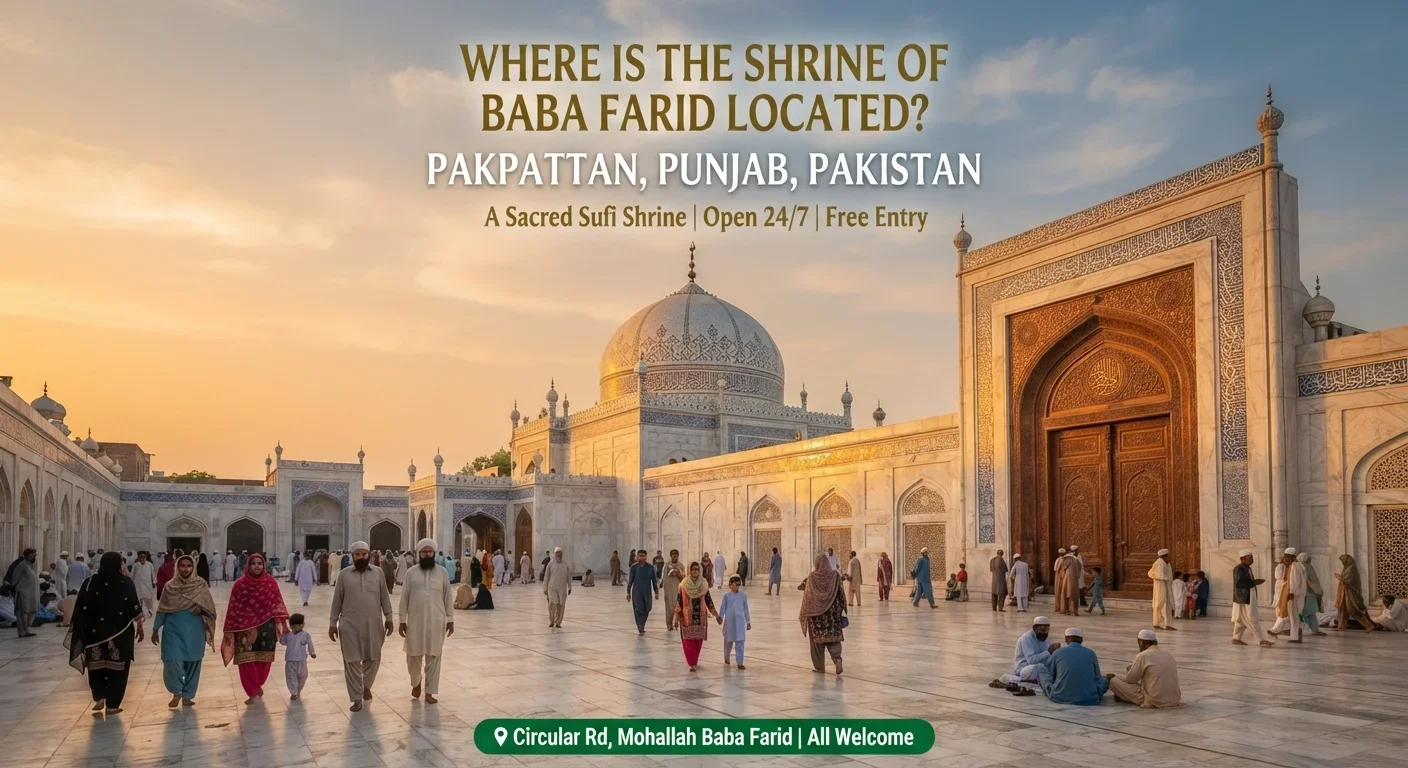
Where Is the Shrine of Baba Farid Located? Complete Guide
The Shrine of Baba Farid holds a position of immense spiritual and historical significance in Pakistan. It is dedicated to the Sufi mystic Fariduddin Ganjshakar, more popularly known as Baba Farid, who is widely revered and considered the "National Islamic Saint of Pakistan." This guide provides a comprehensive overview of the shrine, its location, and essential information for visitors.
Where Is the Shrine Located?
The Shrine of Baba Farid is situated in the city of Pakpattan, in the Punjab province of Pakistan. Historically, the town was known as Ajodhan. Over time, its importance became so intrinsically linked to the shrine that it was renamed Pakpattan, meaning "Pure Ferry." This name references the river crossing that pilgrims used to make to reach the shrine.
The shrine's specific address is Circular Rd, Mohallah Baba Farid, Pakpattan, Punjab, Pakistan.
A Historical and Spiritual Overview
The shrine was built in the 13th century and has evolved into a major center for Sufism in South Asia. Baba Farid was a prominent figure of the Chishti Order, and his poetry is so revered that it was incorporated into the Sikh holy book, the Guru Granth Sahib.
Over the centuries, the shrine has attracted a wide range of devotees, from common people to rulers and emperors. Historical figures such as the Mughal Emperor Akbar, Shah Jahan, and even the founder of Sikhism, Guru Nanak, are recorded to have visited the shrine to pay their respects.
Following the Partition of British India in 1947, the shrine became exclusively identified as a Muslim place of worship and has since emerged as the "unrivaled centre" of Chisti Sufism in Pakistan.
The Shrine Complex
The shrine complex is a hub of spiritual activity and is open to visitors at all hours. The main tomb of Baba Farid is made of white marble and features two significant doors.
The eastern door is called the Nūrī Darwāza, or "Gate of Light," and the southern door is the Bahishtī Darwāza, or "Gate of Paradise."
The Bahishti Darwaza is particularly famous, as it only opens on specific occasions, such as during the annual Urs festival, and it is a deeply sacred tradition for pilgrims to pass through it.
Inside the mausoleum, there are two white marble graves: one belonging to Baba Farid and the other to his eldest son.
The shrine is administered by the Auqaf Department of the Punjab government. It is not segregated by gender, but a designated area exists exclusively for women.
In keeping with Sufi traditions of charity and community service, the shrine maintains a langar, or communal kitchen, that serves free meals to the poor and all visitors.
Guide Information
Eligibility
There are no specific eligibility requirements to visit the Shrine of Baba Farid. It is open to all people, regardless of their religion, nationality, or background. The shrine welcomes pilgrims, tourists, and anyone seeking spiritual solace or a glimpse into Pakistan's rich Sufi heritage.
Required Documents
No documents are required for entry into the shrine itself. However, for international tourists visiting Pakistan, a valid passport with a Pakistani visa is mandatory for entry into the country. It is always advisable to carry a photocopy of your passport and visa with you for general identification.
Fees
Visiting the Shrine of Baba Farid is completely free of charge. There is no entry fee for the shrine complex. This follows the tradition of Sufi shrines, which are meant to be accessible to all, irrespective of their financial means.
Processing Time
There is no processing time required to visit the shrine as it is a place of worship, not an official government office. Visitors can simply walk in and proceed to the main tomb for prayers and reflection.
Application Method
As there is no application process to visit the sh
Validity Period
A visit to the Shrine of Baba Farid is for a specific point in time and does not have a defined vali
Step-by-Step Process
-
STEP-BY-STEP GUIDE TO VISITING THE SHRINE OF BABA FARID
-
Plan Your Travel to Pakpattan
-
The shrine is located in the city of Pakpattan in Punjab, Pakistan. If you are traveling from a major city like Lahore, you can travel by bus, car, or train. The city is well-connected by road.
-
Arrive at the Shrine Complex
-
Once in Pakpattan, head to the main shrine located on Circular Road in the Mohallah Baba Farid area. The shrine is open 24 hours a day, so you can visit at any time that is convenient for you.
-
Follow Shrine Etiquette
-
As you enter the complex, you will need to remove your shoes and cover your head as a sign of respect. Maintain a quiet and respectful demeanor.
-
Proceed to the Mausoleum
-
Inside the complex, you will find the main mausoleum of Baba Farid. The tomb is made of white marble. Take a moment to offer your prayers or simply reflect in the peaceful atmosphere.
-
Visit the Langar (Optional but Recommended)
-
The shrine is famous for its langar, or communal kitchen, which serves free food to all visitors. Participating in this act of community service and charity is a deeply rewarding part of the experience.
-
Explore the Complex
-
Take some time to walk around the courtyard, observe the qawwali gatherings (especially on Thursday nights), and visit other historical parts of the shrine.
Official Information
Contact: While an official public phone number for the shrine administration is not consistently listed, one source provided a number for general inquiries: +92-308-8827000.Physical Address:Circular Rd, Mohallah Baba Farid, Pakpattan, Punjab, Pakistan.Administration:The shrine is managed by the Auqaf Department, Government of Punjab.STEP-BY-STEP:STEP-BY-STEP GUIDE TO VISITING THE SHRINE OF BABA FARIDStep 1: Plan Your Travel to PakpattanThe shrine is located in the city of Pakpattan in Punjab, Pakistan. If you are traveling from a major city like Lahore, you can travel by bus, car, or train. The city is well-connected by road.Step 2: Arrive at the Shrine ComplexOnce in Pakpattan, head to the main shrine located on Circular Road in the Mohallah Baba Farid area. The shrine is open 24 hours a day, so you can visit at any time that is convenient for you.Step 3: Follow Shrine EtiquetteAs you enter the complex, you will need to remove your shoes and cover your head as a sign of respect. Maintain a quiet and respectful demeanor.Step 4: Proceed to the MausoleumInside the complex, you will find the main mausoleum of Baba Farid. The tomb is made of white marble. Take a moment to offer your prayers or simply reflect in the peaceful atmosphere.Step 5: Visit the Langar (Optional but Recommended)The shrine is famous for its langar, or communal kitchen, which serves free food to all visitors. Participating in this act of community service and charity is a deeply rewarding part of the experience.Step 6: Explore the ComplexTake some time to walk around the courtyard, observe the qawwali gatherings (especially on Thursday nights), and visit other historical parts of the shrine.
Frequently Asked Questions
The shrine is located in Pakpattan, Punjab, Pakistan. The town was historically known as Ajodhan.
The address is Circular Rd, Mohallah Baba Farid, Pakpattan, Punjab, Pakistan.
The shrine is open 24 hours a day, 7 days a week, welcoming visitors at all times.
No, entry to the shrine is completely free of charge.
Yes, the shrine is open to everyone, regardless of their religious background or nationality.
The Bahishti Darwaza, or 'Gate of Paradise,' is the southern door of the mausoleum. It is a sacred gate that pilgrims try to pass through, especially during the annual Urs festival, as it is believed to bring spiritual rebirth.
For a peaceful spiritual experience, many suggest visiting early morning or late evening. Thursday nights are particularly significant for qawwali (devotional music) gatherings. The annual Urs festival is also a major event but draws very large crowds.
The shrine is administered by the Auqaf Department of the Punjab government.
Yes, women are welcome to visit. While the shrine is not segregated by gender, there is a designated area exclusively for women.
Photography is generally permitted in the courtyard area, but it is respectful to ask permission before taking photos inside the main mausoleum, especially during prayer times.