What Are Common Reasons for US Visa Refusal?
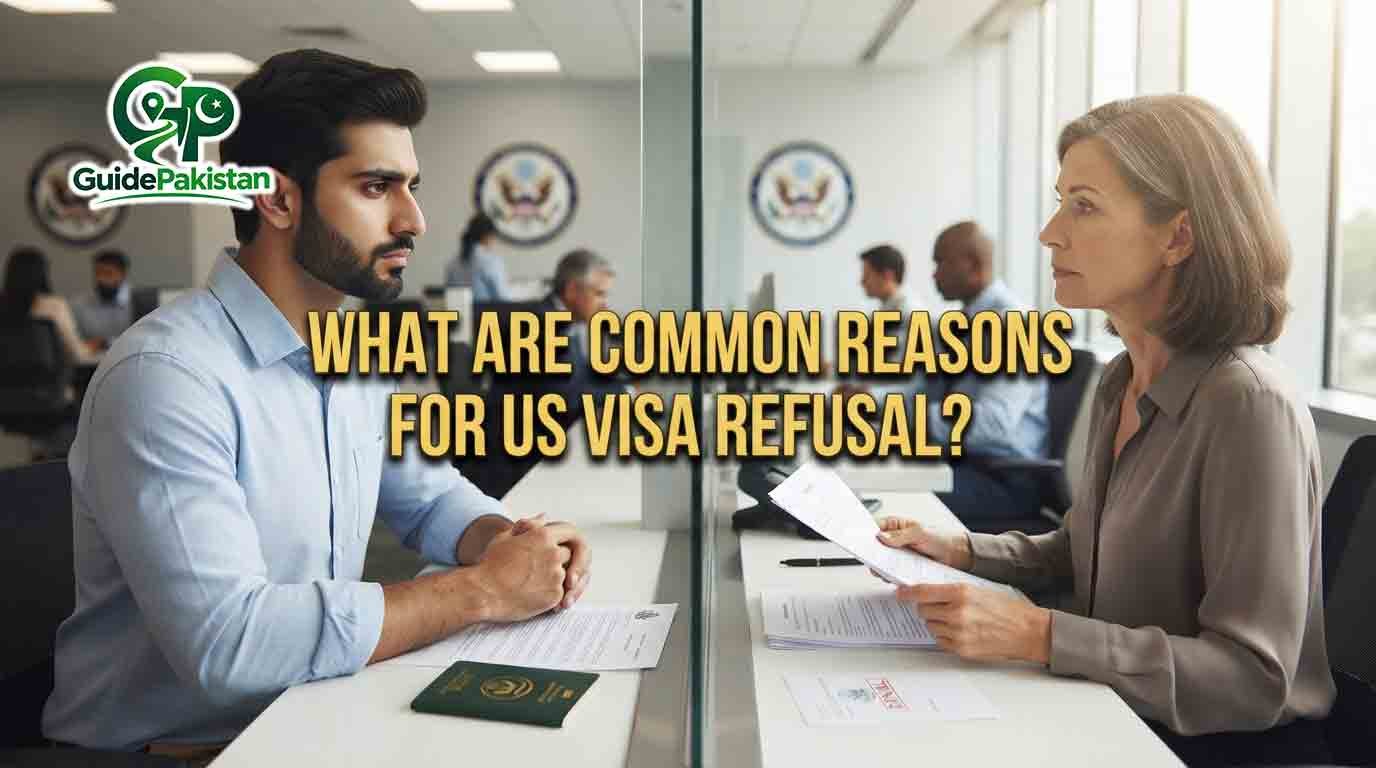
What Are Common Reasons for US Visa Refusal?
A US visa refusal can be disappointing, especially when an applicant has already completed the application, paid the visa fee, prepared for the interview, and made travel plans. However, a refusal does not always mean that an applicant has done something wrong or that the person can never receive a US visa.
US visa applications are decided under US immigration law. The reason for a refusal depends on the visa category, the applicant's individual circumstances, the information available to the consular officer, and any applicable legal grounds of ineligibility. The US Department of State explains that an application can be refused when an applicant has not established eligibility for the requested visa category, has not provided information needed to determine eligibility, or falls under a specific ground of ineligibility.
For Pakistani applicants applying for a nonimmigrant visa such as a B-1/B-2 visitor visa, one of the most important refusal provisions to understand is Section 214(b) of the Immigration and Nationality Act.
What Does US Visa Refusal Mean?
A visa refusal means the US consular officer determined that the applicant was not eligible for the visa under the applicable law based on the information available for that application.
The exact reason matters. US visa refusals are not all the same. For example, a refusal under Section 214(b) is different from a refusal involving fraud, a criminal ground, a previous immigration violation, or a missing document under Section 221(g).
The applicant should therefore read the refusal information carefully instead of assuming that every refusal means the same thing.
1. Failure to Overcome Section 214(b)
Section 214(b) is one of the most important refusal grounds for nonimmigrant visa applicants.
Under this provision, a nonimmigrant applicant is presumed to be an intending immigrant unless the applicant establishes eligibility for the requested temporary status and overcomes that presumption. The Department of State explains that a 214(b) refusal can mean the applicant did not sufficiently demonstrate qualification for the nonimmigrant visa category and/or did not establish strong enough ties outside the United States to demonstrate an intention to depart after a temporary stay.
For example, an applicant applying for a B-2 tourist visa should be able to explain a genuine temporary travel purpose and circumstances consistent with returning after the visit.
This does not mean that an applicant must have a particular amount of property, money, employment history, or family members in Pakistan. The Department of State says ties vary from person to person and can include employment, a home, and family or social relationships.
2. Weak or Insufficiently Demonstrated Home-Country Ties
Another issue connected with 214(b) is the applicant's ties outside the United States.
A consular officer considers the applicant's individual circumstances, travel plans, financial resources, and ties outside the United States when evaluating whether the applicant intends to leave after a temporary visit.
For a Pakistani applicant, relevant circumstances could include:
-
Employment
-
A business
-
Family responsibilities
-
Education
-
Property or a home
-
Professional commitments
-
Other established connections in Pakistan
However, having one of these things does not automatically guarantee approval.
The important point is that the overall circumstances should be consistent with the stated purpose and temporary nature of the trip.
3. Unclear or Unconvincing Travel Purpose
A visitor visa applicant needs to establish the purpose of the proposed trip.
The Department of State states that additional documentation may be requested to establish the purpose of travel, intent to depart the United States, and ability to pay the costs of the trip.
For example, if an applicant says the purpose is tourism but cannot explain basic details about the proposed trip, the circumstances may require additional clarification.
The best approach is not to invent a detailed itinerary simply to make an application appear stronger. The travel purpose should be genuine and accurately described.
4. Applying for the Wrong Visa Category
A refusal can occur when the applicant does not qualify for the visa category selected.
Different US visa categories have different purposes. A B-1/B-2 visitor visa, for example, permits certain temporary business and tourism activities but does not permit ordinary employment or degree-level study. Permanent residence also cannot be pursued through a visitor visa.
Examples of activities generally not permitted on a visitor visa include:
-
Employment in the United States
-
Degree-level study
-
Permanent residence
-
Certain professional performances
-
Certain media-related work
If the real purpose of travel requires another visa category, selecting a visitor visa does not make that activity permissible.
5. Insufficient Evidence of Ability to Pay for the Trip
Financial circumstances can also be relevant.
A visitor visa applicant may need to demonstrate the ability to pay the costs of the proposed trip. The Department of State specifically identifies ability to pay as one type of evidence that may be requested.
This does not mean there is one fixed bank-balance requirement for every applicant.
The appropriate financial picture depends on factors such as:
-
Length of the proposed trip
-
Expected travel expenses
-
Accommodation arrangements
-
Who will pay the expenses
-
Applicant's income and financial circumstances
-
Overall circumstances of the application
A large bank balance by itself does not guarantee a visa.
Likewise, a person does not necessarily need an extremely large balance if the proposed trip is financially realistic and the applicant can appropriately explain the source and availability of funds.
6. Inconsistent Information
Inconsistencies can create problems when information in the application does not match information provided during the interview or other information available to the consular officer.
Examples could include differences involving:
-
Employment
-
Income
-
Travel purpose
-
Previous US travel
-
Previous visa refusals
-
Family information
-
Education
-
Travel history
-
Who is paying for the trip
-
Intended length of stay
Applicants should therefore review the DS-160 carefully before submitting it and make sure they understand the information they have provided.
The safest approach is always to provide accurate information rather than trying to create an application that simply sounds impressive.
7. False Information or Misrepresentation
Providing false information can create a much more serious problem than a normal 214(b) refusal.
The Department of State identifies fraud or willful misrepresentation of a material fact as a ground of visa ineligibility under Section 212(a)(6)(C)(i).
This can involve deliberately providing false information or attempting to hide a material fact in order to obtain a visa.
Applicants should therefore never:
-
Submit fake employment documents
-
Create artificial bank statements
-
Alter property documents
-
Hide relevant immigration history
-
Provide false information about relatives
-
Misrepresent the purpose of travel
-
Use fabricated documents
A truthful application is essential.
8. Previous US Immigration Violations
A previous immigration violation can affect a future visa application.
The Department of State lists previously remaining longer than authorized in the United States as one possible ground of visa ineligibility.
Applicants with previous US travel should therefore accurately review:
-
Previous visa dates
-
Dates of entry and departure
-
Authorized period of stay
-
Any previous overstay
-
Previous immigration proceedings
-
Any prior visa refusals
A previous immigration problem does not necessarily have the same legal consequence in every case. The specific circumstances and applicable law matter.
9. Criminal or Drug-Related Ineligibility
Certain criminal or drug-related circumstances can result in visa ineligibility.
The Department of State lists several criminal and drug-related grounds under the Immigration and Nationality Act, including certain convictions involving moral turpitude and certain drug violations.
Because immigration law can be complicated, applicants with relevant criminal or immigration histories should not assume that a general online explanation determines their individual eligibility.
The applicable legal provision and the facts of the individual case are important.
10. Incomplete Application or Missing Required Information
A visa application can also be refused when required information or documentation has not been provided.
The Department of State lists failure to fully complete the visa application and/or provide required supporting documentation as an example of a Section 221(g) refusal.
Depending on the circumstances, an applicant may receive instructions concerning additional information or processing.
This is why applicants should carefully follow the current instructions for the particular US Embassy or Consulate where they are applying.
11. Administrative Processing
Not every case that does not immediately result in visa issuance should be understood as a permanent refusal.
Some refused applications require additional administrative processing. The Department of State explains that the duration of administrative processing varies according to the circumstances of the individual case.
If the consular section provides instructions concerning administrative processing or additional documents, applicants should follow those instructions and avoid assuming the outcome before the process is complete.
12. Insufficient Evidence for the Requested Visa Category
A person may have genuine travel plans but still fail to establish eligibility for the particular visa being requested.
For example, a B-2 visitor visa applicant must demonstrate that the proposed travel is consistent with visitor-visa purposes.
The Department of State says that consular officers determine whether applicants qualify for the visa type for which they apply.
Therefore, simply having a genuine desire to travel to the United States does not by itself establish eligibility.
13. Relying Too Much on a US Sponsor or Relative
Many applicants believe that having a relative or friend in the United States makes visa approval easier or guarantees the visa.
That is not how a visitor visa is assessed.
The Department of State specifically states that visitor visa applicants qualify based on their ties abroad rather than assurances from US family members or friends. It also states that a letter of invitation or Affidavit of Support is not required to apply for a visitor visa.
A relative in the United States may be part of the applicant's genuine travel circumstances, but the applicant still needs to qualify under the applicable visa requirements.
14. Unclear Financial Sponsorship
If another person will pay some or all of the trip expenses, the applicant should understand and accurately explain that arrangement.
The Department of State allows applicants who cannot cover all trip costs themselves to provide evidence that another person will cover some or all of those costs.
The important point is transparency.
For example, an applicant should not claim to be independently financing the entire trip if the actual plan is for a family member or another person to pay the major expenses.
15. Problems With the Purpose of a Visitor Visa
Applicants should understand exactly what a B-1/B-2 visa permits.
Tourism, vacations, visiting friends or relatives, certain business activities, and certain medical-treatment travel can fall within visitor-visa purposes. However, ordinary employment, degree-level study, and permanent residence are examples of activities that require different immigration categories.
If an applicant's actual intention is inconsistent with the requested visa, this can become a significant eligibility issue.
16. Previous Visa Refusal Without Meaningful Change
A previous refusal does not permanently prevent a person from applying again.
However, simply submitting the same application again without addressing relevant circumstances may not change the result.
The Department of State states that a person refused under Section 214(b) may reapply, and applicants should be able to present evidence of significant changes in circumstances since the previous application when reapplying under 214(b).
A change could involve circumstances such as:
-
A new job
-
A substantial change in family circumstances
-
A genuine change in travel purpose
-
Improved or changed financial circumstances
-
Other significant developments relevant to the application
The change should be genuine, not manufactured for the purpose of the visa application.
17. Applying From an Inappropriate Location
Current Department of State instructions also address where nonimmigrant visa applicants should schedule interviews.
As of July 15, 2026, the Department of State says nonimmigrant visa applicants should schedule interviews at the US Embassy or Consulate in their country of nationality or residence, subject to specific exceptions and designated processing arrangements. Applicants applying based on residence must be able to demonstrate residence there.
This is important for applicants considering applying from a country other than Pakistan.
Applicants should always check the current instructions applicable to their nationality and residence before scheduling.
18. Trying to Memorize Artificial Interview Answers
A visa interview is not an examination where an applicant needs to recite a fixed script.
Applicants should know their own application and be able to explain their genuine circumstances clearly and truthfully.
Trying to memorize complicated answers can create unnecessary inconsistencies, particularly if the prepared response does not match the information in the DS-160 or the applicant's actual circumstances.
The focus should be on truthful, concise, understandable answers.
What Does the US Consular Officer Consider?
For nonimmigrant visa cases, the Department of State explains that officers consider each application individually.
Relevant considerations can include:
-
The applicant's circumstances
-
Travel plans
-
Financial resources
-
Ties outside the United States
-
Eligibility for the requested visa category
-
Information contained in the application
-
Other information relevant to the legal requirements
The officer's assessment is based on the individual case rather than a single universal checklist.
What Are Strong Ties for a Pakistani Applicant?
There is no official single list that guarantees a Pakistani applicant will be considered to have sufficient ties.
The Department of State gives examples such as a job, home, and family or social relationships. It also emphasizes that strong ties vary from person to person, country to country, and city to city.
For example, one applicant may have strong employment and business responsibilities, while another may have significant educational or family responsibilities.
The relevant question is not simply whether an applicant owns property or has a bank account. The officer considers the applicant's overall circumstances.
Does a Large Bank Balance Prevent Visa Refusal?
No.
Financial resources are relevant, but money alone does not establish eligibility for a visitor visa.
For example, an applicant could have substantial savings but still need to establish the genuine purpose of the trip and satisfy the applicable nonimmigrant visa requirements.
Similarly, a person with more modest finances may have a realistic travel plan and sufficient resources for that specific trip.
There is therefore no universal bank balance that guarantees approval.
Does Having Property in Pakistan Guarantee Approval?
No.
Property can be one element of an applicant's overall ties, but it is not a guarantee of visa issuance.
The Department of State describes ties as circumstances that connect an applicant to the home country, with examples including employment, home, and family or friends.
Does Having Family in the USA Guarantee Approval?
No.
Having parents, siblings, children, relatives, or friends in the United States does not automatically qualify someone for a visitor visa.
In fact, applicants should accurately explain their family relationships and travel plans rather than attempting to hide them.
The Department of State states that visitor visa qualification is based on the applicant's ties abroad rather than assurances from US family and friends.
What Should You Do After a US Visa Refusal?
The first step is to identify the reason given for the refusal.
If the refusal is under Section 214(b), understand that it applies to that particular application. The Department of State says there is no appeal process for a 214(b) refusal, but an applicant may reapply if there is additional information or significant change in circumstances.
Before submitting a new application, consider:
-
What legal section was cited?
-
What was different or unclear in the previous application?
-
Have your circumstances genuinely changed?
-
Is the proposed travel purpose still the same?
-
Is your financial situation accurately documented?
-
Are your employment and family details accurate?
-
Are all previous visa and immigration records disclosed correctly?
-
Are you applying under the correct visa category?
A new application should be truthful and based on the applicant's actual circumstances.
Can You Reapply After a 214(b) Refusal?
Yes.
A 214(b) refusal is not a permanent ban on applying for a US visa.
The Department of State explains that an applicant can reapply after a 214(b) refusal, but a new application and fee are generally required. It also indicates that applicants should be able to present evidence of significant changes in circumstances since the previous application.
Reapplying does not mean the visa will automatically be issued. The new application is evaluated under the applicable law and based on the information available at that time.
Important Difference Between Refusal Reasons
It is useful to distinguish between different types of refusal.
Section 214(b)
This applies to nonimmigrant visas and generally concerns failure to establish eligibility for the requested category and/or failure to overcome the presumption of immigrant intent.
Section 221(g)
This can apply when the application is incomplete or additional information or processing is required.
Fraud or Misrepresentation
Willful misrepresentation of a material fact or fraud can create a separate and potentially serious ground of ineligibility under US immigration law.
Criminal or Drug-Related Grounds
Certain criminal convictions or drug violations can also create visa ineligibility under the Immigration and Nationality Act.
Therefore, an applicant should not assume that every refusal is simply a matter of “weak profile” or insufficient bank balance.
How Pakistani Applicants Can Prepare Before Applying
Applicants in Pakistan can reduce avoidable problems by concentrating on accuracy and consistency.
Before applying, make sure:
-
Your visa category matches your actual purpose.
-
Your DS-160 information is accurate.
-
Your employment details are truthful.
-
Your financial information is genuine.
-
Your travel purpose is clear.
-
Your intended trip is realistic.
-
Your previous US travel is disclosed accurately.
-
Previous refusals are disclosed where required.
-
Previous immigration violations are not hidden.
-
Any documents submitted are genuine.
-
You understand who is paying for your trip.
-
Your answers during the interview match the facts of your application.
These steps cannot guarantee visa issuance. The Department of State makes clear that visa decisions are based on applicable US law and the individual circumstances of each case.
Final Thoughts
Common US visa refusal reasons include failure to establish eligibility under Section 214(b), insufficiently demonstrated ties outside the United States, an unclear travel purpose, financial concerns, applying under the wrong visa category, incomplete information, certain immigration violations, fraud or misrepresentation, and other statutory grounds of ineligibility.
For Pakistani applicants, the most important lesson is that there is no single document, bank balance, sponsor, invitation letter, property ownership, or interview answer that guarantees a visa.
The application should present the applicant's genuine circumstances accurately and consistently. If a visa is refused, the refusal notice and applicable legal section should be reviewed carefully before deciding whether and when to submit another application.
For current and authoritative information, applicants should rely on the US Department of State and the relevant US Embassy or Consulate rather than unofficial agents, social-media claims, or guaranteed-approval services.
Guide Information
Eligibility
Eligibility depends on the specific US visa category. For a nonimmigrant visa such as a B-1/B-2 visitor visa, the applicant must establish eligibility for that visa category and satisfy applicable US immigration-law requirements. A refusal may occur if the applicant does not establish eligibility or falls under a specific ground of ineligibility.
Required Documents
Requirements vary by visa category and individual case. For a US visitor visa, applicants generally need a valid passport, DS-160 confirmation page, and evidence relevant to the purpose of travel, ability to pay applicable travel costs, and circumstances showing intent to depart the United States. Additional documents may be requested.
Fees
The visa application fee depends on the visa category and current US Department of State fee schedule. Visa fees are generally non-refundable even when an application is refused.
Processing Time
Processing time varies by case and may be affected by administrative processing or requests for additional information. A visa refusal under Section 214(b) is a final decision for that particular application, although an applicant may reapply in appropriate circumstances.WHEN TO APPLY:Apply when your intended travel purpose is genuine, your circumstances support the visa category, and you can provide accurate information required for the application. Applicants should review current official instructions before applying.
Application Method
Complete the appropriate online visa application,
Validity Period
Visa validity varies by visa category, nationality, and individual visa issuance. A visa's validity
Step-by-Step Process
- Identify the exact US visa category you need.
- Confirm that your intended purpose matches that visa category.
- Review the current official visa requirements.
- Check your passport validity and available blank pages.
- Complete the appropriate DS-160 or other required application accurately.
- Review every answer before submitting the application.
- Make sure your personal information matches your passport and other records.
- Declare previous US travel and visa history accurately.
- Disclose previous refusals honestly when required.
- Provide accurate information about your employment or business.
- Provide accurate information about your education and background.
- Clearly identify the genuine purpose of your proposed trip.
- Estimate realistic travel dates and duration.
- Understand who will pay for the trip.
- Prepare evidence of your financial circumstances when appropriate.
- Prepare information about your employment, business, studies, property, or family circumstances when relevant.
- Review whether your circumstances support temporary travel if applying for a nonimmigrant visa.
- Do not rely on an invitation letter as a substitute for demonstrating your own eligibility.
- Do not create artificial financial documents.
- Do not submit altered or misleading documents.
- Review your application for inconsistencies.
- Prepare concise and truthful answers for the interview.
- Be prepared to explain your travel purpose.
- Be prepared to explain how the trip will be financed.
- Be prepared to explain your circumstances in Pakistan or another country of residence.
- Attend the interview if required.
- Answer the consular officer's questions truthfully.
- Do not provide unnecessary or invented information.
- If additional documents are requested, provide the documents according to the instructions.
- Read the written refusal notice carefully if the application is refused.
- Identify the legal section or reason stated in the refusal.
- If refused under Section 214(b), understand that the decision concerns that particular application.
- Review whether your circumstances have materially changed before reapplying.
- Correct genuine application errors before submitting a new application.
- Do not reapply simply by repeating the same circumstances without considering the reason for the previous refusal.
- Pay the applicable new application fee when required for a new application.
- Complete a new application when the rules require one.
- Follow the current appointment procedure for the location where you apply.
- Apply in your country of nationality or residence when required under current Department of State instructions.
- Keep all information consistent and truthful throughout the application process.
Official Information
Official Website: https://travel.state.gov/content/travel/en/us-visas/visa-information-resources/visa-denials.html
Contact: For current visa instructions and case-specific information, applicants should use the official US Department of State and relevant US Embassy or Consulate websites.
Frequently Asked Questions
For many nonimmigrant applicants, Section 214(b) is a common refusal ground when the applicant does not establish eligibility for the visa category and/or does not overcome the legal presumption of immigrant intent.
It means the applicant did not sufficiently demonstrate qualification for the nonimmigrant visa and/or did not overcome the presumption of immigrant intent.
No. A 214(b) refusal concerns nonimmigrant visa qualification and immigrant intent; it does not by itself mean that the applicant committed a crime.
Weak or insufficiently demonstrated ties outside the United States can contribute to a 214(b) refusal because officers consider circumstances that support the applicant's intent to depart after a temporary visit.
Depending on the individual, ties can include employment, a business, a home, family relationships, or other circumstances connecting the applicant to Pakistan.
An applicant may need to demonstrate the ability to pay the costs of the proposed trip. Financial circumstances are considered as part of the overall application.
No universal bank-balance figure guarantees approval.
Yes. Applicants must establish that their proposed activities are consistent with the visa category for which they apply.
Yes. An applicant must qualify for the particular visa category requested.
Missing required information or supporting documentation can result in refusal or additional processing, depending on the circumstances.
Materially incorrect or misleading information can create serious problems. Applicants should review the DS-160 carefully and provide truthful information.
Yes. Fraud or willful misrepresentation of a material fact can result in visa ineligibility.
A previous period of unlawful presence or remaining longer than authorized can create a specific ground of ineligibility under US immigration law.
Certain criminal convictions or activities can create visa ineligibility under US law.
Certain drug violations can create a ground of visa ineligibility.
No. For a visitor visa, applicants qualify based on their own circumstances and ties abroad rather than assurances from US family or friends.
The Department of State states that an invitation letter is not required to apply for a visitor visa.
No. Sponsorship or an invitation does not guarantee visa issuance.
Unemployment alone is not automatically a refusal ground, but employment circumstances can be relevant when the officer assesses the applicant's overall circumstances and ties.
Self-employment is not automatically disqualifying. The applicant should accurately explain the business and provide appropriate evidence when relevant.
Students may qualify if they meet the requirements for the applicable visa category and can establish the genuine purpose and circumstances of the proposed trip.
A previous refusal does not automatically determine the result of a future application, but the applicant should accurately disclose the previous refusal and address relevant circumstances.
Yes. The Department of State says applicants may reapply, particularly when there is additional information or a significant change in circumstances.
A new application generally requires a new application and payment of the applicable fee.
No. A 214(b) refusal applies to that particular application and does not permanently bar a person from applying again.
The Department of State states that there is no appeal process for a 214(b) refusal.
Administrative processing can involve additional review after an interview. Applicants should follow the instructions given by the consular section.
No. Previous international travel does not guarantee visa issuance.
No. Property can be one aspect of an applicant's circumstances, but it does not guarantee approval.
No. Financial resources are only one part of the overall assessment.
No. The applicant must still establish eligibility for the visa category and satisfy applicable legal requirements.
Inconsistencies can create concerns about the accuracy or credibility of information provided and may affect the adjudication.
Applicants should understand their application and answer naturally and truthfully rather than memorizing artificial responses.
Read the refusal information, identify the applicable legal section or reason, and determine whether there has been a significant change in circumstances or whether additional relevant information exists before reapplying.
No. Changing the location of application does not guarantee visa issuance, and current Department of State rules should be followed regarding where nonimmigrant applicants should apply.
Current Department of State instructions generally direct nonimmigrant applicants to schedule interviews in their country of nationality or residence, with specific rules for designated processing posts.
The consular officer considers the visa application and relevant information available in the case, including circumstances, travel plans, financial resources, and other applicable factors.
A case may require additional documentation or administrative processing when more information or review is necessary. The written instructions provided in the case should be followed.
Section 214(b) concerns failure to establish eligibility for a nonimmigrant visa and/or overcome immigrant intent. Section 221(g) can involve incomplete information or documentation and may result in additional processing.
The US Department of State Visa Denials page provides official information about refusal grounds, including Section 214(b) and other ineligibilities.