What Questions Are Asked in a US Visa Interview?
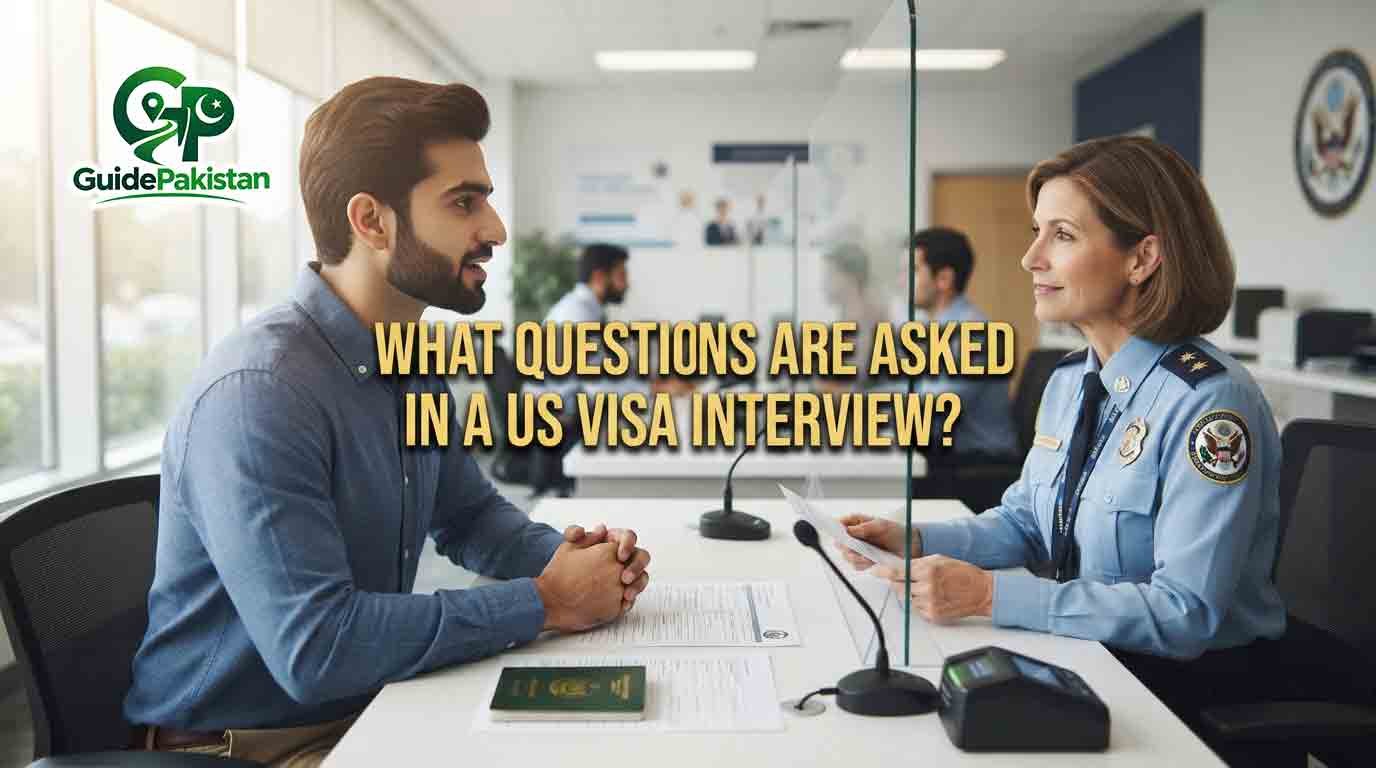
What Questions Are Asked in a US Visa Interview?
A U.S. visa interview is an important part of the application process for many applicants. For Pakistani citizens applying for a nonimmigrant visa such as a B-1/B-2 visitor visa, the consular officer may ask questions about the applicant's travel plans, purpose of the trip, employment, family circumstances, finances, previous travel and other facts relevant to visa eligibility.
There is no official fixed list of questions that every applicant will be asked. The U.S. Department of State says that a consular officer interviews the applicant to determine whether the applicant qualifies for the requested visa. For visitor visas, the officer may consider the purpose of the trip, intent to depart the United States after the temporary visit, ability to pay applicable costs, and the applicant's individual circumstances.
This means that applicants should not try to memorize a standard set of answers. Instead, they should understand their own application and be prepared to explain their genuine circumstances clearly and truthfully.
What Does the Visa Officer Want to Know?
For a visitor visa, the interview generally focuses on whether the applicant qualifies for temporary travel under the requested visa category.
The Department of State explains that officers consider each application individually, including factors such as:
-
The purpose of travel
-
Travel plans
-
Financial resources
-
Ties outside the United States
-
The applicant's individual circumstances
For a nonimmigrant applicant, U.S. law also creates a presumption of immigrant intent under Section 214(b). An applicant must establish that they qualify for the requested nonimmigrant status and overcome that presumption.
The Department of State gives examples of ties to a person's home country, including a job, home and family or other relationships. It also emphasizes that strong ties vary from person to person and from one location to another.
Common US Visa Interview Questions
The following are examples of questions that may arise during a U.S. visitor visa interview. They are examples, not an official questionnaire.
1. Why Are You Going to the United States?
This is one of the most natural questions for a visitor visa applicant.
The answer should match the actual purpose stated in the application.
For example, if your genuine purpose is tourism, explain that you intend to visit particular places or take a vacation. If you are visiting relatives, explain the genuine relationship and purpose of the visit.
Do not invent a purpose because you think one answer is more likely to result in approval.
2. What Will You Do in the USA?
The officer may want to understand your planned activities.
For a B-2 visitor visa, permitted activities include tourism, vacation and visiting friends or relatives. Certain activities, such as ordinary employment or degree study, require different visa categories.
Your answer should therefore correspond with the activities permitted under your visa category.
3. How Long Will You Stay?
You may be asked about the planned duration of your visit.
Give your genuine intended duration.
If you have a specific itinerary, explain it simply. Do not give a longer or shorter period simply because you believe it sounds more convincing.
4. Where Will You Stay?
The officer may ask where you intend to stay.
You might be staying at:
-
A hotel
-
A relative's home
-
A friend's home
-
Other accommodation
Give the information that actually applies to your trip.
If your arrangements are not finalized, do not claim that a hotel or other accommodation has already been booked when it has not.
5. Who Is Paying for Your Trip?
A consular officer may ask how your trip will be financed.
You might be paying for the trip yourself, or another person may cover some or all expenses.
The Department of State specifically notes that applicants may provide evidence showing their ability to pay the costs of the trip. If another person will cover some or all costs, evidence of that arrangement may be relevant.
The important point is accuracy.
6. What Do You Do in Pakistan?
Your occupation can be relevant to understanding your circumstances.
The officer may ask whether you are:
-
Employed
-
Self-employed
-
A business owner
-
A student
-
Retired
-
Unemployed
Explain your actual situation.
If you own a business, be prepared to describe what the business does and your role in it.
7. How Long Have You Worked There?
If you are employed, you may be asked about your employer and length of employment.
Give the actual information.
An applicant should not exaggerate the length of employment or invent an employer to create stronger-looking ties.
8. What Is Your Monthly Income?
The officer may ask about income when it is relevant to the application.
If asked, provide accurate information.
Your answer should be consistent with the financial information and circumstances presented in your application.
9. Do You Own a Business?
Business owners may be asked about their company or commercial activities.
Possible follow-up questions could concern:
-
Type of business
-
Business location
-
Your role
-
How long the business has operated
-
Who manages the business while you travel
There is no need to give a long presentation. Answer what is asked accurately.
10. Do You Have Property in Pakistan?
Property may be part of an applicant's overall circumstances, but owning property does not automatically qualify someone for a visa.
If asked, give truthful information about property ownership or other relevant circumstances.
Do not claim that you own a property if it belongs to someone else.
11. Are You Married?
The officer may ask about marital status.
Answer truthfully.
Family circumstances can form part of the overall information considered in a nonimmigrant visa application.
12. Do You Have Children?
You may be asked about your children, particularly when family circumstances are relevant to the application.
Give accurate information.
13. Do You Have Relatives in the United States?
This is another possible question.
If you have relatives in the United States, state the relationship accurately.
Having relatives in America does not automatically mean that a visitor visa will be refused, nor does it automatically guarantee approval. The application is considered individually.
14. Who Are You Visiting?
If the purpose of your trip includes visiting someone, you may be asked about that person.
Be prepared to explain:
-
Name
-
Relationship
-
Where the person lives
-
Why you are visiting
-
How long you intend to stay
Only provide information that is accurate.
Questions About Your Travel History
15. Have You Travelled Abroad Before?
The officer may ask about your previous international travel.
If you have travelled to other countries, explain your travel history accurately.
16. Have You Ever Visited the United States?
If you have previously visited the United States, you may be asked about:
-
When you travelled
-
Purpose of the trip
-
Length of stay
-
Previous visa category
-
Whether you complied with the terms of your stay
Answer truthfully.
17. Have You Ever Been Refused a US Visa?
If you previously applied for a U.S. visa and were refused, do not hide the refusal.
Previous visa applications can be relevant to the current application.
If the officer asks why you were refused previously, explain the actual circumstances.
Questions About Your Plans to Return to Pakistan
18. Why Will You Return to Pakistan?
This can be an important area for a visitor visa applicant.
Under Section 214(b), most nonimmigrant applicants are presumed to be immigrants unless they establish that they qualify for nonimmigrant status. The Department of State explains that officers consider ties outside the United States that may support the applicant's intention to depart after a temporary stay.
The answer should be based on your real circumstances.
For example, your circumstances may include:
-
Employment
-
Business
-
Family
-
Home
-
Education
-
Other continuing commitments
Do not memorize a statement such as "I will definitely return" without being able to explain the actual reasons.
19. What Will You Do After Returning to Pakistan?
The officer may ask about your plans after the proposed U.S. trip.
Explain your genuine plans.
An employee might return to work. A business owner might return to operate the business. A student might return to continue studies.
The correct answer depends entirely on your circumstances.
Questions About Money
20. How Much Will Your Trip Cost?
A consular officer may ask about the expected cost of the trip.
Give a reasonable estimate based on your actual travel plans if asked.
Do not invent an unrealistically low or high amount.
21. How Much Money Do You Have?
The officer may ask about financial resources.
There is no universal bank-balance amount that automatically qualifies an applicant for a visitor visa.
The Department of State says officers may consider the applicant's ability to pay the costs of the trip as part of the application.
Financial resources should therefore be presented honestly and in the context of the proposed trip.
22. Who Will Pay for Your Travel?
If someone else will pay for the trip, explain the actual arrangement.
For example, a family member may cover certain expenses.
Do not describe someone as a sponsor if that is not actually the arrangement.
Questions About Family in America
23. Do You Have Family Members in the USA?
Answer honestly.
A family connection in the United States can be part of the factual circumstances of the application.
However, the existence of a U.S. relative does not replace the requirement to qualify for the visitor visa.
24. What Does Your Relative Do in America?
If you are visiting a relative, the officer may ask about the relative's circumstances.
Provide accurate information about their relationship and situation if asked.
25. Where Does Your Relative Live?
Give the genuine location.
If you do not know an exact address, do not invent one.
Questions About Immigration Intent
26. Are You Planning to Work in the United States?
If you are applying for a standard visitor visa, answer truthfully.
Ordinary employment is not a permitted activity under a B-1/B-2 visitor visa.
If you actually intend to work in the United States, you should not misrepresent that purpose as tourism.
27. Are You Planning to Study in the United States?
Again, answer honestly.
Degree study generally requires an appropriate student visa rather than a standard visitor visa.
28. Are You Planning to Stay Permanently?
If asked, answer truthfully.
A visitor visa is for temporary travel. Permanent residence is a different immigration purpose and generally requires a different immigration pathway.
Questions About Your DS-160
29. What Did You Write in Your DS-160?
The officer may ask about information contained in your application.
This is one reason applicants should review their DS-160 carefully before the interview.
The Department of State requires applicants to complete the DS-160 accurately and bring the confirmation page to the interview.
30. What Is Your Travel Plan?
Your answer should be consistent with the information in the DS-160.
If your plans changed after submitting the form, explain the change honestly if asked.
Do not try to conceal relevant changes.
Questions About Previous Immigration History
Depending on the applicant's circumstances, an officer may ask about previous:
-
U.S. visas
-
Visa refusals
-
Immigration applications
-
Visits to the United States
-
Overstays
-
Immigration violations
The correct response is always truthful.
Immigration history can be relevant to determining visa eligibility.
Does Every Applicant Get the Same Questions?
No.
There is no official universal interview script.
The Department of State says the officer considers each application individually and evaluates factors such as the applicant's circumstances, travel plans, financial resources and ties outside the United States.
Consequently, one applicant may receive several questions about employment while another may receive more questions about travel history or family.
The questions can also differ because applicants apply for different visa categories.
How Should You Answer US Visa Interview Questions?
The best preparation is not memorizing a long list of perfect answers.
Instead, understand your own application.
Be Truthful
Never invent information.
False or misleading information can have serious immigration consequences.
Keep Answers Relevant
If the officer asks, "What do you do?" answer that question.
There is usually no need to give a five-minute explanation of your entire life unless the officer asks for additional information.
Be Consistent
Your answers should make sense alongside your DS-160 and supporting information.
If there is an error in your application, do not try to hide it.
Know Your Travel Plans
You should understand:
-
Why you are travelling
-
Where you intend to go
-
How long you intend to stay
-
Who is travelling with you
-
Where you plan to stay
-
Who will pay for the trip
Know Your Own Financial Situation
If asked about the cost of the trip or how you will pay for it, you should be able to explain your genuine financial arrangements.
Do Not Memorize Fake Answers
Memorized answers can become problematic if they do not accurately describe your circumstances.
The Department of State specifically expects applicants to be forthcoming about their purpose and plans and to prepare to describe their intentions clearly and concisely.
Is a Bank Statement Always Required?
Not necessarily as a universal interview document for every applicant.
The Department of State's visitor visa guidance lists the core required documents and explains that additional documentation may be requested to establish the purpose of travel, intent to depart and ability to pay travel costs.
Therefore, do not assume that an internet article's claimed minimum bank balance is an official U.S. requirement.
Your financial circumstances should be genuine and consistent with your proposed trip.
Is an Invitation Letter Required?
The Department of State states that a letter of invitation or Affidavit of Support is not needed to apply for a visitor visa.
It also explains that visitor visa applicants qualify based on their own ties abroad rather than assurances from U.S. family members or friends.
This does not mean that information about a person you are visiting is irrelevant. It means an invitation letter is not a mandatory substitute for demonstrating your own eligibility.
What If You Do Not Understand the Question?
Do not guess.
Politely ask the officer to repeat or clarify the question.
The goal is to communicate your actual circumstances accurately.
If language assistance is relevant, check the current instructions of the U.S. Embassy or Consulate where your interview is scheduled.
Should You Bring Extra Documents?
Applicants should bring the required documents and any relevant supporting documentation appropriate to their circumstances.
The Department of State notes that additional documents may be requested to establish:
-
Purpose of the trip
-
Intent to depart
-
Ability to pay the costs of the trip
It also states that evidence of employment and family ties may be sufficient in some cases.
Do not bring fabricated documents or documents containing false information.
What Can Cause Problems During the Interview?
Applicants should avoid:
Giving False Information
Never invent an employer, income, property, relationship, travel history or purpose of travel.
Giving Contradictory Answers
If your DS-160 says you are travelling for tourism but your interview answers indicate that your actual purpose is employment, that inconsistency can create serious problems.
Hiding Previous Refusals
Answer questions about previous visa applications accurately.
Claiming You Will Return Without Explaining Your Circumstances
If asked about your return to Pakistan, explain your genuine commitments rather than relying on a memorized sentence.
Treating an Agent's Script as Your Own Story
A private agent does not know your circumstances better than you do.
Your answers should describe your real situation.
Does a US Visa Interview Guarantee Approval?
No.
The interview is part of the adjudication process. The Department of State explains that a consular officer determines whether an applicant qualifies for the requested visa under U.S. law.
Even after an interview, an application can require further administrative processing.
Therefore:
Interview appointment ≠ visa approval
Visa fee payment ≠ visa approval
Invitation letter ≠ visa approval
Bank balance ≠ visa approval
The decision depends on the applicant's eligibility and the applicable law.
How Section 214(b) Relates to the Interview
Section 214(b) is particularly relevant to many nonimmigrant visa applicants.
The Department of State explains that a refusal under Section 214(b) can mean the applicant did not sufficiently demonstrate that they qualified for the requested nonimmigrant category or did not overcome the presumption of immigrant intent.
The Department also explains that ties can include a job, home and relationships with family and friends, although the strength and nature of ties vary between individuals.
This is why questions about employment, family, property, finances and future plans can arise during a visitor visa interview.
Practical Preparation Checklist
Before your interview, review the following:
Personal Information
Make sure you know the information contained in your DS-160, including your passport and personal details.
Travel Purpose
Be able to explain why you are going to the United States.
Travel Duration
Know your genuine intended duration.
Accommodation
Know where you plan to stay.
Travel Companions
Know who will travel with you.
Financial Arrangements
Know who will pay for your trip and how the expenses will be handled.
Employment or Business
Be prepared to explain your current occupation accurately.
Family
Know the relevant information about your immediate family and any relatives you intend to visit.
Previous Travel
Review your previous U.S. and international travel history.
Previous Visa Applications
Be prepared to answer accurately about previous U.S. visa applications and refusals.
Final Advice for Pakistani Applicants
There is no magic list of U.S. visa interview questions that guarantees success.
The questions depend on the applicant, visa category and circumstances. For Pakistani applicants seeking a B-1/B-2 visitor visa, questions commonly may concern the purpose of travel, itinerary, duration, accommodation, finances, employment, family, previous travel and reasons for returning to Pakistan.
The most useful preparation is to understand your own application thoroughly.
Review your DS-160 before the interview. Make sure your information is accurate. Know your genuine travel plans. Be able to explain who is paying for the trip. Understand your employment, business or educational circumstances. Be prepared to discuss relevant family and travel history.
Most importantly, answer truthfully and concisely.
The U.S. Department of State says applicants should be forthcoming about their purpose and plans and should be prepared to describe their intentions clearly and concisely.
For current requirements, applicants should rely on the U.S. Department of State and the U.S. Embassy or Consulate responsible for their application rather than unofficial interview-question lists.
The questions above can help you understand the areas that may be discussed, but they should be used for preparation—not as a script to memorize.
Guide Information
Eligibility
Interview requirements depend on the visa category and the applicant's circumstances. Interviews are generally required for U.S. visa applicants, subject to limited exceptions. For a visitor visa, the applicant must establish eligibility for the requested category and satisfy the applicable requirements under U.S. law.
Required Documents
For a typical B-1/B-2 interview, applicants should have a valid passport, DS-160 confirmation page, visa application fee payment receipt where required, and a photograph if the online photo submission did not meet the applicable requirements. Additional supporting documents may be appropriate depending on the purpose of travel and individual circumstances.
Fees
The current application processing fee for B-1/B-2 visitor visas is US$185. The fee is non-refundable. Interview questions themselves do not have a separate government fee.
Processing Time
The interview itself may be brief, but the overall visa process can take longer because of appointment availability, administrative processing, document review, or other circumstances. No specific approval or processing time is guaranteed.WHEN TO APPLY:Apply sufficiently early to allow time for completing the DS-160, paying the fee, obtaining an interview appointment, and completing any additional processing that may be required. The Department of State advises applicants to plan ahead because appointment wait times vary.
Application Method
Complete the DS-160 online, follow the current U.S
Validity Period
Interview validity applies only to the scheduled appointment date and time. A visa's validity period
Step-by-Step Process
- Identify the correct U.S. visa category.
- Understand the purpose for which that visa category is issued.
- Review the current official requirements for your category.
- Complete the DS-160 if applying for a nonimmigrant visa.
- Make sure your DS-160 answers are accurate.
- Review your personal information before submission.
- Review your travel information before submission.
- Submit the DS-160 electronically.
- Save the DS-160 confirmation page.
- Pay the applicable visa application fee.
- Schedule the required interview.
- Review the appointment confirmation.
- Check the interview location and time.
- Prepare your passport.
- Prepare the DS-160 confirmation page.
- Prepare the fee-payment receipt if required.
- Review the information you entered in the DS-160.
- Review the purpose of your proposed trip.
- Be prepared to explain where you plan to travel.
- Be prepared to explain how long you plan to stay.
- Be prepared to explain who will pay for the trip.
- Be prepared to explain your occupation or business.
- Be prepared to explain relevant family circumstances.
- Be prepared to explain previous international travel if asked.
- Review your previous U.S. travel history if applicable.
- Review any previous U.S. visa refusals if applicable.
- Prepare truthful answers rather than memorized scripts.
- Bring documents relevant to your individual circumstances.
- Arrive according to the official interview instructions.
- Follow security procedures at the visa post.
- Answer the consular officer's questions directly.
- Do not provide false or misleading information.
- Ask for clarification if you genuinely do not understand a question.
- Keep answers relevant to the question.
- Do not invent information because you think it will improve your chances.
- Make sure your answers are consistent with your DS-160.
- Explain your intended temporary travel clearly when applying for a visitor visa.
- Explain your circumstances in Pakistan accurately when relevant.
- Provide additional documents if the consular officer requests them.
- Follow any instructions given after the interview.
- If administrative processing is required, follow the official instructions.
- Monitor your application or passport status through the applicable official system.
- Do not assume that an interview guarantees approval.
- Do not make false claims about employment, income, relatives, property, or travel plans.
- Keep copies of important application records.
- Check the final visa information carefully if the visa is issued.
- Follow the admission requirements separately when travelling to the United States.
- Remember that a visa does not itself guarantee admission to the United States.
Official Information
Official Website: https://travel.state.gov/content/travel/en/us-visas/tourism-visit/visitor.html
Contact: Use the current official U.S. Embassy or Consulate and U.S. Department of State contact information for visa-related questions. Contact procedures can change and should be verified on official websites before use.
Frequently Asked Questions
Questions depend on the visa category and individual circumstances. For a visitor visa, the officer may ask about the purpose of travel, planned activities, length of stay, finances, employment, family circumstances, previous travel, and other information relevant to eligibility.
There is no single officially designated most important question. The officer considers the applicant's overall circumstances, travel purpose, financial resources, and ties outside the United States.
Answer truthfully and briefly according to your actual purpose, such as tourism, visiting relatives, or another activity permitted under the B-1/B-2 category.
State your genuine planned duration. Do not give an artificial answer simply because you think a particular duration sounds better.
Give the actual accommodation or location you plan to use if you have made those arrangements. If plans are not finalized, explain that honestly.
Explain truthfully whether you will pay yourself or whether another person will cover some or all of the expenses.
Explain your actual occupation, business, studies, or other relevant activity clearly and accurately.
If asked, provide your actual income information rather than an estimated or invented figure.
Answer according to your actual marital status.
Answer truthfully and provide the relevant information if asked.
Answer honestly. Having relatives in the United States does not by itself determine the outcome of a visitor visa application.
If you are visiting someone, explain your genuine relationship and the purpose of the visit.
Give an accurate account of relevant international travel if asked.
Answer accurately, including previous U.S. travel when applicable.
If you have previously been refused, answer truthfully and explain the circumstances if the officer asks for more information.
Answer truthfully. Previous immigration history can be relevant to visa eligibility.
If asked, explain your actual property ownership or other relevant circumstances. Do not claim ownership that you do not have.
Explain your genuine circumstances and commitments. Under U.S. law, nonimmigrant applicants are generally presumed to have immigrant intent unless they establish eligibility for nonimmigrant status.
Relevant ties can include employment, home, family relationships, and other circumstances connecting you to Pakistan.
State your actual employment status, employer or business information, and role when relevant.
Give the truthful length of your employment.
If you operate a business, explain what it does and your actual role.
Describe your genuine business activities in simple terms.
If asked, explain the actual arrangements for your temporary absence.
Explain the genuine reason for your planned travel dates.
Give the actual destinations you intend to visit, consistent with your stated travel purpose.
Explain your genuine tourism interests or planned activities without inventing reasons.
Answer honestly. A visa interview does not require you to invent a confirmed booking.
State whether you have made accommodation arrangements. Do not claim a booking that does not exist.
Give accurate information about anyone who will actually travel with you.
Explain truthfully whether another person or organization will pay some or all of your expenses.
Give a realistic figure based on your actual plans if asked, rather than an invented amount.
Explain your actual financial situation and how the trip will be funded.
If asked, provide truthful information supported by appropriate records when relevant. There is no universal bank-balance figure that automatically qualifies an applicant for a visitor visa.
Do not memorize a special answer. Explain your actual circumstances, including employment, family, business, property, or other relevant commitments when applicable.
If applying for a visitor visa, answer truthfully. Employment is not a permitted purpose of a standard B-1/B-2 visitor visa.
Answer according to your actual plans. Degree study generally requires an appropriate student visa rather than a visitor visa.
Answer truthfully. Visitor visas are for temporary travel and do not authorize permanent residence.
Explain your genuine employment, business, education, family, or other plans after the proposed trip.
Politely ask the officer to repeat or clarify the question. Do not guess an answer.
No. Applicants should be prepared to explain their genuine circumstances clearly rather than memorizing artificial scripts.
Answer the question directly and provide additional detail when it is relevant or requested.
The important requirement is that you can communicate your circumstances accurately. The U.S. Embassy or Consulate's current interview arrangements should be followed if language assistance is needed.
Yes. There is no fixed public list of questions that every applicant receives. Questions can vary according to the visa category and individual case.
Yes. Family circumstances can be relevant to understanding an applicant's overall ties and travel situation.
Yes. Previous U.S. visa applications and travel history may be relevant to the application.
Yes. Education can be relevant depending on the applicant's circumstances and visa category.
Yes. Employment information can be relevant to understanding the applicant's circumstances.
Yes. The Department of State says additional documentation may be requested to establish the purpose of the trip, intent to depart, or ability to pay applicable travel costs.
The Department of State states that a letter of invitation or Affidavit of Support is not needed to apply for a visitor visa and is not one of the factors used in determining whether to issue or deny the visa.
No. Applicants must independently establish eligibility for the visa category.
No. Property is only one possible part of an applicant's overall circumstances and does not by itself guarantee approval.
No. Financial resources are considered together with other circumstances, including the purpose of travel and ties outside the United States.
No. Employment can be relevant to an applicant's circumstances, but it does not automatically guarantee visa issuance.
Inconsistencies can create concerns about the accuracy of the application. Review your DS-160 carefully and answer truthfully during the interview.
False or misleading information can have serious immigration consequences. Applicants should provide complete and truthful information.
Yes. If you have a previous refusal, the officer may consider your prior application and circumstances.
Yes. Previous international and U.S. travel can be relevant to the application.
The officer is assessing whether the applicant qualifies for the requested visa under U.S. law. For visitor visas, this includes the purpose of travel, circumstances, financial resources, and ties outside the United States.
Section 214(b) of the Immigration and Nationality Act applies to nonimmigrant visa categories and creates a presumption of immigrant intent unless the applicant establishes eligibility for nonimmigrant status.
The Department of State gives examples such as a job, home, and relationships with family and friends. Strong ties vary from person to person.
No. The questions vary according to the applicant, visa category, travel purpose, and information relevant to the case.
Understand your application, review your DS-160, know your genuine travel plans, organize relevant documents, and be prepared to answer questions clearly and truthfully.