PSV in Pakistan – Public Service Vehicle Guide 2026 - PSV Stand for
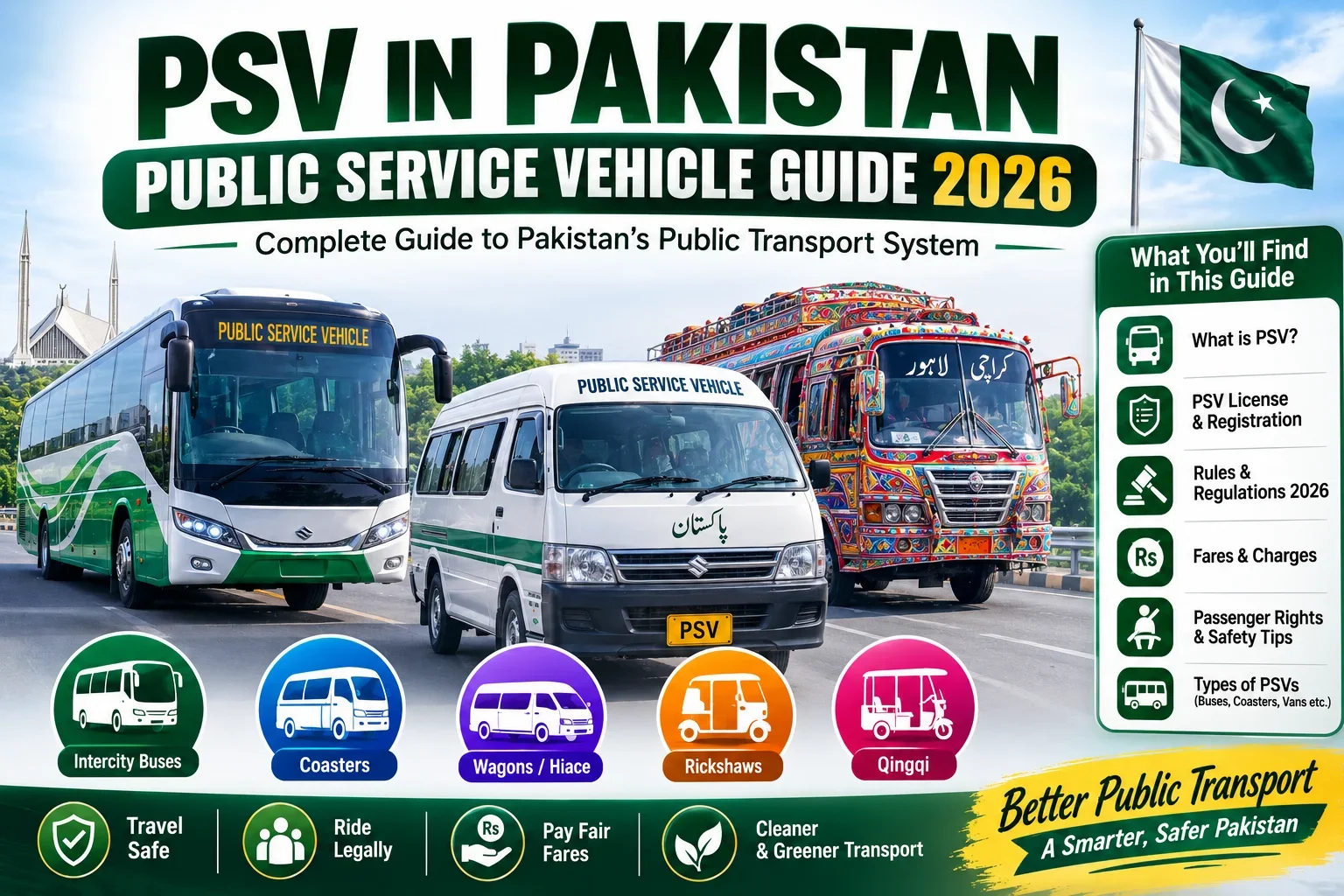
PSV in Pakistan – Public Service Vehicle Guide 2026
What Vehicles Are Considered PSV in Pakistan?
Depending on the vehicle category and applicable provincial or federal rules, public passenger vehicles can include:
- Passenger vans
- Wagons
- Coasters
- Buses
- Public passenger transport vehicles
- Other vehicles authorized to carry passengers for public service
For example, Traffic Police Punjab explains that an LTV/PSV licence can cover light passenger vehicles such as Wagon and Bolan, while an HTV/PSV licence can cover heavy passenger vehicles such as buses and coasters.
What Is a PSV Driving Licence?
A PSV driving licence or authorization allows a qualified driver to operate the relevant category of public service vehicle.
The exact requirements can vary according to the licensing authority and vehicle category. The National Highways & Motorway Police licensing rules specifically define a "PSV endorsement" as authorization added to a licence to drive a specified Public Service Vehicle.
What Is the Difference Between LTV, HTV and PSV?
LTV means Light Transport Vehicle.
HTV means Heavy Transport Vehicle.
PSV means Public Service Vehicle.
LTV and HTV generally describe the vehicle class, while PSV relates to the authorization for operating a vehicle used for public passenger transport.
For example:
- LTV = Light Transport Vehicle
- HTV = Heavy Transport Vehicle
- PSV = Public Service Vehicle
A driver may therefore have an LTV/PSV or HTV/PSV authorization depending on the type of passenger vehicle they are permitted to drive.
PSV Licence Requirements in Pakistan
PSV licensing requirements can differ depending on the province and licensing authority.
Applicants may need to meet requirements relating to:
- Minimum age
- Existing driving licence
- Driving experience
- Medical fitness
- Learner permit
- Driving test
- Sign/theory test
- Practical driving test
- Required identification documents
- Applicable PSV authorization
For example, Punjab's official driving-licence information lists PSV as a licence category and provides separate fees and testing requirements.
PSV Driver Documents
PSV drivers should carry the documents required for their vehicle and route.
Traffic Police Punjab specifically advises PSV drivers to carry their:
- Driving licence
- Vehicle registration certificate
- Fitness certificate
- Route permit
PSV drivers are also instructed to operate according to their permitted route and maintain a valid fitness certificate.
PSV Safety Requirements
Public service vehicles have additional safety responsibilities because they transport passengers.
Drivers and operators should ensure that:
- The vehicle is properly maintained
- Brakes are working correctly
- Tyres are in good condition
- Lights are functioning
- Required documents are valid
- The vehicle does not exceed its permitted passenger capacity
- The vehicle follows its authorized route
- The driver follows the prescribed speed limit
- The driver does not use a mobile phone while driving
Traffic Police Punjab specifically advises PSV drivers not to overload vehicles, follow their route permit, observe speed limits and avoid mobile-phone use while driving.
PSV Fitness Certificate
A fitness certificate is an important requirement for applicable public service vehicles.
The purpose is to ensure that the vehicle is suitable for safe operation. NHMP's PSV management system includes monitoring of PSV fitness, route permits and safety equipment.
PSV operators should make sure that the vehicle's fitness documentation remains valid before operating it.
PSV Route Permit
A route permit authorizes an applicable public service vehicle to operate on a specified route.
PSV drivers should follow the route authorized by the relevant transport authority and should not assume that a permit for one route automatically authorizes operation on another route.
Traffic Police Punjab specifically instructs PSV drivers to follow their route permit and operate only on the notified route.
PSV Speed Limit in Pakistan
PSV speed limits depend on the type of road and applicable restrictions.
For motorways, NHMP announced in June 2026 that the previously prescribed speed limits were restored, including 110 km/h for PSVs and HTVs. Drivers must still follow any lower speed limit displayed on a particular section of road.
PSV Overloading Rules
A public service vehicle should not carry passengers beyond its permitted capacity.
Overloading is a serious safety concern because it can affect vehicle stability, braking performance and passenger safety.
Punjab's published traffic penalty schedule includes penalties for carrying passengers in a PSV beyond the permitted limit.
NHMP has also conducted enforcement campaigns against PSVs for overloading and other violations.
PSV Fire Extinguisher Requirement
In 2026, NHMP introduced stronger fire-safety requirements for public service and cargo vehicles operating on national highways and motorways.
NHMP announced that public service and cargo vehicles must carry functional fire extinguishers and that enforcement would apply to vehicles entering national highways and motorways. Drivers and operators should ensure that the extinguisher is serviceable, has adequate pressure and is within its validity period.
PSV Drivers on Long Routes
Long-distance passenger transport requires additional attention to driver fatigue.
NHMP has emphasized the importance of safety for long-route passenger buses and has directed that such buses comply with requirements concerning multiple drivers to reduce crashes associated with fatigue and drowsiness.
PSV Licence in Punjab
Punjab has a specific PSV category within its driving-licence system.
According to Traffic Police Punjab's current information, the published regular licence schedule includes a separate PSV category, with a listed renewal rate and testing fee.
Because licence requirements and fees can change, applicants should verify the latest information with the relevant licensing authority before applying.
PSV Licence in Pakistan – Important Note
There is not necessarily one identical PSV licensing procedure throughout Pakistan.
Requirements can differ between:
- Punjab
- Sindh
- Khyber Pakhtunkhwa
- Balochistan
- Islamabad
- National highways and motorways
Therefore, anyone applying for a PSV licence should check the requirements of the licensing authority responsible for their area.
PSV Meaning in Driving Licence
When you see "PSV" on a Pakistani driving licence, it generally indicates authorization relating to Public Service Vehicles.
It does not simply mean that the person has an ordinary private-car driving licence. The authorization relates to operating the relevant passenger-service vehicle category.
PSV vs Private Vehicle
A private vehicle is generally used for personal transportation.
A PSV is used to provide passenger transportation as a public or commercial service.
For example:
Private car → Personal transportation
PSV van → Passenger/public transport service
PSV bus → Public passenger transport
The exact legal classification depends on the applicable vehicle and transport regulations.
Why Is PSV Licensing Important?
PSV licensing helps authorities ensure that drivers operating passenger vehicles meet appropriate requirements.
It also supports:
- Passenger safety
- Driver qualification
- Vehicle fitness
- Route compliance
- Traffic-law enforcement
- Commercial transport regulation
NHMP operates a Public Service Vehicle Management Information System that monitors PSV-related information including routes, speed and traffic violations.
Frequently Asked Questions
PSV stands for Public Service Vehicle.
A PSV is a vehicle authorized for carrying passengers as a public or commercial transport service.
A PSV driving licence or authorization permits a qualified driver to operate the applicable category of public service vehicle.
LTV means Light Transport Vehicle, while PSV means Public Service Vehicle. LTV describes a vehicle category, whereas PSV relates to passenger-service authorization.
HTV means Heavy Transport Vehicle, while PSV means Public Service Vehicle. A heavy passenger vehicle may require an HTV/PSV authorization.
Not automatically. The driver must have the appropriate PSV authorization for the relevant passenger vehicle category.
An HTV licence alone should not be assumed to authorize passenger-service operation. The appropriate PSV authorization may also be required.
PSV authorization is associated with operating public passenger-service vehicles, which are commonly used for commercial or public transport.
Depending on the jurisdiction and vehicle, a PSV driver may need a valid driving licence, vehicle registration, fitness certificate and route permit.
Applicable public service vehicles are required to maintain the required fitness documentation. Traffic authorities use fitness requirements to help ensure passenger vehicles remain safe to operate.
Applicable PSVs generally need the required route authorization and must operate according to the permitted route.
No. PSVs should not carry passengers beyond their legally permitted capacity.
The generally restored motorway speed limit for PSVs is 110 km/h, subject to lower posted speed limits and other restrictions.
PSV drivers should not use a mobile phone while driving. Traffic Police Punjab specifically advises PSV drivers not to use a cell phone while operating the vehicle.
It indicates authorization relating to Public Service Vehicles.
No. Licensing requirements and procedures can vary between provinces and licensing authorities.
You should apply through the relevant driving-licensing authority in your province or jurisdiction.
Medical requirements can apply to commercial and PSV licensing. The exact requirements depend on the relevant licensing authority.
Licensing authorities can require theory, sign, medical and practical driving tests depending on the licence category and applicable rules.
The vehicles permitted depend on the specific PSV authorization and underlying vehicle category, such as light or heavy passenger vehicles. :::