How to Visit Chinese Factories as a Pakistani Business Owner?
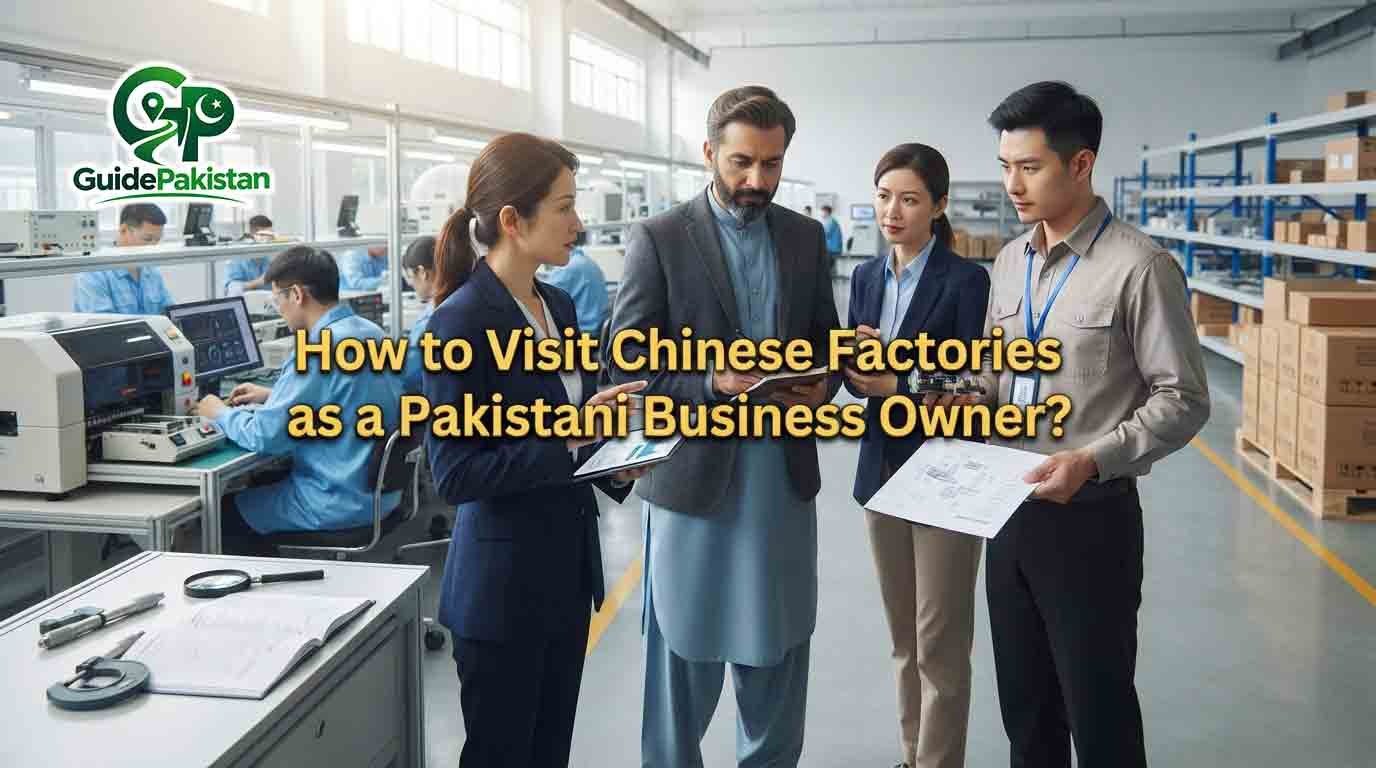
How to Visit Chinese Factories as a Pakistani Business Owner?
Visiting a Chinese factory can be one of the most valuable steps a Pakistani business owner can take before placing a large order. A factory visit allows you to see the production environment, meet the supplier's team, understand manufacturing capabilities, inspect quality-control practices, discuss customization, negotiate commercial terms, and build a stronger business relationship.
However, a successful factory visit requires more preparation than simply booking a flight to China and asking a supplier to show you around.
A Pakistani importer should plan the trip around business objectives, supplier verification, visa requirements, travel arrangements, factory appointments, product inspections, commercial negotiations, and follow-up actions.
The purpose of the visit should be clear before leaving Pakistan.
Why Pakistani Business Owners Should Visit Chinese Factories
A factory visit gives an importer an opportunity to verify information that may be difficult to understand through websites, photographs, videos, or online meetings.
During a visit, you may be able to observe:
-
Production areas
-
Machinery
-
Assembly lines
-
Workers and production staff
-
Raw-material storage
-
Finished-goods storage
-
Packaging operations
-
Quality-control procedures
-
Testing equipment
-
Production capacity
-
Safety practices
-
Management structure
-
Product development capabilities
A physical visit can also help you determine whether the company you are dealing with is actually connected to the manufacturing operation you are being shown.
This does not mean a factory visit alone proves that every supplier claim is accurate. Proper verification should still include business documents, references, samples, inspection, contracts, and other appropriate due diligence.
Decide What You Want to Achieve Before Traveling
Do not travel to China simply because a supplier invited you.
Write down the objectives of the trip.
For example:
-
Verify a supplier
-
Inspect production
-
Negotiate a large order
-
Discuss OEM manufacturing
-
Develop private-label products
-
Approve samples
-
Discuss packaging
-
Evaluate machinery
-
Review quality systems
-
Meet factory management
-
Find alternative suppliers
-
Develop a long-term sourcing relationship
A clear objective helps you decide which factories to visit and how much time to spend at each location.
Identify the Right Chinese Suppliers Before the Trip
Do not wait until you arrive in China to start looking for suppliers.
Research suppliers before traveling.
Review:
-
Company information
-
Product range
-
Factory location
-
Manufacturing capabilities
-
Years of operation
-
Export experience
-
Product certifications where relevant
-
Customer references where available
-
Communication quality
-
Sample quality
-
Quotation quality
-
Minimum order quantity
-
Production lead time
Shortlist suppliers before booking factory appointments.
Do Not Visit Every Supplier Without Prior Screening
A factory tour takes time and money.
If you visit ten suppliers without screening them first, much of your trip may be wasted.
Create a shortlist and prioritize suppliers based on your business requirements.
For example:
Supplier A: High priority
Supplier B: High priority
Supplier C: Medium priority
Supplier D: Backup
This allows you to focus on suppliers that can realistically meet your requirements.
Contact Suppliers Before Traveling
Contact the supplier well before your planned trip.
Tell them:
-
Your name
-
Your company
-
Your product interest
-
Your expected order volume
-
Your intended visit dates
-
The purpose of the visit
-
The factory location
-
The topics you want to discuss
Ask whether the factory can receive visitors on the proposed dates.
Get the appointment confirmed in writing.
Understand the Chinese Business Visa Requirement
A Pakistani business owner traveling to mainland China for commercial or trade activities may need the appropriate Chinese visa category.
The Chinese Visa Application Service Center currently identifies the M category for commercial trade activities. Current Pakistan-specific guidance also lists requirements involving an invitation from a Chinese organization or other supporting documentation depending on the circumstances.
Visa requirements can change, so applicants should check the current instructions for their relevant Chinese Visa Application Service Center and Chinese diplomatic mission before applying.
Do not assume that an old visa checklist is still valid.
Obtain the Correct Invitation Documentation
If a Chinese factory is inviting you, ask the company what invitation documentation it can provide for your visa application.
The current commercial-trade guidance refers to invitation documentation such as an Invitation Letter (TE), Verification Letter of Invitation, or an ordinary invitation letter in applicable circumstances.
The invitation should accurately reflect:
-
Your identity
-
Your company
-
Purpose of visit
-
Dates
-
Places you will visit
-
Chinese inviting organization
-
Business relationship
-
Relevant financial arrangements
Do not ask a supplier to provide false information.
Prepare Your Pakistani Business Documents
Depending on your circumstances and the current visa requirements, keep your business documentation organized.
Potential documents may include:
-
Passport
-
CNIC
-
Company registration documents
-
Business license or registration evidence
-
Tax-related records where applicable
-
Bank statements
-
Supplier correspondence
-
Purchase discussions
-
Invitation documentation
-
Previous China travel records
-
Hotel information
-
Travel itinerary
The exact visa requirements should be checked from the current official instructions before submission.
Check Your Passport
Before applying, make sure your passport meets the current validity and blank-page requirements.
The current Pakistan commercial-trade guidance states that the passport should generally have more than six months of validity and at least one blank visa page for the M-visa application.
Do not leave passport checking until the last moment.
Plan the Trip Around Factory Locations
China's manufacturing industry is spread across many cities and industrial regions.
If your suppliers are located in different areas, calculate the travel time between them.
Do not create a schedule such as:
Factory A at 9:00 AM
Factory B at 11:00 AM
Factory C at 1:00 PM
unless the locations and transportation realistically make that possible.
Allow time for traffic, security procedures, factory registration, meetings, meals, and unexpected delays.
Group Factory Visits by Location
If several suppliers are located in the same city or industrial area, schedule them together.
This can reduce:
-
Hotel changes
-
Domestic travel
-
Transportation costs
-
Lost time
-
Scheduling risk
A geographic itinerary is usually more efficient than randomly moving between cities.
Book Factory Appointments in Advance
Never assume a factory will receive you simply because you are nearby.
Confirm:
-
Date
-
Arrival time
-
Factory address
-
Contact person
-
Phone number
-
WeChat contact
-
Meeting room
-
Factory tour availability
-
People attending the meeting
Ask for the exact location pin if appropriate.
Confirm Who Will Meet You
Find out whether you will meet:
-
Salesperson
-
Export manager
-
Factory manager
-
General manager
-
Owner
-
Production manager
-
Quality manager
-
Engineer
For a major investment or large order, meeting management can be particularly valuable.
Prepare a Factory Visit Checklist
Before leaving Pakistan, prepare a checklist.
You can include:
-
Factory size
-
Production lines
-
Machinery
-
Number of production workers
-
Production capacity
-
Raw-material storage
-
Quality control
-
Testing
-
Packaging
-
Warehouse
-
Product traceability
-
Safety
-
Certifications
-
Lead time
-
Subcontracting
-
Export experience
The checklist prevents you from relying only on first impressions.
Observe the Factory From the Moment You Arrive
Pay attention before the formal presentation begins.
Observe:
-
Entrance
-
Reception
-
Production areas
-
Warehouse
-
Loading area
-
Packaging
-
General cleanliness
-
Organization
-
Worker activity
-
Material movement
You may notice useful information during the normal factory tour that does not appear in a supplier presentation.
Ask to See Production Areas
A showroom can look impressive while the actual production operation may be different.
Where appropriate and permitted, ask to see the actual production area.
Look for:
-
Relevant machinery
-
Production processes
-
Workers
-
Quality-control stations
-
Raw materials
-
Work-in-progress
-
Finished products
The goal is not to interfere with production but to understand the supplier's actual capabilities.
Ask About Production Capacity
Do not ask only:
"How many products can you make?"
Ask more practical questions.
For example:
-
What is normal monthly capacity?
-
What is current utilization?
-
How much capacity is available for new orders?
-
What happens during peak season?
-
Which processes are outsourced?
-
What is the normal production lead time?
-
What is the maximum practical order size?
Capacity claims should be considered alongside actual production evidence.
Ask Whether Production Is Outsourced
Some factories perform certain processes internally while outsourcing others.
Ask whether your product involves:
-
Outsourced machining
-
External printing
-
Outside packaging
-
Third-party assembly
-
External coating
-
Contract manufacturing
This matters because the actual supply chain may involve more companies than the importer initially realizes.
Review Quality-Control Procedures
Quality should be one of the most important parts of the factory visit.
Ask:
-
Who checks incoming materials?
-
Who checks production?
-
Who performs final inspection?
-
What testing equipment is used?
-
How are defective products handled?
-
Are inspection records maintained?
-
How are customer specifications controlled?
For technical products, ask questions relevant to the specific product and applicable standards.
Compare the Factory With Your Samples
Take your approved sample, specification sheet, drawings, photographs, or reference product to the meeting.
Discuss differences between:
-
Sample
-
Production version
-
Material
-
Dimensions
-
Color
-
Finish
-
Packaging
-
Performance
For customized products, written specifications are particularly important.
Discuss Raw Materials
Ask the factory where important raw materials come from.
You may want to know:
-
Material type
-
Grade
-
Supplier
-
Availability
-
Lead time
-
Alternative material
-
Quality-control process
Do not assume that a product will always be manufactured with exactly the same material unless the specification is clearly agreed.
Discuss Packaging
Packaging should be reviewed before placing a major order.
Discuss:
-
Carton size
-
Product protection
-
Inner packaging
-
Labels
-
Barcodes
-
Printed packaging
-
Shipping marks
-
Private-label requirements
-
Export packaging
Good packaging can reduce damage during international transportation.
Discuss Private Label and OEM Requirements
If you want your own brand, discuss:
-
Logo placement
-
Product labeling
-
Packaging
-
Manuals
-
Product colors
-
Product design
-
Minimum order quantity
-
Artwork approval
-
Mold ownership
-
Tooling costs
-
Intellectual-property arrangements
Do not rely only on verbal promises.
Important commercial terms should be documented.
Discuss Tooling and Molds Carefully
If your product requires a mold, die, fixture, or specialized tooling, ask:
-
Who owns the tooling?
-
Who pays for it?
-
Where will it be stored?
-
Can it be transferred?
-
What happens if the relationship ends?
-
Can another factory use it?
-
What is the expected tooling life?
These questions can become extremely important later.
Ask About Production Lead Time
Ask the supplier to explain lead time from:
Purchase order confirmation
to
Raw-material preparation
to
Production
to
Quality inspection
to
Packing
to
Factory dispatch.
This is more useful than simply asking for one number.
Discuss Minimum Order Quantity
The factory may quote a minimum order quantity online, but actual MOQ can vary depending on:
-
Product
-
Materials
-
Packaging
-
Customization
-
Color
-
Production process
-
Order frequency
Discuss MOQ face-to-face if you are considering a long-term relationship.
Negotiate After Understanding the Factory
Do not make price the first and only discussion.
First understand:
-
Product quality
-
Materials
-
Production process
-
Capacity
-
Packaging
-
Lead time
-
Inspection
-
Payment terms
Then compare the commercial offer.
A lower price is not necessarily better if quality, reliability, or delivery performance is poor.
Ask for a Revised Quotation
After discussing specifications at the factory, ask the supplier for a revised quotation.
The revised quotation should reflect the actual requirements discussed during the visit.
Confirm:
-
Product
-
Quantity
-
Specifications
-
Packaging
-
Branding
-
MOQ
-
Unit price
-
Tooling
-
Payment terms
-
Lead time
-
Shipping terms
Discuss Payment Terms Carefully
Payment terms can significantly affect business risk.
Discuss the supplier's proposed:
-
Deposit
-
Balance
-
Payment milestone
-
Accepted payment method
-
Bank information
-
Documentation
Do not make a large payment simply because the factory visit created a strong personal impression.
Follow your normal financial controls.
Ask About Inspection Options
Discuss whether the factory permits:
-
Pre-production inspection
-
During-production inspection
-
Pre-shipment inspection
-
Final random inspection
For large orders, independent inspection may provide an additional layer of protection.
Verify Business Information
A factory visit should be part of broader supplier due diligence.
Compare what you see with:
-
Company information
-
Business registration information
-
Quotation
-
Invoice
-
Contract
-
Bank details
-
Product information
-
Export documentation
If there are major inconsistencies, investigate before placing a significant order.
Build a Professional Relationship
Chinese business relationships can become valuable over time.
Be:
-
Punctual
-
Prepared
-
Respectful
-
Clear
-
Professional
-
Patient
Do not assume that a friendly factory tour means every commercial term has been agreed.
Maintain professionalism from the first meeting through the final contract.
Bring the Right Materials From Pakistan
Useful items can include:
-
Product samples
-
Drawings
-
Measurements
-
Packaging examples
-
Brand guidelines
-
Product specifications
-
Quality requirements
-
Target order quantities
-
Question list
-
Business cards
-
Notebook
-
Measuring tools where appropriate
If a product is technical, bring the exact specifications you expect the supplier to follow.
Be Careful With Photos and Videos
Ask before photographing sensitive production areas, documents, machinery, employees, or proprietary processes.
Some factories may have restrictions.
Respect those restrictions.
A professional visitor should not photograph confidential information without permission.
Do Not Sign a Contract You Have Not Reviewed
A factory visit can create excitement.
You may feel confident after seeing the operation.
However, do not sign a major contract simply because the meeting went well.
Review:
-
Specifications
-
Quantity
-
Price
-
Payment
-
Delivery
-
Inspection
-
Defective goods
-
Warranty
-
Packaging
-
Intellectual property
-
Confidentiality
-
Dispute provisions
-
Cancellation
-
Applicable legal terms
For significant transactions, professional legal advice may be appropriate.
Do Not Pay for an Order Without Proper Verification
Never allow the pressure of a factory visit to replace normal supplier verification.
Before payment, confirm that:
-
Supplier identity is correct
-
Bank account is verified
-
Purchase order is correct
-
Specifications are correct
-
Price is correct
-
Payment terms are understood
If bank details change, independently verify the change.
Visit Multiple Factories When Practical
If the trip is primarily for supplier selection, visiting multiple factories can provide useful comparisons.
Compare:
-
Product quality
-
Production systems
-
Communication
-
Capacity
-
Pricing
-
Packaging
-
Quality control
-
Lead time
-
Management
-
Responsiveness
A single factory can look excellent until you compare it with another supplier.
Take Notes Immediately After Each Visit
Do not wait until the end of the trip.
After each factory visit, record:
-
Supplier name
-
Location
-
Products
-
Strengths
-
Weaknesses
-
Price indication
-
MOQ
-
Lead time
-
Quality observations
-
Capacity
-
Communication
-
Management impression
-
Next action
This makes comparison much easier.
Create a Supplier Scorecard
After visiting several factories, score them against consistent criteria.
For example:
Product quality: 1–10
Price competitiveness: 1–10
Capacity: 1–10
Quality control: 1–10
Communication: 1–10
Lead time: 1–10
Customization: 1–10
Packaging: 1–10
Reliability: 1–10
Overall suitability: 1–10
Do not select a supplier based only on the cheapest quotation.
Plan the Follow-Up Before Returning to Pakistan
Before leaving China, make sure you know what happens next.
For each supplier, identify:
-
Documents they will send
-
Revised quotation
-
Sample changes
-
Contract
-
Payment requirements
-
Production schedule
-
Inspection arrangements
-
Next communication date
A factory visit should produce concrete next steps.
Send a Written Summary After the Visit
After returning to your hotel or office, send a professional summary to the supplier.
Confirm what was discussed.
For example:
-
Product specifications
-
Price
-
Quantity
-
Packaging
-
Lead time
-
Sample changes
-
Inspection
-
Next steps
Ask the supplier to confirm any corrections.
This creates a written record of the meeting.
Do Not Assume a Factory Visit Guarantees Quality
A factory visit is useful, but it is not a substitute for quality control.
A factory can look professional and still produce an order that does not meet your specifications.
Use appropriate:
-
Samples
-
Specifications
-
Purchase orders
-
Contracts
-
Inspections
-
Testing
-
Quality-control procedures
The visit is one part of the overall supplier-management system.
Plan Future Visits Around Business Needs
You do not necessarily need to visit every supplier before every order.
A first factory visit may be particularly useful when:
-
The supplier is new
-
The order is large
-
The product is customized
-
Tooling is required
-
Quality is critical
-
The relationship is strategic
For established suppliers, future visits can focus on audits, product development, relationship management, or production reviews.
Final Advice for Pakistani Business Owners
Visiting Chinese factories can significantly improve sourcing decisions when the trip is properly planned.
The most important principle is to treat a factory visit as a business due-diligence exercise rather than a sightseeing trip.
Research suppliers before traveling, arrange appointments, prepare your product specifications, understand the applicable Chinese visa requirements, inspect the actual production environment, ask detailed questions about capacity and quality control, discuss commercial terms carefully, compare multiple suppliers where practical, document the results, and follow up in writing.
For Pakistani business owners, the trip can become even more valuable when several objectives are combined into one carefully planned China sourcing visit. You may be able to verify suppliers, compare factories, develop new products, negotiate orders, inspect production capabilities, and build long-term business relationships during the same trip.
Most importantly, never allow a successful factory visit to replace proper due diligence. The best supplier is not necessarily the company with the most impressive showroom or the lowest price. The better choice is usually the supplier that can consistently meet your specifications, quality requirements, delivery expectations, communication needs, and commercial terms.
Guide Information
Eligibility
This guide is relevant to Pakistani business owners, importers, wholesalers, retailers, manufacturers, e-commerce sellers, sourcing professionals, procurement managers, and entrepreneurs planning a business visit to Chinese factories.
Required Documents
Valid passport, CNIC, Chinese visa application documents, relevant Chinese invitation documentation, business documents, supplier correspondence, company registration evidence where applicable, bank statements where required, travel information, hotel information, product specifications, samples, quotations, and other documents required under the current visa and business circumstances.
Fees
There is no single fixed cost for visiting a Chinese factory. Total expenses may include Chinese visa-related charges, travel, airfare, hotels, domestic transportation, meals, interpretation, factory transportation, inspection, business services, and other travel or sourcing expenses. Current visa charges and service fees should be verified through the relevant Chinese Visa Application Service Center before applying.
Processing Time
There is no universal factory-visit processing time. Visa processing, travel planning, supplier appointments, domestic transportation, and factory schedules vary. Plan the trip sufficiently in advance to allow time for visa processing, supplier confirmations, and itinerary changes.WHEN TO APPLY:Start planning the factory visit well before the intended China travel date. Begin supplier screening first, then arrange factory appointments and prepare the required visa documentation. Applicants should check the current visa center instructions for the appropriate application timing.
Application Method
A factory visit is normally arranged directly with
Validity Period
A factory visit has no fixed validity period. Chinese visa validity, permitted stay, and number of e
Step-by-Step Process
- Define the main purpose of your China factory visit.
- Identify the products you want to source or manufacture.
- Determine your expected order quantity.
- Define your required product specifications.
- Research potential Chinese suppliers.
- Shortlist suitable factories.
- Review supplier business information.
- Compare available suppliers.
- Contact shortlisted suppliers.
- Explain your intended factory visit.
- Request factory visit availability.
- Confirm the factory's exact location.
- Confirm the name of your contact person.
- Obtain the appropriate Chinese invitation documentation where required.
- Check the latest Chinese business visa requirements.
- Check your passport validity and blank pages.
- Prepare the required visa documents.
- Complete the current visa application procedure.
- Plan your international travel.
- Group factories by geographical location.
- Create a realistic China travel itinerary.
- Book factory appointments in advance.
- Confirm every appointment shortly before travel.
- Prepare your factory inspection checklist.
- Prepare product samples and specifications.
- Prepare questions about production capacity.
- Prepare questions about quality control.
- Prepare questions about raw materials.
- Prepare questions about packaging.
- Prepare questions about customization.
- Prepare questions about MOQ.
- Prepare questions about lead time.
- Prepare questions about payment terms.
- Prepare questions about inspection.
- Visit the factory at the agreed time.
- Observe the actual production environment.
- Review relevant machinery and production processes.
- Ask about production capacity.
- Ask whether production processes are outsourced.
- Review quality-control procedures.
- Compare factory capabilities with your product requirements.
- Discuss raw materials.
- Discuss packaging.
- Discuss private-label or OEM requirements.
- Discuss tooling and mold ownership if applicable.
- Discuss production lead time.
- Discuss MOQ.
- Discuss pricing.
- Discuss payment terms.
- Discuss quality inspection.
- Ask for a revised quotation.
- Take notes after the factory visit.
- Record strengths and weaknesses.
- Compare the factory with other shortlisted suppliers.
- Create a supplier scorecard.
- Verify important commercial information.
- Avoid making major payments without proper verification.
- Confirm next steps in writing.
- Request samples or revisions where necessary.
- Review contracts before signing.
- Confirm production requirements.
- Arrange inspection if needed.
- Monitor the first order carefully.
- Record supplier performance.
- Maintain the relationship after returning to Pakistan.
- Use the factory visit results for future supplier decisions.
Official Information
Contact: For visa-related matters, contact the relevant Chinese Visa Application Service Center and Chinese diplomatic mission in Pakistan. For factory visits, communicate directly with the Chinese supplier, factory, or inviting organization. For commercial transactions, maintain written contact information for the supplier's sales and management representatives.
Frequently Asked Questions
A factory visit can help verify production capabilities, quality-control practices, machinery, capacity, packaging, and the supplier's overall operation.
No. It can be especially valuable for new suppliers, large orders, customized products, strategic relationships, or quality-sensitive products.
The M visa category is used for commercial trade activities, subject to the current Chinese visa rules and the applicant's circumstances.
Visa requirements depend on the traveler's passport and circumstances. Pakistani ordinary passport holders should check the current official Chinese visa requirements before travel.
The M category is a Chinese visa category for commercial and trade activities.
Commercial-trade visa applications may require invitation documentation. The exact acceptable documents should be checked against the current Pakistan-specific instructions.
A genuine Chinese business or inviting organization may provide the relevant invitation documentation when appropriate.
Yes. Information provided for a visa application should be truthful, complete, and consistent with the actual visit.
Contact them well before the planned trip so that appointments, travel arrangements, and visa documentation can be organized properly.
If the trip is for supplier selection, visiting several suitable factories can provide a better basis for comparison.
Shortlist suppliers based on product quality, capabilities, pricing, communication, capacity, lead time, and other requirements important to your business.
Yes. Confirm the date, time, location, and contact person before traveling.
Take product samples, specifications, drawings, packaging examples, quantity requirements, quality requirements, and a list of questions.
Review relevant production areas, machinery, raw-material storage, quality-control processes, packaging, warehouses, and production flow where access is permitted.
It provides useful evidence but should not be treated as complete proof. Other supplier due diligence is still important.
Yes. Ask about normal capacity, current workload, available capacity, peak-season capacity, and production lead time.
Yes. Understanding outsourced processes can help you understand the actual supply chain behind your product.
Yes. Quality control should be one of the main subjects of a serious factory visit.
Yes. An approved sample can help you discuss the exact product requirements with the supplier.
Yes. Packaging requirements should be agreed before placing an important order.
Yes. Factory meetings can be useful for discussing branding, packaging, customization, and OEM requirements.
If your product requires tooling, discuss ownership, cost, storage, use, maintenance, and transfer arrangements.
You can negotiate, but first understand the product specifications, quality, capacity, packaging, and delivery requirements.
Only after carefully reviewing all important commercial and legal terms.
Do not let a factory visit replace normal payment verification and financial controls.
Verify the supplier identity, purchase order, price, payment terms, and bank-account details before making payment.
Ask for permission first, especially in sensitive production areas or where proprietary information may be visible.
A translator can be useful when communication is difficult or when technical and contractual discussions are complex.
For major orders or strategic relationships, meeting management can be useful, although the appropriate representative depends on the company.
Use a consistent supplier scorecard covering quality, price, capacity, communication, lead time, customization, quality control, and reliability.
Record the supplier name, location, products, strengths, weaknesses, pricing, MOQ, lead time, quality observations, capacity, and next steps.
You can, but plan travel realistically and group factories by location where possible.
It is better to arrange an appointment in advance because factory staff and management may not be available for unscheduled visitors.
Yes. Confirm the exact address and practical travel route before the appointment.
Ask how long production takes from order confirmation through raw-material preparation, manufacturing, inspection, packing, and dispatch.
Yes. MOQ can change depending on materials, customization, packaging, and production requirements.
Yes. Discuss when and how inspection can be performed and whether independent inspection is acceptable.
No. Appearance is only one factor. Samples, specifications, inspection, and actual order performance are also important.
Not necessarily. A factory visit and independent inspection serve different purposes.
Send a written summary, confirm the agreed points, obtain revised quotations or samples, and continue supplier due diligence.
Yes. Written communication helps document specifications, prices, deadlines, and other important agreements.
It can improve your ability to compare suppliers and reduce dependence on the first supplier you meet.
A visit can be valuable for large or strategically important orders, especially when the supplier is new.
A common mistake is focusing only on price while failing to investigate quality, capacity, production processes, lead time, and commercial terms.
Yes. A scorecard helps you compare suppliers using consistent criteria rather than relying only on impressions.
Understanding the actual production process and supplier capabilities can help you discuss price, MOQ, quality, customization, packaging, and lead time more realistically.
Yes. Delivery expectations should be discussed before confirming an important order.
Yes. You can discuss expected order volumes, product development, future sourcing, and long-term cooperation.
If permitted, warehouse observation can provide useful information about materials, finished products, organization, and storage practices.
For important products, understanding critical raw materials and their availability can help assess supply risk.
Yes. It can help with packaging, branding, product customization, quality requirements, and production planning.
Yes. E-commerce sellers can use visits to evaluate products, packaging, customization, production capacity, and supplier reliability.
A visit can be helpful, but payment should still follow proper supplier verification and agreed commercial terms.
Ask why access is restricted and consider whether additional due diligence is needed before placing a large order.
Investigate the discrepancy before proceeding with a significant commercial transaction.
You can discuss them, but any exclusivity arrangement should be clearly documented and reviewed before signing.
For technical or customized products, accurate drawings and specifications can be extremely useful.
Yes. If your product, design, brand, tooling, or technology is proprietary, discuss appropriate protection and contractual arrangements.
Combine supplier verification, factory visits, product development, negotiations, sampling, and sourcing research into a realistic itinerary.
Yes. Traffic, security, delays, longer meetings, and travel between industrial areas can affect your schedule.
The main goal is to determine whether the supplier is capable of meeting your actual business requirements reliably and consistently.