Gilgit-Baltistan Travel Guide 2026 – Best Places, Hotels, Routes & Travel Tips
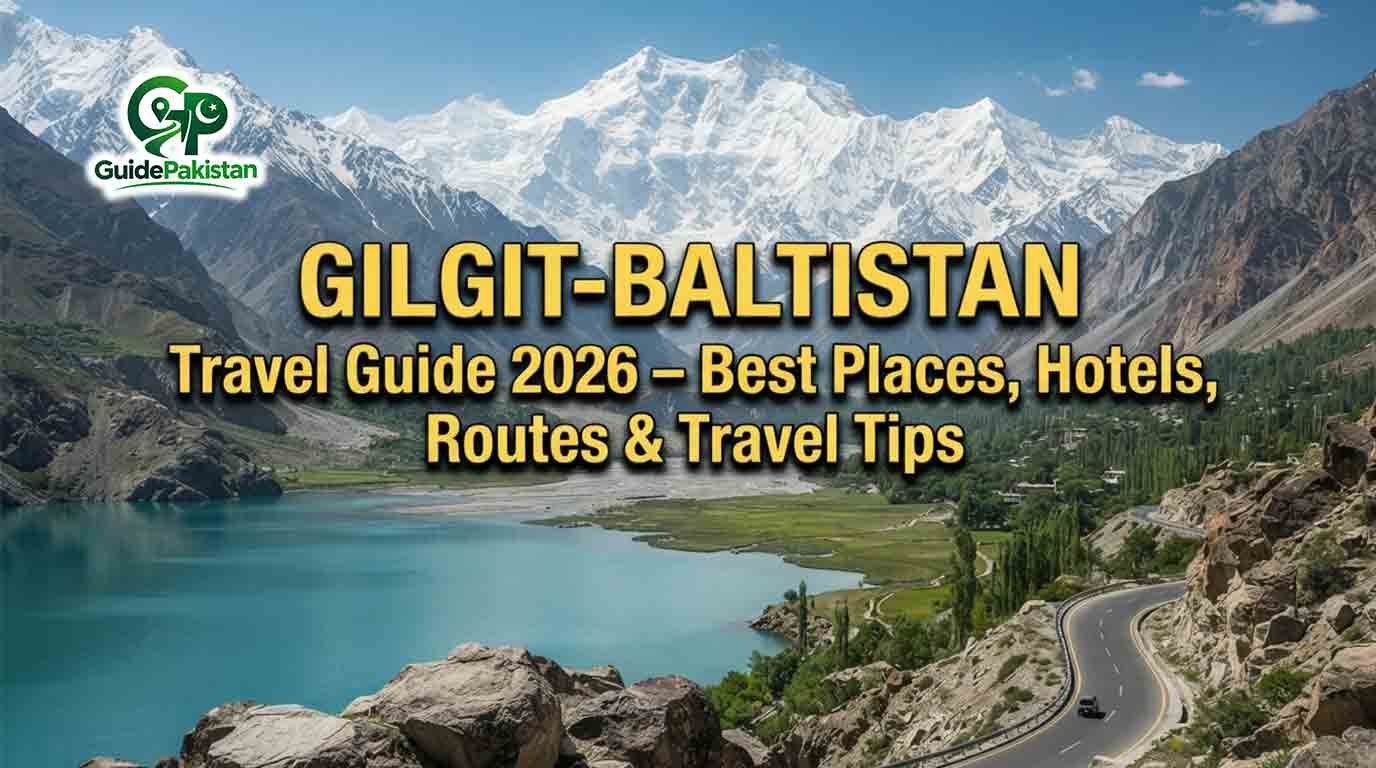
Gilgit-Baltistan Travel Guide 2026
Gilgit-Baltistan (GB) is one of Pakistan's most spectacular travel destinations, offering some of the world's highest mountains, turquoise lakes, glaciers, historic forts, beautiful valleys, traditional villages and legendary routes such as the Karakoram Highway.
The region includes major destinations such as Gilgit, Hunza, Nagar, Skardu, Shigar, Ghanche, Kharmang, Astore, Ghizer and Diamer. The official Gilgit-Baltistan Tourism Department currently lists these districts and highlights attractions including Hunza, Skardu, Naltar, Fairy Meadows, Deosai, Ghizer, Astore and Khunjerab Pass.
Whether you are planning a family holiday, honeymoon, photography trip, adventure tour, road trip or trekking expedition, Gilgit-Baltistan offers different experiences for different budgets.
Why Visit Gilgit-Baltistan in 2026?
Gilgit-Baltistan is famous for its dramatic mountain scenery and diverse landscapes. Visitors can experience green valleys, glaciers, high-altitude lakes, cold deserts, forests, historic settlements and some of the world's highest peaks.
The region is particularly famous for the Karakoram mountain range and peaks such as K2, while areas around Diamer, Hunza, Skardu and Astore provide access to some of Pakistan's most impressive natural landscapes. The official tourism department describes GB as home to more than 700 peaks above 6,000 metres and more than 108 peaks above 7,000 metres.
Gilgit-Baltistan is also an excellent destination for:
-
Family vacations
-
Honeymoon trips
-
Photography
-
Camping
-
Hiking
-
Trekking
-
Fishing
-
Boating
-
Mountain biking
-
Skiing
-
Cultural tourism
-
Road trips
-
Adventure tourism
-
Mountaineering
Best Time to Visit Gilgit-Baltistan
The best time depends on the destination and the type of experience you want.
April to May – Spring and Blossom Season
Spring is an excellent time for visitors interested in flowers, orchards and pleasant weather.
Hunza and other valleys can become particularly beautiful during blossom season, with apricot, cherry and other fruit trees adding colour to the mountain landscape.
This period is suitable for:
-
Hunza
-
Nagar
-
Gilgit
-
Lower valleys
-
Cultural tours
-
Photography
June to August – Peak Summer Season
June to August is the most popular period for northern tourism.
Many major roads and high-altitude destinations become more accessible, although conditions can change quickly because of rain, landslides and mountain weather.
Popular summer destinations include:
-
Hunza
-
Skardu
-
Fairy Meadows
-
Astore
-
Deosai
-
Ghizer
-
Shigar
-
Kharmang
-
Ghanche
-
Naltar
-
Khunjerab Pass
September to October – Autumn Season
September and October can be excellent for travellers who want fewer crowds and beautiful autumn scenery.
Mountain landscapes around Hunza, Nagar and other valleys can develop spectacular autumn colours.
This is also a good period for photography and road trips, but temperatures become colder as winter approaches.
November to March – Winter
Winter travel requires careful planning.
Snow can affect roads, high-altitude passes and remote valleys. Some destinations may become difficult or impossible to access.
If travelling during winter, choose accessible destinations and check current road and weather conditions before departure.
The GB Tourism Department specifically advises travellers to check weather and road clearance before travelling and to avoid unnecessary travel during dangerous weather conditions.
Best Places to Visit in Gilgit-Baltistan
1. Hunza Valley
Hunza is one of the most famous destinations in Gilgit-Baltistan.
Major attractions include:
-
Baltit Fort
-
Altit Fort
-
Attabad Lake
-
Passu Cones
-
Gulmit
-
Duikar
-
Eagle's Nest
-
Ganish
-
Borith Lake
-
Passu Glacier
-
Khunjerab Pass
-
Sost
-
Upper Hunza
The official tourism department highlights Hunza's cultural heritage, Altit and Baltit forts, Attabad Lake, Duikar, Passu and Gulmit.
Hunza is particularly suitable for families, couples, photographers and first-time visitors to GB.
2. Skardu
Skardu is one of the main tourism hubs of Baltistan.
Top attractions include:
-
Kharpocho Fort
-
Shangrila Resort
-
Lower Kachura Lake
-
Upper Kachura Lake
-
Satpara Lake
-
Katpana Cold Desert
-
Manthal Buddha Rock
-
Basho Valley
-
Chunda Valley
-
Shigar Valley
-
Deosai National Park
-
Sadpara
-
Khaplu
-
Mantokha Waterfall
The official GB Tourism Department lists Kharpocho Fort, Manthal Rock, Sadpara, Kachura and Shangrila lakes, Basho, Satpara and Katpana among Skardu's attractions.
Skardu is ideal for families, couples, adventure travellers and photographers.
3. Gilgit City
Gilgit is the administrative capital and an important gateway to northern Pakistan.
Popular attractions include:
-
Naltar Valley
-
Naltar Lakes
-
Kargah Buddha
-
Danyore
-
Bagrot Valley
-
Heramosh Valley
-
Danyore Suspension Bridge
-
Local bazaars
The official tourism department notes that Gilgit can be reached by air from Islamabad in roughly an hour, while road travel via the Karakoram Highway takes considerably longer.
Gilgit is especially useful as a transit base for Hunza, Nagar and surrounding valleys.
4. Naltar Valley
Naltar is famous for forests, mountains, lakes and winter skiing.
The valley is located near Gilgit and is suitable for:
-
Nature photography
-
Hiking
-
Family trips
-
Skiing
-
Camping
-
Day trips
The official tourism department describes Naltar as an alpine forest region with snow-covered mountains and says it offers skiing opportunities in winter.
5. Fairy Meadows
Fairy Meadows is one of Pakistan's most famous mountain destinations.
It is located in Diamer District near Nanga Parbat.
The journey involves reaching Raikot Bridge and then continuing toward the Fairy Meadows area by local transport followed by trekking.
It is best suited to travellers comfortable with mountain roads, hiking and changing weather.
6. Deosai National Park
Deosai is a high-altitude plateau famous for vast open landscapes, wildlife and lakes.
Important attractions include:
-
Sheosar Lake
-
Deosai Plains
-
Wildlife
-
Mountain scenery
-
Camping opportunities
Access is seasonal and weather dependent.
The official Astore tourism page identifies Deosai and Sheosar Lake as major attractions.
7. Astore Valley
Astore is known for forests, valleys, lakes and mountain scenery.
Top places include:
-
Rama Valley
-
Rama Lake
-
Deosai
-
Sheosar Lake
-
Ratu
-
Gorikot
-
Domail Valley
-
Chilim
-
Bunji
The official tourism department describes Rama Valley as heavily forested and identifies Rama Lake and Deosai among Astore's major attractions.
8. Ghizer Valley
Ghizer is often described as the land of lakes.
Important destinations include:
-
Phander
-
Khalti Lake
-
Gupis
-
Yasin Valley
-
Ishkoman
-
Puniyal
-
Shandur Pass
-
Hundarap Valley
-
Langar Valley
Ghizer is excellent for travellers seeking quieter landscapes, fishing, camping and scenic road trips. The official tourism department highlights Phander, Khalti, Yasin, Ishkoman and Shandur among the district's attractions.
9. Shandur Pass
Shandur is famous for its high-altitude polo ground and dramatic mountain scenery.
The annual Shandur Polo Festival is a major attraction.
Travel to Shandur requires careful seasonal planning because high-altitude road conditions can change quickly.
10. Nagar Valley
Nagar offers spectacular mountain views and access to areas around Rakaposhi, Hopper and surrounding valleys.
Popular places include:
-
Rakaposhi View Point
-
Hopper Valley
-
Hopper Glacier
-
Nagar villages
-
Pissan
-
Minapin
-
Rakaposhi trekking areas
Nagar is a strong option for photographers and adventure travellers.
11. Shigar Valley
Shigar is close to Skardu and is known for its historic heritage and mountain landscapes.
The area is particularly famous for:
-
Shigar Fort
-
Shigar Valley
-
Traditional villages
-
Trekking routes
-
Access toward major mountain areas
12. Khaplu
Khaplu in Ghanche District is famous for its historic architecture and beautiful mountain scenery.
Important attractions include:
-
Khaplu Palace
-
Khaplu Valley
-
Hushe Valley
-
Traditional villages
-
Mountain landscapes
Khaplu is an excellent destination for travellers wanting culture and peaceful surroundings.
13. Kharmang Valley
Kharmang offers waterfalls, valleys and mountain scenery.
One of the best-known attractions is Mantokha Waterfall.
The region is suitable for road trips and travellers looking for less crowded destinations.
Best Hotels in Gilgit-Baltistan
Accommodation ranges from simple guesthouses to luxury resorts and heritage properties.
The official GB Tourism Department currently lists hotels and properties in destinations including Hunza, Skardu, Deosai and Naltar.
Budget Accommodation
Typical planning range:
PKR 3,000–8,000 per room per night.
Budget rooms may be available in:
-
Gilgit
-
Aliabad
-
Karimabad
-
Skardu
-
Gahkuch
-
Phander
-
Astore
Facilities vary, so confirm heating, hot water, Wi-Fi, parking and meals before booking.
Mid-Range Hotels
Typical planning range:
PKR 8,000–20,000 per room per night.
These properties generally offer:
-
Private bathrooms
-
Hot water
-
Better views
-
Restaurant facilities
-
Parking
-
Wi-Fi
-
Family rooms
Current 2026 market listings show wide variations depending on location and season. Gilgit and Hunza mid-range rooms commonly fall around the upper single-digit to mid-teen thousands, while Skardu also offers budget rooms from roughly PKR 4,000–8,000 and mid-range accommodation around PKR 12,000–20,000 in some listings.
Luxury Accommodation
Luxury and heritage properties can cost:
PKR 20,000–50,000+ per room per night.
Premium resorts can cost significantly more during peak season.
Examples of properties listed by the official GB Tourism Department include:
-
Hard Rock Hotel Hunza
-
Luxus Hunza
-
Serena Altit Fort Hunza
-
Dewanekhas Hotel & Restaurant Skardu
-
Mountain Lodge Skardu
-
Turgil Green Resort Naltar
-
The Brown Bear Hotel Deosai
Always confirm the latest rate directly with the property because hotel prices can change substantially during peak season.
Best Areas to Stay
Hunza
Best for:
-
Couples
-
Families
-
Scenic views
-
Heritage
-
First-time visitors
Recommended areas:
-
Karimabad
-
Aliabad
-
Altit
-
Duikar
-
Gulmit
-
Passu
Skardu
Best for:
-
Families
-
Adventure travellers
-
Lakes
-
Deosai
-
Cold desert
-
Longer vacations
Recommended areas:
-
Skardu city
-
Kachura
-
Shigar
-
Sadpara
Gilgit
Best for:
-
Transit
-
Airport access
-
Shopping
-
Short stays
-
Connecting to Hunza and other valleys
Ghizer
Best for:
-
Peaceful holidays
-
Fishing
-
Lakes
-
Photography
-
Camping
How to Reach Gilgit-Baltistan
By Air
The easiest option for many travellers is flying from Islamabad.
Flights are available to:
-
Gilgit
-
Skardu
Flight duration is approximately one hour, depending on the route.
However, mountain flights are weather-sensitive. Always keep a backup plan and avoid connecting an international flight immediately after a northern domestic flight.
Current 2026 market data indicates Islamabad–Gilgit fares can be around PKR 20,000–30,000 one way, while Islamabad–Skardu fares commonly fall around PKR 15,000–40,000 one way depending on airline, season and availability.
By Road
The Karakoram Highway is the main road route into Gilgit-Baltistan.
A common route from Islamabad is:
Islamabad → Abbottabad → Mansehra → Besham → Dasu → Chilas → Gilgit
From Gilgit, travellers can continue toward:
-
Hunza
-
Nagar
-
Ghizer
-
Astore
-
Naltar
Islamabad to Gilgit Route
Approximate road distance is around 590 km, although the actual travel route and time can vary.
Normal road travel can take roughly 12–16 hours or longer depending on traffic, road conditions, stops and weather.
Public transport can be cheaper, while private cars provide greater flexibility.
For a road trip, consider breaking the journey into manageable sections rather than driving continuously.
Islamabad to Skardu Route
The road journey to Skardu is long and is normally better planned over two days.
A common route is:
Islamabad → Mansehra → Besham → Dasu → Chilas → Skardu
Depending on road conditions, road travel can take roughly 17–22 hours of driving time.
Air travel is much faster, but weather-related cancellations are possible.
Hunza Route
Typical route:
Islamabad → Abbottabad → Mansehra → Besham → Dasu → Chilas → Gilgit → Hunza
After reaching Gilgit, continue along the Karakoram Highway toward Aliabad, Karimabad, Attabad, Gulmit and Passu.
Astore Route
The official tourism department says there is no direct Islamabad–Astore flight.
Travellers can fly to Gilgit and then travel roughly 120 km by road via Thalichi, or fly to Skardu and continue by road. Road travel from Islamabad via the Karakoram Highway to Astore is roughly 630 km and can take around 15–17 hours under suitable conditions.
Gilgit-Baltistan Travel Cost 2026
The total cost depends on:
-
Starting city
-
Number of travellers
-
Number of days
-
Transport type
-
Hotel category
-
Season
-
Number of valleys
-
Food
-
Activities
-
Private vehicle requirements
The following figures are planning estimates rather than fixed package prices.
Budget Solo Trip
3–4 days:
PKR 30,000–55,000
7 days:
PKR 60,000–100,000
Mid-Range Solo Trip
5–7 days:
PKR 80,000–150,000
Couple Trip
5–7 days:
PKR 130,000–230,000
Family of Four
5–7 days:
PKR 220,000–400,000+
Premium Family Trip
7–10 days:
PKR 400,000–700,000+
These estimates can increase significantly during July and August, especially when using private vehicles and premium hotels.
Typical Daily Expenses
Budget Traveller
Accommodation: PKR 3,000–6,000
Food: PKR 1,000–2,000
Local transport: PKR 500–2,000
Estimated daily budget:
PKR 4,500–10,000
Mid-Range Traveller
Accommodation: PKR 8,000–15,000
Food: PKR 2,000–4,000
Transport and activities: PKR 2,000–5,000
Estimated daily budget:
PKR 12,000–24,000
Premium Traveller
Accommodation: PKR 20,000+
Food: PKR 4,000+
Private transport and activities: PKR 5,000–15,000+
Estimated daily budget:
PKR 30,000–50,000+
Sample 7-Day Gilgit-Baltistan Itinerary
Day 1 – Islamabad to Gilgit
Fly from Islamabad to Gilgit or start the road journey.
If flying, stay in Gilgit and explore the local bazaar.
Overnight in Gilgit.
Day 2 – Gilgit to Hunza
Travel toward Hunza.
Visit:
-
Rakaposhi viewpoint
-
Karimabad
-
Baltit Fort
Overnight in Hunza.
Day 3 – Hunza
Explore:
-
Altit Fort
-
Altit village
-
Duikar
-
Eagle's Nest
-
Karimabad Bazaar
Overnight in Hunza.
Day 4 – Upper Hunza
Visit:
-
Attabad Lake
-
Gulmit
-
Passu Cones
-
Passu
-
Hussaini area
-
Borith Lake
Overnight in Hunza or Passu.
Day 5 – Hunza to Gilgit
Return toward Gilgit.
Depending on the schedule, visit additional viewpoints or cultural sites.
Overnight in Gilgit.
Day 6 – Gilgit and Naltar
Visit Naltar Valley if road and weather conditions allow.
Return to Gilgit.
Overnight in Gilgit.
Day 7 – Gilgit to Islamabad
Take a morning flight if available.
Keep a backup day whenever possible because mountain flights can be affected by weather.
Sample 10-Day Gilgit-Baltistan Itinerary
-
Day 1: Islamabad → Gilgit
-
Day 2: Gilgit → Hunza
-
Day 3: Central Hunza
-
Day 4: Upper Hunza
-
Day 5: Khunjerab Pass
-
Day 6: Hunza → Gilgit
-
Day 7: Gilgit → Astore
-
Day 8: Rama Valley / Rama Lake
-
Day 9: Astore → Gilgit
-
Day 10: Gilgit → Islamabad
Sample 10-Day Skardu Itinerary
-
Day 1: Islamabad → Skardu
-
Day 2: Skardu city and Kharpocho Fort
-
Day 3: Kachura Lakes and Shangrila
-
Day 4: Satpara and Manthal
-
Day 5: Deosai
-
Day 6: Shigar Valley
-
Day 7: Khaplu
-
Day 8: Basho Valley
-
Day 9: Free day and local shopping
-
Day 10: Skardu → Islamabad
Food in Gilgit-Baltistan
Visitors should try local dishes and regional foods.
Popular foods include:
-
Chapshoro
-
Mamtu
-
Diram Fitti
-
Balay
-
Local breads
-
Apricots
-
Cherries
-
Mulberries
-
Local honey
-
Traditional soups
-
Trout fish
-
Herbal teas
Hunza is particularly famous for fruits including apricots, apples, mulberries, cherries and grapes.
Internet and Mobile Connectivity
Mobile coverage varies significantly between towns, valleys and remote mountain areas.
Before travelling:
-
Download offline maps
-
Keep important phone numbers offline
-
Carry a power bank
-
Download hotel confirmations
-
Keep some cash
-
Do not depend entirely on mobile internet
Money and Payments
Major towns have banks and ATMs, but remote valleys may have limited financial services.
Carry sufficient Pakistani rupees for:
-
Hotels
-
Local transport
-
Food
-
Fuel
-
Jeep hire
-
Entrance fees
-
Emergency expenses
Cash becomes particularly important when travelling into remote areas.
Road and Weather Safety
Mountain travel requires greater caution than normal city travel.
The official GB Tourism Department issued a 2026 advisory warning travellers about possible heavy rainfall, landslides, flash floods and Glacial Lake Outburst Flood risks. It advised travellers to check weather and road conditions before departure and avoid vulnerable areas during dangerous weather.
Always:
-
Check the weather forecast
-
Check road clearance
-
Avoid unnecessary night driving
-
Do not stop below unstable slopes
-
Avoid standing near swollen streams
-
Follow local administration instructions
-
Keep emergency supplies
-
Allow extra travel time
Travel Tips for Gilgit-Baltistan
-
Book accommodation early during July and August.
-
Keep your itinerary flexible.
-
Carry warm clothing even during summer.
-
Carry rain protection.
-
Keep cash with you.
-
Download offline maps.
-
Carry a power bank.
-
Do not rely entirely on mobile signals.
-
Check road conditions before departure.
-
Keep one buffer day for flights.
-
Drive carefully on mountain roads.
-
Avoid unnecessary night driving.
-
Hire experienced local drivers for difficult routes.
-
Respect local culture.
-
Dress appropriately in villages and cultural sites.
-
Do not litter.
-
Avoid damaging plants and natural areas.
-
Follow local instructions around glaciers and lakes.
-
Keep children away from steep edges and rivers.
-
Carry basic medicines.
-
Carry sunscreen.
-
Wear comfortable walking shoes.
-
Keep a reusable water bottle.
-
Carry snacks for long road journeys.
-
Do not underestimate altitude.
-
Rest if you feel unwell.
-
Avoid rushing between distant valleys.
-
Confirm jeep rates before travelling.
-
Confirm hotel facilities before payment.
-
Keep emergency contact information saved offline.
Family Travel Tips
Families should choose comfortable hotels and avoid overly aggressive itineraries.
For families with children:
-
Keep daily driving reasonable.
-
Carry warm clothing.
-
Choose hotels with heating and hot water.
-
Keep snacks and drinking water available.
-
Avoid dangerous viewpoints.
-
Do not rush high-altitude destinations.
-
Keep extra time for weather delays.
Honeymoon Travel Tips
Hunza and Skardu are excellent choices for honeymoon trips.
Recommended experiences include:
-
Sunrise at Duikar
-
Attabad Lake
-
Passu
-
Kachura Lakes
-
Shangrila
-
Shigar
-
Khaplu
-
Private scenic dinners
-
Photography sessions
Photography Tips
Gilgit-Baltistan is one of Pakistan's best photography destinations.
Best subjects include:
-
Mountain peaks
-
Lakes
-
Forts
-
Valleys
-
Glaciers
-
Traditional villages
-
Local markets
-
Roads
-
Sunrises
-
Sunsets
-
Autumn colours
-
Starry skies
Carry extra batteries and memory cards because electricity and charging facilities may be limited in remote areas.
Adventure Activities
Depending on the location and season, visitors can enjoy:
-
Trekking
-
Hiking
-
Camping
-
Fishing
-
Boating
-
Skiing
-
Mountain biking
-
Rock climbing
-
Paragliding
-
Mountaineering
The official GB Tourism Department lists activities such as fishing, boating, trekking, rock climbing, paragliding, skiing and mountain biking in different districts.
Is Gilgit-Baltistan Safe for Tourists?
Gilgit-Baltistan is a major domestic tourism destination, but visitors should still follow normal travel precautions.
The biggest practical risks are often related to:
-
Mountain roads
-
Landslides
-
Heavy rain
-
Flash floods
-
High-altitude weather
-
Remote locations
-
Vehicle breakdowns
-
Flight cancellations
Always follow current government and local administration advisories.
What to Pack
Essential packing list:
-
Warm jacket
-
Sweater
-
Waterproof jacket
-
Comfortable shoes
-
Sunglasses
-
Sunscreen
-
Hat
-
Gloves
-
Power bank
-
Phone charger
-
First-aid kit
-
Personal medicines
-
Water bottle
-
Snacks
-
Cash
-
ID documents
-
Offline maps
-
Camera
-
Extra batteries
-
Small backpack
Final Gilgit-Baltistan Travel Budget
For a comfortable 7-day trip, a reasonable planning budget for one person can be around:
PKR 80,000–150,000
For a couple:
PKR 130,000–230,000
For a family of four:
PKR 220,000–400,000+
A private luxury trip can easily exceed PKR 500,000 depending on hotels, transport and activities.
These figures are planning estimates and should not be treated as fixed prices because transport and accommodation rates change with season, demand and weather.
Final Travel Advice
Gilgit-Baltistan should not be treated as a destination where every trip has to follow a strict timetable.
Mountain weather can change quickly, flights can be delayed, roads can close temporarily and travel times can increase unexpectedly.
The best approach is to plan the major parts of your trip in advance while keeping enough flexibility for weather and road conditions.
For a first visit, Hunza and Skardu are the easiest destinations to combine with a broader GB trip. Travellers with more time can add Ghizer, Astore, Fairy Meadows, Shigar, Khaplu, Kharmang and other valleys.
Always check the latest weather and road conditions before leaving for remote areas.
Guide Information
Eligibility
Anyone can visit Gilgit-Baltistan as a domestic tourist if they have suitable travel documents and can comply with local travel, safety and access requirements.
International visitors should confirm Pakistan entry and travel requirements before planning a trip to Gilgit-Baltistan.
Adventure activities such as trekking, mountaineering and high-altitude expeditions may require additional arrangements, guides, registrations or permissions depending on the destination and activity.
Required Documents
* Original CNIC for Pakistani travellers.
* Passport for international travellers.
* Valid Pakistan visa or appropriate entry permission for foreign visitors.
* Hotel booking details.
* Transport or flight booking details.
* Emergency contact information.
* Travel insurance information where applicable.
* Trekking or expedition documents where required.
* Copies of important documents stored securely offline.
Fees
There is no single entrance fee for travelling throughout Gilgit-Baltistan.Typical travel expenses may include:* Air tickets* Bus tickets* Hotel charges* Private vehicle charges* Local jeep charges* Attraction entrance fees* Boating charges* Guide fees* Trekking or expedition fees* Food* Fuel* Parking* Camping expensesPrices vary by destination and season.
Processing Time
There is no standard processing time for a normal domestic tourism trip to Gilgit-Baltistan.Hotel and transport bookings can usually be arranged before departure.Flights should be booked as early as practical during peak season.Special trekking, mountaineering or expedition arrangements may require additional time.WHEN TO APPLY:For summer travel, it is recommended to start planning several weeks to a few months before the trip.For July and August, book hotels and flights as early as possible because demand can be high.For trekking and mountaineering expeditions, begin planning much earlier and confirm all applicable requirements.
Application Method
Gilgit-Baltistan tourism is normally planned throu
Validity Period
A Gilgit-Baltistan tourism trip does not have a single standard validity period.Travellers may stay
Step-by-Step Process
- Decide how many days you can spend in Gilgit-Baltistan.
- Choose your main destination.
- Decide whether you want Hunza, Skardu, Gilgit or another valley.
- Select the best travel season.
- Check the latest weather forecast.
- Check current road conditions.
- Check the status of mountain flights.
- Compare air and road travel.
- Select your travel budget.
- Choose budget, mid-range or luxury accommodation.
- Book your main hotel.
- Reserve flights if travelling by air.
- Arrange bus tickets if travelling by road.
- Decide whether you need a private vehicle.
- Arrange a local jeep for difficult destinations.
- Prepare your CNIC or passport.
- Download offline maps.
- Save emergency phone numbers.
- Prepare warm and waterproof clothing.
- Carry a power bank.
- Carry enough cash.
- Plan your major sightseeing locations.
- Avoid putting too many distant destinations into one day.
- Keep at least one flexible day for weather delays.
- Confirm hotel check-in and check-out times.
- Confirm transport rates before starting local journeys.
- Check local conditions before entering remote valleys.
- Follow local administration and tourism advisories.
- Keep your family or travel companions informed about your route.
- Begin the journey only after confirming the latest road and weather situation.
Official Information
Official Website: https://www.visitgilgitbaltistan.gov.pk/?utm_source=chatgpt.com)
Contact: Government of Gilgit-Baltistan Tourism, Sports, Culture, Archaeology & Museums DepartmentSecretariat:Phone: 05811-920173Directorate of Tourism & Culture:Phone: 05811-920573District Tourism Office Gilgit:Phone: 05811-920458District Tourism Office Skardu/Shigar:Phone: 05815-920663District Tourism Office Diamer:Phone: 05812-920183District Tourism Office Ghizer:Phone: 05814-920327District Tourism Office Ghanche/Kharmang:Phone: 05816-920185District Tourism Office Astore:Phone: 05817-922068District Tourism Office Hunza:Phone: 05811-920573Islamabad Sub Office:Phone: 051-2726976These contact details are published by the Government of Gilgit-Baltistan Tourism Department.
Frequently Asked Questions
Gilgit-Baltistan is famous for high mountains, glaciers, lakes, valleys, forts, the Karakoram Highway, K2, Hunza, Skardu, Fairy Meadows, Deosai and many other natural and cultural attractions.
May to October is generally the most practical period for broad tourism, while April and May are attractive for blossom season and September and October can offer beautiful autumn scenery.
Yes, Gilgit-Baltistan remains a major tourism destination in Pakistan. However, road and weather conditions can change, so travellers should check current advisories before departure.
Hunza is excellent for forts, culture, Attabad Lake and Karakoram Highway scenery, while Skardu is ideal for lakes, Deosai, cold deserts and Baltistan landscapes. Both are excellent.
Five to seven days can provide a good introduction, while 10 to 14 days is better for combining multiple destinations.
A comfortable seven-day trip may cost roughly PKR 80,000–150,000 per person, while a couple may spend around PKR 130,000–230,000 depending on transport and hotels.
You can fly from Islamabad to Gilgit or travel by road via the Karakoram Highway.
Depending on road, weather, traffic and stops, the journey can take roughly 12–16 hours or longer.
The flight is approximately one hour, although schedules and actual flight times can vary.
You can fly to Skardu or travel by road through the Karakoram Highway and Chilas corridor.
Road travel generally requires roughly 17–22 hours of driving time and is better planned over two days.
Mountain flights are weather-sensitive and may be delayed or cancelled. Travellers should keep a backup plan and avoid tight connections.
Yes. Hunza is one of the most popular family destinations in northern Pakistan, although families should still use caution around mountain roads, lakes and steep viewpoints.
Yes. Skardu has many family-friendly attractions, but some destinations such as Deosai require careful planning because of altitude and road conditions.
Both are excellent. Hunza is especially good for scenic hotels, forts and Attabad Lake, while Skardu offers lakes, deserts, mountain landscapes and heritage destinations.
Popular places include Baltit Fort, Altit Fort, Attabad Lake, Duikar, Passu, Gulmit, Borith Lake, Ganish and Khunjerab Pass.
Popular places include Kharpocho Fort, Shangrila, Kachura Lakes, Satpara Lake, Katpana Cold Desert, Manthal Rock, Basho and Shigar.
Hunza, Skardu, Ghizer, Astore, Deosai, Fairy Meadows and Nagar all offer exceptional photography opportunities.
It can be suitable for families with older children who can handle the journey and trekking, but parents should consider road, weather and hiking conditions carefully.
No. Access is seasonal and can be affected by snow and weather.
Access can be restricted by weather and road conditions. Always check current conditions before planning the journey.
Pack warm layers, waterproof clothing, comfortable shoes, sunglasses, sunscreen, medicines, a power bank, cash, snacks and personal documents.
No. Coverage varies by location, and remote valleys may have limited or unreliable connectivity.
Yes. Cash is highly recommended because ATMs and card payment facilities may be limited in remote areas.
A private vehicle is not essential for every trip, but it can be very useful when visiting multiple valleys or travelling with a family.
Some destinations require or strongly benefit from local 4x4 vehicles because of rough mountain roads.
It is a major tourism region, but travellers must take mountain-road, weather and environmental risks seriously and follow current local advisories.
You can travel when conditions are safe, but heavy rain can cause landslides, flash floods and road closures. Always check current conditions.
The official Government of Gilgit-Baltistan Tourism Department website is the primary source for tourism information, district destinations and official contacts.