Is Pakistan Safe for Foreigners? Complete Safety Guide 2026
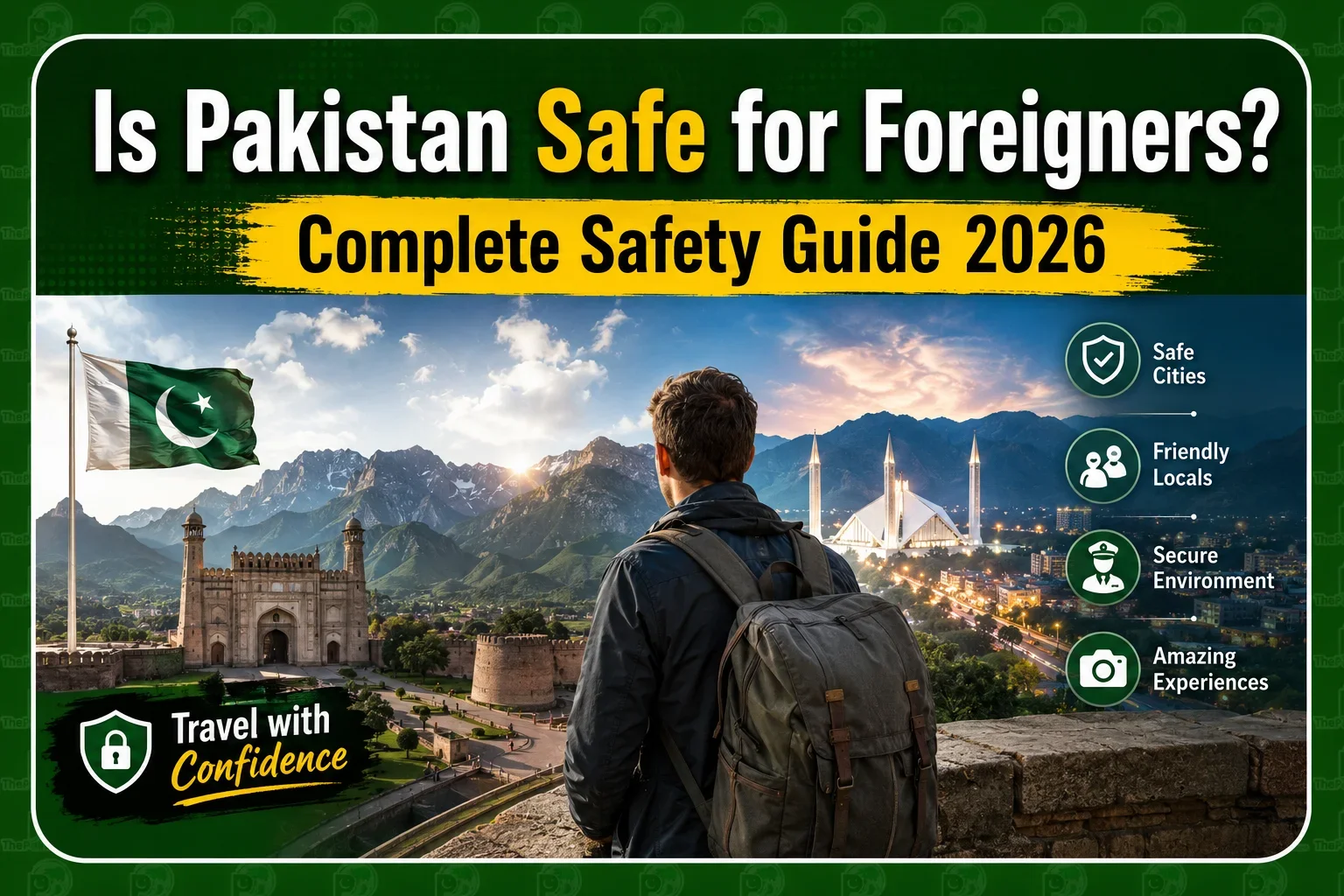
Is Pakistan Safe for Foreigners?
Yes, Pakistan can be safe for foreigners when they travel carefully and choose their destinations wisely. Millions of people visit Pakistan for tourism, business, family visits, religious travel, and other purposes.
However, Pakistan has different security conditions across its provinces and regions. Major cities such as Islamabad and Lahore generally offer better facilities for international visitors, while some border and remote areas have substantially higher security risks.
Foreign visitors should always check the latest government travel advisory before travelling because security conditions can change quickly.
Safest Places in Pakistan for Foreign Visitors
Some of the destinations commonly visited by international travelers include:
Islamabad
Islamabad is Pakistan's capital and has diplomatic missions, international hotels, major hospitals, restaurants, shopping centers, and established tourist attractions.
Foreign visitors should still maintain normal security precautions and avoid demonstrations or large political gatherings.
Lahore
Lahore is one of Pakistan's major cultural and historical cities. Popular attractions include the Lahore Fort, Badshahi Mosque, Walled City, and other historical sites.
Tourists should remain alert in crowded areas and take precautions against petty theft and traffic-related risks.
Karachi
Karachi is Pakistan's largest city and an important business and commercial center. Foreigners regularly visit the city for business and other purposes.
Because Karachi is a very large city, security conditions can vary considerably between neighborhoods. Visitors should use reputable transportation and accommodation and follow local security advice.
Northern Pakistan
Areas such as Hunza, Skardu and other parts of Gilgit-Baltistan are popular with international tourists because of their mountains and scenery.
However, visitors should remember that remote mountain travel can involve additional risks, including difficult roads, weather changes, landslides, limited medical facilities and communication problems.
Areas Where Foreigners Should Exercise Extreme Caution
Some parts of Pakistan have significantly higher security risks.
Foreign travelers should be particularly cautious about:
- Balochistan
- Parts of Khyber Pakhtunkhwa
- Areas near the Afghanistan border
- Some areas close to the Line of Control
- Remote border regions
- Areas affected by terrorism, militancy or civil unrest
Travelers should follow their own government's current travel advisory before entering these areas.
Is Pakistan Safe for Solo Travelers?
Pakistan can be visited by solo travelers, but additional planning is recommended.
Solo foreigners should:
- Stay in reputable hotels or guesthouses.
- Use trusted transportation.
- Avoid travelling alone in remote areas.
- Share their itinerary with someone they trust.
- Avoid political demonstrations.
- Keep important documents secure.
- Avoid unnecessary travel after dark in unfamiliar areas.
- Follow advice from local authorities and experienced guides.
Is Pakistan Safe for Female Foreign Travelers?
Foreign women visit Pakistan for tourism, business, education and other purposes. However, female travelers should take additional precautions, particularly when travelling alone.
It is advisable to dress respectfully according to local customs, use reputable accommodation and transportation, avoid isolated areas, and consider travelling with a trusted local guide in unfamiliar locations.
Is Pakistan Safe for American and European Tourists?
American, British, European, Australian and other international visitors can travel to Pakistan, but their governments may issue specific security warnings.
Travelers should check the latest official advisory issued by their government before departure and again during their trip.
Common Safety Risks in Pakistan
Security concerns are not limited to terrorism. Foreign visitors should also consider:
Petty Crime
Pickpocketing, mobile-phone theft and other forms of petty crime can occur, particularly in crowded markets, public transportation and busy tourist areas.
Road Safety
Road travel can be one of the biggest practical risks for visitors. Traffic conditions, driving standards, road quality and long-distance travel can vary significantly.
Use reputable drivers and transportation companies whenever possible.
Political Demonstrations
Political protests and demonstrations can develop quickly and may result in road closures or security restrictions.
Foreigners should avoid demonstrations and large political gatherings.
Terrorism
Terrorism remains a security concern in some parts of Pakistan. The risk is not uniform throughout the country, which is why travelers should research their specific destination rather than treating Pakistan as one security zone.
Natural Disasters
Mountainous areas can experience landslides, floods, earthquakes and extreme weather. Travelers visiting northern Pakistan should check weather and road conditions before travelling.
Safety Tips for Foreigners in Pakistan
Follow these basic precautions:
- Keep your passport and important documents secure.
- Carry a copy of your passport and visa.
- Use registered or reputable transportation.
- Stay in reputable hotels.
- Avoid isolated areas.
- Don't participate in political protests.
- Avoid photographing sensitive government or military installations.
- Keep valuables out of sight.
- Be careful when using ATMs.
- Follow local laws and customs.
- Keep emergency contact numbers available.
- Check local weather and road conditions before travelling.
- Follow current government travel advisories.
What Should Foreigners Avoid in Pakistan?
Foreign visitors should avoid:
- Travelling to restricted or high-risk border areas without proper authorization.
- Entering areas under security restrictions.
- Political demonstrations.
- Photographing sensitive military or government facilities.
- Travelling alone into remote areas without preparation.
- Displaying large amounts of cash or expensive valuables.
- Ignoring instructions from local authorities.
- Travelling to remote mountain areas without checking weather and road conditions.
Do Foreigners Need a Local Guide?
A local guide is not necessarily required for every destination, but it can make travel considerably easier and safer, particularly for first-time visitors.
A reputable local guide can help with transportation, language, local customs, sightseeing and navigation.
For remote or mountainous destinations, using an experienced local guide or tour operator is strongly recommended.
Emergency Numbers in Pakistan
Foreign visitors should keep these emergency numbers available:
| Service | Number |
|---|---|
| Police | 15 |
| Rescue/Emergency | 1122 |
| Fire Brigade | 16 |
| Edhi Ambulance | 115 |
Emergency services and availability can vary by location.
Final Verdict: Is Pakistan Safe for Foreigners?
Pakistan is not uniformly unsafe for foreigners, but it is also not a destination where travelers should ignore security precautions.
Major cities and established tourist destinations can be visited by international travelers with appropriate planning. At the same time, some regions have serious security risks and may be subject to government travel warnings.
The best approach is to choose your destination carefully, check the latest travel advisory, use reputable transportation and accommodation, avoid high-risk areas, and stay aware of local conditions.
Quick Safety Rating
| Factor | Assessment |
|---|---|
| Hospitality toward foreigners | Generally good |
| Major city travel | Generally manageable with precautions |
| Tourist infrastructure | Improving |
| Road safety | Requires caution |
| Petty crime | Precautions recommended |
| Terrorism risk | Varies significantly by region |
| Remote/border areas | Higher risk |
| Solo travel | Possible with preparation |
| Overall | Destination-dependent; travel with caution |
Important: Security conditions can change quickly. Always check the latest official travel advisory from your country's government before travelling to Pakistan.
Emergency numbers and service availability can vary by location.
Official Links
Pakistan Travel and Government Information
- UK Foreign Travel Advice – Pakistan: UK Government Pakistan Travel Advice
- U.S. Department of State – Travel Advisories: U.S. Travel Advisories
- Punjab Police Emergency Helplines: Punjab Police Emergency Helplines
Important: Visa and immigration requirements should be verified through official Pakistani government channels before travel.
Travel Insurance
Foreign visitors should consider purchasing travel insurance before travelling to Pakistan.
Depending on the policy, travel insurance may provide coverage for:
- Emergency medical treatment
- Hospitalization
- Evacuation
- Lost baggage
- Trip cancellation
- Travel disruption
Check whether the policy covers the specific regions you intend to visit.
Final Verdict
Pakistan can be a memorable destination for foreign visitors, particularly those who plan carefully and understand regional differences.
The key point is that Pakistan should not be classified simply as "safe" or "unsafe." Security conditions vary considerably between locations.
Foreigners should research their exact destination, check the latest government travel advisory, use reputable accommodation and transportation, avoid high-risk areas and respect Pakistani laws and customs.
Guide Information
Step-by-Step Process
-
Check your passport validity
-
Make sure your passport is valid for the required period before planning your trip.
-
Check Pakistan visa requirements
-
Determine which visa or travel authorization applies to your nationality and purpose of travel.
-
Apply for the appropriate visa
-
Submit your application through the official Pakistani visa/immigration system where applicable.
-
Check your government's travel advisory
-
Review the latest security advice for Pakistan, including warnings about specific provinces, districts or border areas.
-
Choose your destinations carefully
-
Research the specific cities and regions you plan to visit. Security conditions are not the same throughout Pakistan.
-
Book reputable accommodation
-
Choose a well-reviewed hotel, guesthouse or other established accommodation.
-
Arrange reliable transportation
-
Use reputable transport providers, trusted drivers or established tour operators, particularly for long-distance and remote travel.
-
Prepare important documents
-
Keep your passport, visa, hotel information, travel insurance and emergency contacts accessible.
-
Share your itinerary
-
Give your travel plans and accommodation details to a family member or trusted person.
-
Follow local laws and customs
-
Respect Pakistani laws, religious practices, dress customs and local cultural norms.
-
Avoid demonstrations and high-risk areas
-
Do not participate in political demonstrations and avoid regions subject to current security warnings or restrictions.
-
Take normal personal-security precautions
-
Protect your valuables, avoid displaying large amounts of cash and remain alert in crowded places.
-
Check weather and road conditions
-
This is particularly important when travelling to Hunza, Skardu, Gilgit-Baltistan and other mountainous areas.
-
Keep emergency numbers available
-
Save relevant emergency contacts, including Police 15 and Rescue 1122 where available.
-
Monitor conditions during your trip
-
Continue checking official travel and local security information rather than relying only on information obtained before departure.
-
Contact your embassy when necessary
-
If you lose your passport, face a serious emergency or need consular assistance, contact your embassy or consulate in Pakistan.
-
Review your plans before travelling to another region
-
Security conditions can differ substantially between destinations, so reassess the situation before moving to a new province or remote area.
Frequently Asked Questions
Pakistan can be safe for foreigners, but safety conditions vary by region. Travelers should take precautions and check the latest official travel advice before visiting.
Yes, many foreigners visit Pakistan for tourism, but travelers should research their destinations and follow current security guidance.
American tourists can visit Pakistan, but they should check the latest U.S. government travel advisory before travelling.
British tourists can visit Pakistan, but they should review the latest UK government travel advice before travelling.
European tourists can travel to Pakistan, but they should check the travel advisory issued by their own government.
Islamabad is one of Pakistan's main destinations for foreign visitors, but travelers should still take normal security precautions.
Lahore is a popular destination for foreign tourists, but visitors should remain alert in crowded areas and avoid demonstrations.
Foreigners visit Karachi for tourism and business, but security conditions vary between neighborhoods, so visitors should use reputable accommodation and transportation.
Hunza is a popular destination for international tourists, but visitors should consider mountain roads, weather conditions and local security advice.
Skardu is visited by international tourists, but its remote location means travelers should prepare for difficult roads, weather changes and limited services.
Many foreigners travel to northern Pakistan, but safety conditions vary and travelers should check weather, road and security conditions before travelling.
Solo travel is possible in Pakistan, but travelers should use reputable accommodation and transportation and avoid isolated or high-risk areas.
Female travelers can visit Pakistan, but women travelling alone should take additional precautions and respect local cultural customs.
Families can visit Pakistan, particularly established tourist destinations, provided they plan carefully and follow appropriate safety precautions.
Foreign visitors are generally welcomed in Pakistan, and many tourists experience Pakistani hospitality during their visits.
Pakistan has security risks in certain regions, but the level of risk varies considerably between cities and provinces.
Terrorism remains a security concern in some parts of Pakistan. Travelers should check current government travel advisories before visiting affected regions.
Foreigners can face security risks, particularly in areas affected by terrorism or militancy. Travelers should avoid high-risk locations.
Kidnapping risks vary by region and can be higher in certain remote or conflict-affected areas.
Travelers should check current official advisories for high-risk areas, particularly parts of Balochistan, Khyber Pakhtunkhwa and certain border regions.
Some areas of Balochistan have significant security risks, so foreigners should check official travel advice before travelling there.
Security conditions vary by district, and some areas of Khyber Pakhtunkhwa have significant security risks.
Peshawar can present higher security risks than many major tourist destinations, so travelers should check current official advice before visiting.
Quetta and other parts of Balochistan can have elevated security risks, so foreigners should carefully review current travel advice.
Some areas near the Afghanistan border have significant security risks and may be subject to travel restrictions.
Security conditions can be sensitive near the Line of Control, so travelers should check current restrictions before visiting.
Safety at night depends on the location. Foreigners should avoid unfamiliar or isolated areas after dark.
Walking can be safe in many populated areas, but travelers should remain aware of their surroundings and avoid isolated locations.
Public transportation can be used, but foreigners should choose reputable services and remain cautious in crowded environments.
Driving in Pakistan requires caution because traffic conditions, road quality and driving standards vary.
First-time visitors may find it safer and more convenient to use a reputable driver or transportation service.
Reputable taxis and established ride-hailing services can be used, but travelers should avoid accepting transportation from unknown individuals.
Foreigners can travel by train, but they should choose reputable services and take normal precautions with luggage and personal belongings.
Domestic flights can be a convenient way to travel long distances, subject to normal airline and travel considerations.
Mountain travel can be safe with proper preparation, but landslides, extreme weather, difficult roads and limited medical facilities can create additional risks.
A reputable local guide can be helpful, especially when visiting remote, mountainous or unfamiliar areas.
Yes. Foreign visitors should avoid political demonstrations and large gatherings because situations can change quickly.
Foreigners should avoid photographing military installations, security facilities and other sensitive locations.
It is advisable to ask permission before photographing individuals, especially women, children and private situations.
No. Travelers should carry only the cash they need and keep money and valuables secure.
Petty theft can occur, particularly in crowded markets, public transportation and busy tourist areas.
Travelers may encounter scams or unofficial services, so they should verify prices and use reputable businesses.
Reputable hotels generally provide better security and services for international visitors than unknown accommodation.
Yes. Travelers should keep secure physical or digital copies of their passport, visa and important travel documents.
Travelers should comply with identification requirements while keeping their passport secure and avoiding unnecessary exposure to loss or theft.
Yes. Comprehensive travel insurance with appropriate medical and travel coverage is recommended.
Yes. Major cities have hospitals and private medical facilities, although medical services can be more limited in remote areas.
Travelers should generally choose bottled, filtered or reliably treated water.
Many visitors enjoy Pakistani food safely, but travelers should choose hygienic restaurants and follow normal food-safety precautions.
Street food can be enjoyed, but foreigners should choose busy vendors with good hygiene and freshly prepared food.
Many religious sites can be visited by foreigners, but visitors should follow local rules, dress appropriately and respect religious customs.
Yes. Dressing respectfully according to local customs is recommended, particularly in conservative and religious areas.
Alcohol is subject to Pakistani laws and restrictions. Foreign visitors should understand and comply with the applicable laws.
Foreign visitors should exercise discretion when discussing politics and should not participate in political demonstrations or activities.
Visa requirements depend on nationality, purpose of travel and applicable Pakistani immigration rules.
Eligible foreign nationals can apply for the appropriate Pakistani tourist visa or travel authorization.
Yes. Foreign business travelers can visit Pakistan subject to the appropriate visa and immigration requirements.
Foreign nationals generally need the appropriate authorization and immigration status to work legally in Pakistan.
Yes. Foreign students can study in Pakistan if they meet the relevant admission and immigration requirements.
Depending on the visa type and circumstances, an extension may be possible. Travelers should verify the current rules with Pakistani authorities.
Requirements vary, but travelers generally need a valid passport and appropriate visa or authorization, along with any supporting documents required for their trip.
Yes. Keeping accommodation details available can be useful during travel and immigration procedures.
Travelers should check the entry requirements applicable to their nationality and visa category.
The police emergency number is 15 in Pakistan.
Rescue emergency services can be reached at 1122 in areas where the service operates.
The fire emergency number is 16.
Report the loss to the relevant authorities and contact your country's embassy or consulate for assistance.
Move to a safe location, report the incident to the police and contact your embassy or consulate if necessary.
Yes. Foreign nationals should keep their embassy or consulate contact information available.
Move to a secure location, follow instructions from local authorities and contact your embassy or relevant emergency service if necessary.
Travelers should exercise increased caution in crowded locations and remain alert to their surroundings.
Foreigners should avoid unauthorized or high-risk border areas and follow current government travel advice.
Remote areas can have additional risks, including limited medical facilities, difficult roads, poor communications and changing weather.
Pakistan can be suitable for experienced backpackers, but careful planning is particularly important when visiting remote areas.
Independent travel is possible in some areas, but travelers should research destinations carefully and use additional precautions in remote or high-risk regions.
Elderly travelers can visit Pakistan, but they should consider healthcare access, transportation, weather and the physical demands of their itinerary.
Families with children can visit Pakistan, but parents should carefully plan transportation, accommodation, food and medical arrangements.
International students can study in Pakistan, but they should follow their institution's security guidance and local laws.
Business travelers regularly visit Pakistan, but they should use reputable hotels and transportation and monitor local security conditions.
Journalists should conduct additional security planning and verify local rules and restrictions before travelling.
Photographers can visit Pakistan, but they should avoid sensitive military, government and restricted locations and ask permission before photographing people.
Yes, but rural and remote travel requires additional preparation and awareness of local conditions.
Safety cannot be determined by a simple city-wide ranking because conditions vary by neighborhood and can change over time.
Islamabad generally has extensive diplomatic and visitor infrastructure, but travelers should still assess current local security conditions.
Hunza is a popular tourist destination, but no location should be considered completely risk-free.
Safety depends on the region. Some areas can experience extreme heat, while northern areas may have different weather-related risks.
Winter travel can be challenging in northern and mountainous regions because of snow, road closures and severe weather.
Yes, but travelers should preferably use ATMs located inside banks, hotels or secure shopping areas.
Travelers should avoid unnecessarily displaying expensive phones in crowded or isolated areas.
Yes. Sharing an itinerary with a trusted person is a useful safety precaution.
Some governments provide voluntary traveler-registration services. Travelers should check whether their embassy offers such a service.
Yes. All foreign visitors are required to comply with Pakistani laws and regulations.
Only when legally authorized. Foreigners should not enter restricted or prohibited areas without permission.
It is strongly recommended that travelers check current official travel advisories before departure.
Travel advisories are official risk assessments, but travelers should understand that conditions can change and advisories may differ between governments.
Yes. Political, security and weather conditions can change quickly, particularly in certain regions.
Use reputable accommodation and transportation, plan the itinerary carefully, avoid high-risk areas and monitor current security information.
Solo travel is possible, but first-time visitors may benefit from trusted local contacts, guides or organized transportation.
Pakistan offers historical sites, cultural experiences, hospitality, food and spectacular natural scenery. Travelers should make their decision based on their destination, circumstances and current official travel advice.
The most important rule is to research your specific destination, check current official travel advice and avoid areas identified as high risk.
Foreign travelers should check their own government's official travel advisory and relevant Pakistani government authorities before travelling.
Pakistan has both relatively manageable tourist destinations and areas with serious security risks. Foreigners should assess safety region by region rather than treating the entire country as uniformly safe or unsafe.