Karakoram Highway Travel Guide 2026 – Route, Destinations, Cost & Travel Tips
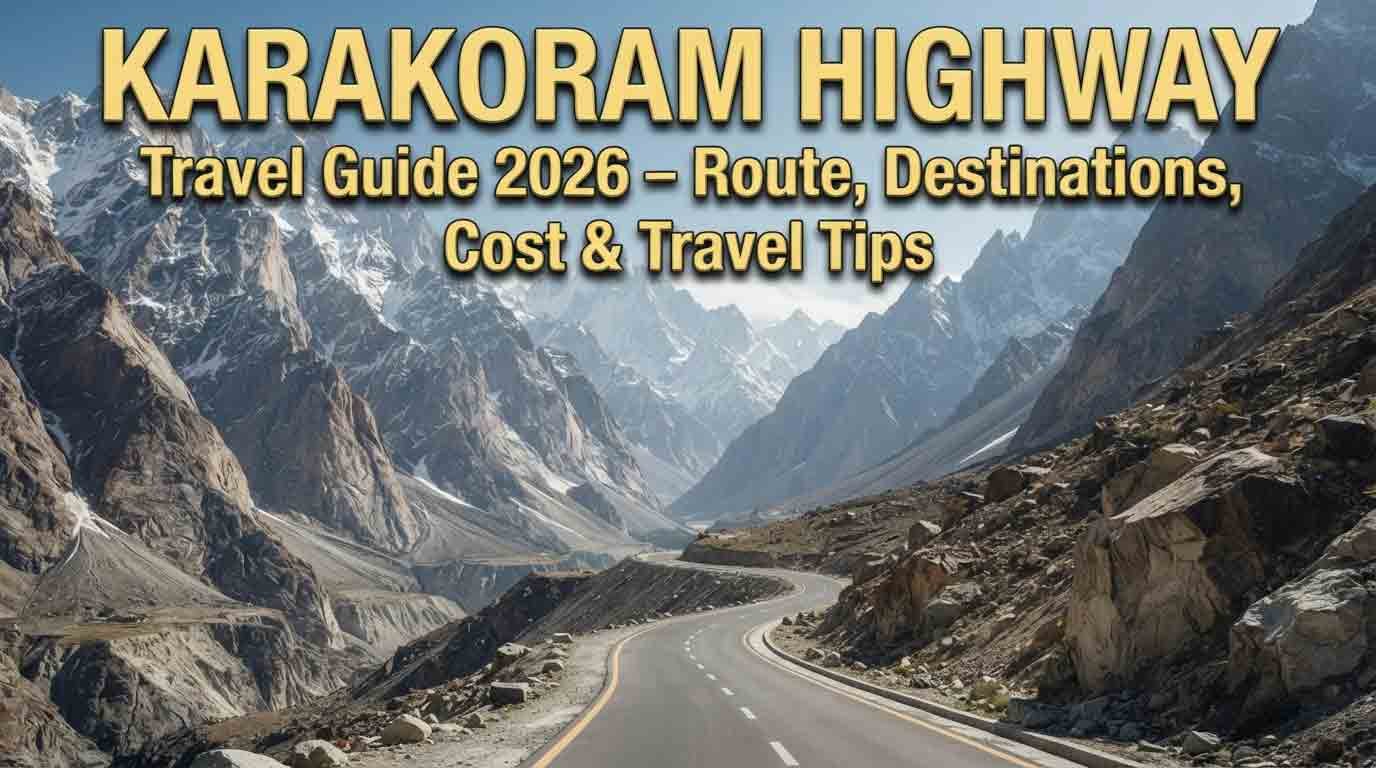
Karakoram Highway Travel Guide 2026 – Route, Destinations, Cost & Travel Tips
Karakoram Highway is one of Pakistan's most spectacular mountain roads. It connects Hassanabdal near Islamabad with Khunjerab Pass and continues toward China. The Pakistani section is officially designated as N-35 and extends for approximately 806 kilometres from Hassanabdal through Thakot to Khunjerab.
The highway passes through some of the most dramatic landscapes in northern Pakistan, including the Indus River valleys, Kohistan, Chilas, Gilgit, Nagar, Hunza, Gojal, Passu, Sost and the high-altitude Khunjerab region.
For travelers, the Karakoram Highway is much more than a road. It is a complete mountain journey featuring enormous peaks, glaciers, rivers, historic villages, suspension bridges, lakes, forts, valleys and traditional communities.
The classic tourist journey follows the road from Islamabad toward Gilgit and Hunza and then continues to Khunjerab Pass near the Pakistan-China border. A round trip normally requires several days, while travelers who want to explore Hunza and nearby valleys should allow additional time.
The highway reaches Khunjerab Pass at an elevation of approximately 4,693 metres. The Government of Gilgit-Baltistan identifies Khunjerab as one of the world's highest international border crossings and notes that the pass is affected by severe winter weather.
Karakoram Highway at a Glance
| Feature | Details |
|---|---|
| Highway Name | Karakoram Highway |
| Highway Number | N-35 |
| Main Pakistani Route | Hassanabdal – Thakot – Khunjerab |
| Main Starting Area | Hassanabdal / Islamabad |
| Main Region | Khyber Pakhtunkhwa and Gilgit-Baltistan |
| International Destination | China |
| Major Gateway | Gilgit |
| Famous Tourist Region | Hunza |
| Famous Lake | Attabad Lake |
| Famous Mountain | Rakaposhi |
| Famous Peaks | Passu Cones |
| Famous Border Pass | Khunjerab Pass |
| Khunjerab Elevation | Approximately 4,693 metres |
| Major Activities | Road trips, sightseeing, photography, hiking and cultural tourism |
| Recommended Trip | 7–12 days for a detailed journey |
| Best General Season | May to October |
| Main Travel Concern | Mountain weather, landslides and road conditions |
| Main Highway | N-35 |
The exact travel duration depends on road conditions, weather, traffic, stops and the number of destinations included.
Why Travel on the Karakoram Highway in 2026?
The Karakoram Highway is ideal for travelers who want to experience the mountains of northern Pakistan by road.
The journey offers:
-
Dramatic mountain landscapes
-
Massive glaciers
-
Deep river valleys
-
Hunza Valley
-
Gilgit
-
Nagar Valley
-
Attabad Lake
-
Passu
-
Sost
-
Khunjerab Pass
-
Traditional mountain villages
-
Historic forts
-
Suspension bridges
-
Photography opportunities
-
Hiking and trekking
-
Cultural experiences
-
Scenic roadside stops
-
High-altitude landscapes
One of the biggest advantages of a KKH road trip is the ability to stop at different locations rather than simply flying directly to Hunza or Gilgit.
The road itself becomes part of the experience.
Where Is the Karakoram Highway?
The Karakoram Highway begins in the Hassanabdal area and travels north through Khyber Pakhtunkhwa before entering Gilgit-Baltistan.
The highway continues through areas including:
Hassanabdal → Haripur → Abbottabad → Mansehra → Besham → Dasu → Chilas → Gilgit → Nagar → Hunza → Gulmit → Passu → Sost → Khunjerab Pass
The official National Highway Authority network identifies N-35 as the Hassanabdal–Thakot–Khunjrab route with a Pakistani length of approximately 806 kilometres.
Islamabad to Karakoram Highway Route
Travelers starting from Islamabad generally connect with the northern road network toward Hassanabdal and then continue onto the KKH.
A typical route is:
Islamabad → Hassanabdal → Haripur → Abbottabad → Mansehra → Besham → Dasu → Chilas → Gilgit → Hunza → Sost → Khunjerab Pass
The exact route and travel time can vary because travelers may use alternative summer routes, including the Babusar side when conditions permit.
Main Karakoram Highway Destinations
The major destinations and stops include:
-
Hassanabdal
-
Haripur
-
Abbottabad
-
Mansehra
-
Besham
-
Dasu
-
Chilas
-
Nanga Parbat Viewpoints
-
Jaglot
-
Gilgit
-
Rakaposhi View Point
-
Karimabad
-
Baltit Fort
-
Altit Fort
-
Eagle's Nest
-
Attabad Lake
-
Gulmit
-
Passu
-
Passu Cones
-
Hussaini Suspension Bridge
-
Sost
-
Khunjerab National Park
-
Khunjerab Pass
Not every destination requires an overnight stay. Some are better treated as roadside stops, while Hunza and the upper Gojal region deserve multiple nights.
Chilas
Chilas is an important stop on the KKH and is located in the Diamer region of Gilgit-Baltistan.
It is known for:
-
Nanga Parbat views
-
Ancient rock carvings
-
Indus River scenery
-
Mountain landscapes
-
Access toward Fairy Meadows
-
KKH roadside accommodation
Travelers commonly use Chilas as an overnight stop when traveling between Islamabad and Gilgit.
Nanga Parbat Viewpoints
Nanga Parbat is one of Pakistan's most famous mountains and rises dramatically above the surrounding landscape.
The KKH provides several opportunities to see the mountain from the Chilas and Raikot areas.
Travelers should allow extra time for photography because mountain visibility can depend heavily on weather and cloud conditions.
Jaglot
Jaglot is an important geographical location along the journey toward Gilgit.
The area is associated with the meeting region of the Karakoram, Himalaya and Hindu Kush mountain systems.
It is also an important road junction for travelers continuing toward Gilgit, Skardu and other parts of Gilgit-Baltistan.
Gilgit
Gilgit is the administrative center of Gilgit-Baltistan and one of the most important stops on the Karakoram Highway.
Travelers can use Gilgit as a base for:
-
Kargah Valley
-
Kargah Buddha
-
Naltar Valley
-
Local markets
-
River viewpoints
-
Nearby mountain villages
-
Hunza travel
-
Nagar travel
Gilgit is also a useful place to rest, refuel, arrange transport and purchase supplies before continuing farther north.
Rakaposhi View Point
Rakaposhi View Point near Ghulmet is one of the most famous roadside attractions between Gilgit and Hunza.
Rakaposhi rises to approximately 7,788 metres and is a major landmark of the Karakoram region. The Government of Gilgit-Baltistan identifies the Ghulmet viewpoint on the KKH as a popular place to see the mountain.
Travelers can stop for:
-
Mountain photography
-
Tea
-
Short walks
-
Glacier-fed stream views
-
Landscape photography
Hunza Valley
Hunza is one of the most popular destinations connected by the Karakoram Highway.
The main tourist areas include:
-
Karimabad
-
Aliabad
-
Altit
-
Baltit
-
Duikar
-
Eagle's Nest
-
Gulmit
-
Passu
-
Upper Hunza
Hunza is known for:
-
Mountain scenery
-
Historic forts
-
Terraced villages
-
Local culture
-
Apricot orchards
-
High peaks
-
Hiking
-
Photography
-
Traditional food
Travelers should ideally spend at least two or three nights in Hunza instead of treating it as a quick roadside stop.
Karimabad
Karimabad is one of the main tourist centers of Hunza.
It provides access to:
-
Baltit Fort
-
Altit Fort
-
Eagle's Nest
-
Local markets
-
Traditional streets
-
Restaurants
-
Hotels
-
Guesthouses
Karimabad is one of the best locations for travelers who want comfortable accommodation while exploring Hunza.
Baltit Fort
Baltit Fort is one of the most recognizable cultural landmarks of Hunza.
The fort sits above Karimabad and provides views over the valley and surrounding mountains.
Travelers interested in history, architecture and local culture should include Baltit Fort in their Hunza itinerary.
Altit Fort
Altit Fort is another major historical attraction in Hunza.
The fort is surrounded by traditional settlement areas and offers views over the Hunza River and surrounding landscape.
It can be combined with a visit to Karimabad and other central Hunza attractions.
Eagle's Nest
Eagle's Nest at Duikar is famous for panoramic views of the surrounding Hunza mountains.
It is particularly popular around sunrise and sunset.
Travelers should carry warm clothing because temperatures can drop quickly at higher viewpoints.
Attabad Lake
Attabad Lake is one of the most famous attractions along the Karakoram Highway.
The lake was created after a major landslide in 2010 and is now one of the defining landscapes of the upper Hunza region.
Travelers can enjoy:
-
Lake photography
-
Boat rides
-
Mountain views
-
Roadside viewpoints
-
Water activities where available
The KKH passes through tunnels along the lake, making the journey itself a memorable part of the experience.
Gulmit
Gulmit is a historic settlement in Upper Hunza and an important stop between Attabad and Passu.
The area provides access to:
-
Traditional villages
-
Local culture
-
Mountain viewpoints
-
Gojal attractions
-
Passu region
Travelers interested in local life should spend some time away from the main road.
Passu
Passu is one of the most photogenic areas on the Karakoram Highway.
The area is famous for:
-
Passu Cones
-
Glaciers
-
Mountain scenery
-
Suspension bridges
-
Hiking
-
Traditional village landscapes
The Passu Cones are particularly recognizable and are among the most photographed landscapes in northern Pakistan.
Hussaini Suspension Bridge
The Hussaini Suspension Bridge is a popular attraction in the Gojal region.
The bridge is associated with dramatic mountain scenery and is popular among adventure travelers and photographers.
Visitors should follow local safety instructions and avoid overcrowding the bridge.
Sost
Sost is the last major Pakistani settlement before Khunjerab Pass.
The Government of Gilgit-Baltistan identifies Sost as a village and important border-related location on the Karakoram Highway, with Pakistani immigration and customs facilities located there.
Travelers going toward Khunjerab should ensure they have enough:
-
Water
-
Food
-
Cash
-
Warm clothing
-
Fuel
-
Necessary documents
Khunjerab Pass
Khunjerab Pass is the final major destination on the Pakistani side of the Karakoram Highway.
It stands at approximately 4,693 metres and connects Pakistan's Gilgit-Baltistan region with China's Xinjiang region.
The area is famous for:
-
High-altitude scenery
-
Pakistan-China border
-
Mountain landscapes
-
Khunjerab National Park
-
Wildlife
-
Snow-covered peaks
Weather can change rapidly at this altitude.
Travelers should not treat Khunjerab as an ordinary sightseeing stop because altitude and weather can affect visitors significantly.
Can You Cross into China from Khunjerab?
Reaching the Khunjerab Pass viewpoint and border area is different from crossing into China.
A traveler planning to enter China needs to meet the applicable Chinese visa, immigration and border requirements.
Border operating arrangements can change, especially because of weather, security and bilateral procedures.
Travelers should confirm the latest requirements before attempting an international crossing.
Karakoram Highway Travel Cost 2026
The total cost depends on:
-
Starting city
-
Number of travelers
-
Private or shared transport
-
Vehicle type
-
Driver
-
Number of nights
-
Hotel category
-
Food
-
Local sightseeing
-
Guide requirements
-
Additional valleys
-
Travel season
A private road trip is considerably more expensive than using shared transport.
A practical planning approach is to calculate:
Transport + Accommodation + Food + Local Transport + Activities + Emergency Budget
Travelers should not rely on one fixed package price because KKH costs vary considerably between summer and shoulder seasons.
Estimated Budget for Two People
A reasonable planning budget for two people for a road trip can be approximately:
| Expense | Planning Range |
|---|---|
| Islamabad/northern transport | PKR 30,000–60,000+ |
| Private vehicle/driver share | PKR 30,000–80,000+ |
| Accommodation | PKR 15,000–40,000+ |
| Food | PKR 10,000–20,000+ |
| Local sightseeing | PKR 5,000–15,000+ |
| Miscellaneous | PKR 5,000–15,000+ |
A practical total can therefore range from approximately:
PKR 70,000–180,000+ for two people
depending on transport arrangements, number of days, hotel category and destinations.
A private vehicle, premium hotels and additional valleys can increase the total substantially.
Estimated Family Trip Cost
A family of four should plan a larger budget because a private vehicle and multiple hotel rooms may be required.
A five-to-seven-day family road trip can reasonably require approximately:
PKR 140,000–300,000+
depending on:
-
Transport
-
Accommodation
-
Food
-
Number of rooms
-
Sightseeing
-
Travel season
-
Local driver
-
Additional destinations
Families should keep an emergency reserve because mountain-road delays can increase travel time and expenses.
Karakoram Highway Hotels and Accommodation
Travelers can find different accommodation categories along the route.
Options include:
-
Budget hotels
-
Guesthouses
-
Family hotels
-
Boutique hotels
-
Mountain resorts
-
Glamping
-
Camping
-
Local homestays
Major accommodation bases include:
-
Chilas
-
Gilgit
-
Karimabad
-
Aliabad
-
Gulmit
-
Passu
-
Sost
Hunza generally provides the widest choice for tourists.
Travelers should book accommodation in advance during peak summer months.
Best Time to Travel on Karakoram Highway
The best general travel period is:
May to October
However, the ideal month depends on the route.
May
May can be attractive for travelers looking for:
-
Spring scenery
-
Fewer crowds
-
Pleasant temperatures in lower areas
-
Fresh landscapes
Higher-altitude locations may still experience cold conditions.
June
June is generally a strong month for northern travel.
Road conditions improve as the summer season develops, although weather-related disruptions can still occur.
July and August
These are among the busiest tourism months.
Advantages include:
-
Green valleys
-
Better access to northern destinations
-
More tourism facilities
-
Trekking opportunities
Disadvantages include:
-
Higher hotel prices
-
More tourists
-
Traffic
-
Possible monsoon-related landslides
September
September is often excellent for travelers seeking:
-
Cooler weather
-
Fewer crowds
-
Clear mountain views
-
Photography
-
Road trips
October
October can provide beautiful autumn scenery, particularly in Hunza.
However, temperatures fall rapidly and higher routes become increasingly weather-dependent.
November to April
Winter travel requires significantly more planning.
Snow, ice and extreme cold can affect high-altitude areas and border routes.
The Government of Gilgit-Baltistan states that Khunjerab Pass is closed during winter because of harsh weather.
Karakoram Highway Road Conditions
Mountain-road conditions can change quickly.
Possible problems include:
-
Landslides
-
Rockfall
-
Heavy rainfall
-
Flooding
-
Damaged roads
-
Mud
-
Snow
-
Temporary closures
-
Traffic restrictions
In March 2026, the Gilgit-Baltistan Tourism Department reported landslides affecting sections between Pattan and Bursin after heavy rainfall and advised travelers to monitor official road updates before traveling.
This is why travelers should never plan a KKH trip using an old road-condition update.
Is Karakoram Highway Safe?
The KKH can be traveled safely with proper preparation, but it is a demanding mountain route.
Travelers should:
-
Use experienced drivers.
-
Avoid unnecessary night driving.
-
Check road conditions before departure.
-
Keep extra travel time.
-
Avoid stopping beneath unstable slopes.
-
Follow local instructions.
-
Keep emergency contacts.
-
Carry sufficient water and food.
-
Avoid risky photography locations.
-
Respect weather warnings.
The biggest mistake is treating the KKH like a normal highway.
Mobile Network and Internet
Mobile connectivity varies along the route.
Connectivity is generally better around towns but can become unreliable in remote mountain areas.
Travelers should:
-
Download offline maps.
-
Save hotel numbers.
-
Save driver information.
-
Carry a power bank.
-
Inform family members of the itinerary.
-
Avoid depending entirely on mobile internet.
ATM and Cash
Travelers should carry enough cash before entering remote areas.
Cash may be required for:
-
Hotels
-
Food
-
Local transport
-
Guides
-
Parking
-
Activities
-
Emergency expenses
Keep emergency cash separately from your main wallet.
What to Pack for a Karakoram Highway Trip
Recommended items include:
-
Warm jacket
-
Rain jacket
-
Comfortable shoes
-
Hiking shoes
-
Extra clothes
-
Sunglasses
-
Sunscreen
-
Cap
-
Water bottle
-
Power bank
-
Flashlight
-
First-aid kit
-
Personal medicines
-
Camera
-
Small backpack
-
Offline maps
-
Cash
-
Identification documents
-
Snacks
-
Warm sleeping equipment if camping
Travelers going to Khunjerab should carry additional warm clothing because temperatures can be much lower than in Islamabad or Lahore.
Recommended Number of Days
3–4 Days
Suitable for a fast trip focused on Hunza.
5–7 Days
Better for combining Gilgit, Hunza, Attabad, Passu and Khunjerab.
7–10 Days
Recommended for travelers who want a relaxed KKH road trip with additional sightseeing.
10–14 Days
Best for travelers who want to explore side valleys and spend more time in Hunza and surrounding regions.
Suggested 5-Day Karakoram Highway Itinerary
Day 1
Islamabad to Chilas.
Stop along the route for meals and photographs.
Overnight in Chilas.
Day 2
Chilas to Gilgit.
Visit suitable viewpoints.
Continue toward Gilgit.
Overnight in Gilgit.
Day 3
Gilgit to Hunza.
Stop at Rakaposhi View Point.
Continue toward Karimabad.
Visit selected Hunza attractions.
Overnight in Hunza.
Day 4
Hunza to Attabad Lake, Passu and Sost.
Explore the upper Hunza region.
Continue toward Sost depending on the itinerary.
Overnight in the upper Hunza region or return toward Hunza.
Day 5
Travel toward Khunjerab Pass if road and weather conditions allow.
Return toward Hunza or begin the journey back according to the schedule.
Suggested 7-Day Karakoram Highway Itinerary
Day 1
Islamabad to Chilas.
Overnight in Chilas.
Day 2
Explore Chilas and nearby viewpoints.
Continue toward Gilgit.
Overnight in Gilgit.
Day 3
Explore Gilgit.
Visit local attractions.
Overnight in Gilgit.
Day 4
Gilgit to Hunza.
Stop at Rakaposhi View Point.
Visit Karimabad.
Overnight in Hunza.
Day 5
Explore Baltit Fort, Altit Fort and Eagle's Nest.
Overnight in Hunza.
Day 6
Visit Attabad Lake, Gulmit, Passu and Sost.
Overnight in Upper Hunza.
Day 7
Travel toward Khunjerab Pass if conditions permit.
Return toward Hunza or begin the return journey.
Karakoram Highway for Families
Families can enjoy the KKH, especially when the journey is divided into manageable sections.
Families may prefer:
-
Comfortable hotels
-
Private vehicles
-
Short sightseeing stops
-
Hunza stays
-
Lake visits
-
Fort visits
-
Scenic viewpoints
Families with young children should be careful with:
-
Long driving hours
-
Cold weather
-
High altitude
-
Suspension bridges
-
Riverbanks
-
Mountain roads
Karakoram Highway for Couples
The KKH is an excellent choice for couples interested in:
-
Mountain scenery
-
Photography
-
Comfortable hotels
-
Lakes
-
Historic forts
-
Road trips
-
Peaceful valleys
-
Adventure
A seven-day itinerary can provide a good balance between driving and sightseeing.
Karakoram Highway for Adventure Travelers
Adventure travelers can combine the KKH with:
-
Fairy Meadows
-
Naltar Valley
-
Passu
-
Hussaini Bridge
-
Upper Hunza
-
Khunjerab
-
Local trekking
-
Camping
-
Glacier viewpoints
Additional side trips require extra time and budget.
Responsible Tourism on the Karakoram Highway
Travelers should help protect the environment and local communities.
Visitors should:
-
Avoid littering.
-
Take plastic waste with them.
-
Avoid damaging vegetation.
-
Respect local traditions.
-
Avoid excessive noise.
-
Do not pollute rivers.
-
Respect historical sites.
-
Support local businesses.
-
Avoid disturbing wildlife.
-
Follow designated camping rules.
The Gilgit-Baltistan Tourism Department also advises visitors to respect local culture, avoid harming the environment and cooperate with Tourist Police.
Final Thoughts
The Karakoram Highway is one of Pakistan's greatest road-trip experiences.
From the Indus River and dramatic Kohistan mountains to Chilas, Gilgit, Rakaposhi, Hunza, Attabad Lake, Passu, Sost and Khunjerab Pass, the journey offers an extraordinary combination of scenery, culture and adventure.
The most important rule is not to rush.
A short trip can introduce you to the KKH, but a longer journey allows you to experience the valleys, mountains and communities properly.
With suitable transport, enough cash, warm clothing, flexible planning and regular road-condition checks, the Karakoram Highway can become an unforgettable travel experience in northern Pakistan.
Guide Information
Eligibility
No specific eligibility requirement applies to a domestic Karakoram Highway road trip. Travelers should be physically and practically prepared for long mountain journeys, changing weather, high-altitude areas and extended driving.
Travelers planning to enter China must separately meet the applicable visa, passport, immigration and border requirements.
Required Documents
* Original CNIC for Pakistani travelers.
* Passport for international travelers.
* Valid driving license for self-driving.
* Vehicle registration documents when using a private vehicle.
* Vehicle insurance documents where applicable.
* Hotel booking details.
* Emergency contact information.
* Required international travel documents for travelers crossing into China.
Fees
There is no single fixed fee for traveling on the Karakoram Highway.Typical expenses include:* Transport or fuel.* Driver charges.* Hotel accommodation.* Food.* Local sightseeing.* Guide charges.* Entry tickets where applicable.* Activities.* Emergency expenses.A practical two-person road-trip budget can range from approximately PKR 70,000–180,000+ depending on duration, transport, accommodation and itinerary.
Processing Time
Not applicable for a normal domestic road trip.Travel planning should ideally begin several weeks before departure, especially during peak summer months when hotels and private vehicles can become busy.WHEN TO APPLY:Not applicable.Travelers should plan and book their trip before the intended travel date.For peak summer travel, early hotel and transport reservations are recommended.
Application Method
There is no formal application process for a domes
Validity Period
Not applicable.The travel itinerary is valid for the selected travel dates and should be adjusted ac
Step-by-Step Process
- Decide whether you want a short Hunza trip or a complete Karakoram Highway road trip.
- Select your preferred travel dates.
- Check the expected weather conditions.
- Check current road conditions.
- Confirm whether your planned route is open.
- Decide whether to travel by private vehicle, shared transport or public transport.
- Select an experienced mountain driver if hiring a vehicle.
- Prepare your CNIC or passport.
- Confirm your vehicle documents if driving yourself.
- Prepare an estimated travel budget.
- Keep an emergency fund separate.
- Book accommodation in Chilas, Gilgit or Hunza according to your itinerary.
- Plan your overnight stops.
- Avoid making the itinerary unnecessarily tight.
- Download offline maps.
- Save important hotel and driver contact numbers.
- Carry a power bank.
- Carry sufficient cash.
- Carry suitable warm clothing.
- Carry rain protection.
- Prepare basic medicines and first-aid supplies.
- Carry drinking water and snacks.
- Start the journey early each day.
- Avoid unnecessary night driving.
- Take regular breaks during long drives.
- Stop only at safe roadside locations.
- Check weather conditions before heading toward higher elevations.
- Confirm Khunjerab road and border conditions before traveling toward the pass.
- Keep extra time for unexpected road delays.
- Follow local authorities, road instructions and safety advice throughout the journey.
Official Information
Contact: For road and highway information, travelers should check relevant National Highway Authority updates.For tourism-related information in Gilgit-Baltistan, travelers can contact the Gilgit-Baltistan Tourism Department.Gilgit-Baltistan Tourist Police emergency contact information published by the tourism department includes 1422 within Gilgit-Baltistan and 05811-930055 from outside the region.
Frequently Asked Questions
The Karakoram Highway, commonly called the KKH, is Pakistan's major international mountain highway connecting Hassanabdal with Khunjerab and the Pakistan-China border.
The Pakistani section of the Karakoram Highway is designated as N-35.
The National Highway Authority identifies the N-35 Hassanabdal–Thakot–Khunjrab route as approximately 806 kilometres within Pakistan.
The Pakistani N-35 starts from the Hassanabdal area and continues north toward Khunjerab.
The Pakistani section reaches Khunjerab Pass on the Pakistan-China border.
May to October is generally a practical travel period, although exact conditions vary by location and weather.
Winter travel is possible on some lower sections, but high-altitude areas can become difficult because of snow, ice and extreme weather.
Khunjerab Pass can close during winter because of harsh weather and heavy snow. Travelers should confirm the current status before departure.
Five to seven days can provide a good introduction, while seven to twelve days are better for a relaxed trip with additional sightseeing.
It can be traveled with proper planning, but travelers should take mountain-road, weather, landslide and driving risks seriously.
Yes. Families can enjoy the route, particularly with a private vehicle, comfortable hotels and a relaxed itinerary.
Yes. The route is suitable for couples interested in mountain scenery, photography, lakes, historic sites and road trips.
Hunza is one of the most popular destinations along the KKH, while Khunjerab Pass is the famous high-altitude endpoint on the Pakistani side.
Khunjerab Pass reaches approximately 4,693 metres above sea level.
Attabad Lake is located in the Gojal area of Hunza along the Karakoram Highway.
Yes. It is one of the most scenic attractions on the KKH and offers striking blue water surrounded by mountains.
Passu is located in Upper Hunza along the Karakoram Highway and is famous for its distinctive mountain peaks and scenic landscapes.
Passu Cones are a group of dramatic pointed mountain peaks near Passu in Upper Hunza.
Sost is a settlement in Gojal, Hunza, and serves as an important Pakistani border-related location before Khunjerab.
International crossing requires compliance with current Chinese visa, immigration and border regulations. Travelers should confirm the latest requirements before departure.
Pakistani domestic travelers should carry their original identification documents. Travelers intending to cross the international border need a valid passport and the required international travel documents.
No. Connectivity can become unreliable in remote mountain sections, so travelers should download offline maps and important information.
Yes. Cash is useful for hotels, food, local transport, guides, activities and emergency expenses.
Self-driving is possible for experienced drivers, but mountain roads require careful driving and travelers should check conditions before departure.
Not necessarily for the entire paved highway, but vehicle suitability depends on the exact route and side trips. A capable vehicle and experienced driver are important for difficult sections.
Pack warm clothing, comfortable shoes, rain protection, medicines, water, snacks, a power bank, offline maps, cash and identification documents.
Yes. Hunza is commonly used as a base for exploring upper destinations before continuing toward Khunjerab Pass.
Major stops include Hassanabdal, Abbottabad, Mansehra, Besham, Dasu, Chilas, Gilgit, Rakaposhi View Point and Hunza.
Trying to complete the journey too quickly. A flexible itinerary is better because mountain roads, weather and traffic can cause delays.