How Can I Verify a Vehicle's Chassis and Engine Number in Pakistan?
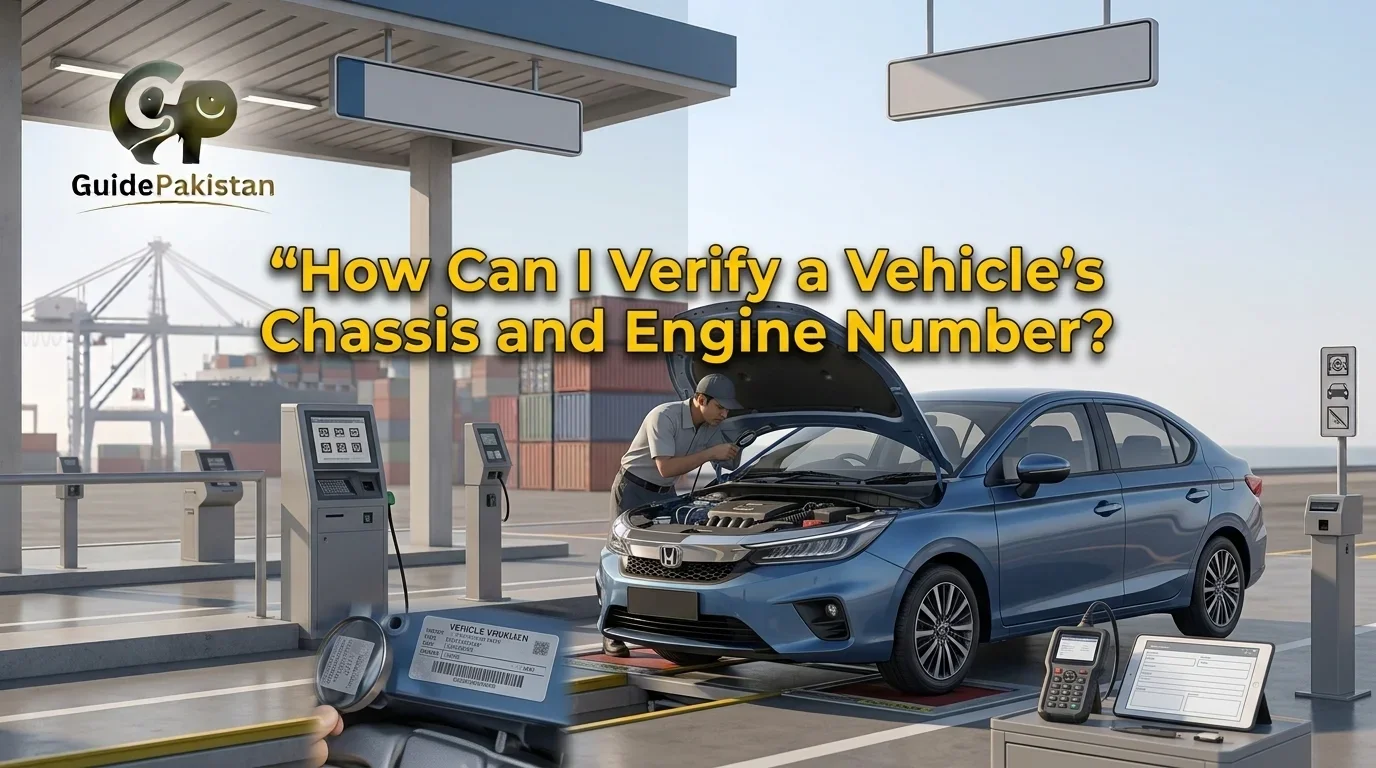
How Can I Verify a Vehicle's Chassis and Engine Number in Pakistan?
A vehicle's chassis number and engine number are two of the most important identification details used to confirm that a vehicle matches its official registration and ownership records. These numbers are particularly important when buying a used car or motorcycle, transferring ownership, registering an imported vehicle, or checking whether a vehicle may have been stolen, tampered with, or illegally altered.
In Pakistan, vehicle verification is generally handled through the relevant provincial Excise, Taxation and Narcotics Control Department, while police verification can provide an additional check for stolen, snatched, recovered, or suspicious vehicles. The exact procedure can vary between provinces.
What Are the Chassis Number and Engine Number?
The chassis number is a unique identification number assigned to the vehicle's body or chassis. On many modern vehicles, it corresponds to the Vehicle Identification Number (VIN) or forms part of the vehicle's identification system.
The engine number is the identification number associated with the vehicle's engine.
Both numbers should be treated as important identity information. When buying a used vehicle, you should compare the numbers physically stamped or marked on the vehicle with the numbers recorded in the registration documents and official government records.
Punjab Excise documentation specifically identifies the chassis number and engine number as vehicle-record fields.
Why Should You Verify These Numbers?
Checking these numbers can help identify discrepancies before you purchase or transfer a vehicle.
For example, a problem may exist if:
-
The chassis number on the vehicle differs from the registration record.
-
The engine number differs from the registration documents.
-
A number appears to have been altered, re-stamped, ground down, welded or otherwise tampered with.
-
The registration record identifies a different vehicle.
-
The seller cannot explain a discrepancy.
-
The vehicle's documentation does not match its physical identity.
-
Police records raise concerns about theft, snatching or recovery.
-
An engine has been replaced but the official record has not been updated.
A mismatch does not automatically prove that a vehicle is stolen. It means that the discrepancy should be investigated through the appropriate Excise and police authorities before proceeding with a purchase or ownership transfer.
Where Can You Find the Chassis and Engine Numbers?
The physical location varies according to the vehicle manufacturer, model and year.
The chassis/VIN may be found:
-
On a metal plate or stamped area in the engine compartment.
-
On the vehicle body.
-
Near the driver's side dashboard or door area.
-
On the chassis frame of some vehicles.
-
In another manufacturer-designated location.
The engine number is usually stamped or engraved directly on the engine or an associated engine component. Its exact location varies considerably between manufacturers.
Do not rely only on a sticker or easily removable label. When verifying a vehicle, compare the official documents with the actual identification markings on the vehicle.
Check the Registration Documents
Start by examining the original vehicle registration documents available from the owner.
The document should contain important vehicle information such as the registration number, chassis number and engine number. Punjab Excise's official registration-card documentation lists both chassis and engine numbers among the vehicle information recorded by the department.
Carefully compare:
Vehicle registration number → Chassis number → Engine number → Make/model → Owner information
Pay attention to every letter and number. A single character can make a difference.
Do not assume that a small difference is simply a typing mistake. Ask the relevant Excise authority to confirm the official record.
Use the Provincial Excise Vehicle Verification Service
If the vehicle is registered in Punjab, Punjab Excise provides an online Online Verification of Registered Vehicles service. The department lists this as an official online service and links it to the Punjab vehicle verification system.
The official Punjab Excise website also provides services for motor vehicle registration and post-registration transactions.
Online verification should be treated as an important record check, but it should not replace physical inspection of the vehicle.
For a vehicle registered in Sindh, the Sindh Excise Department also provides an official online vehicle verification service. Its current online service asks users to select the vehicle category and enter the registration number.
Other provinces and territories have their own vehicle registration authorities and procedures.
Compare the Online Record With the Physical Vehicle
This is one of the most important parts of the verification process.
Suppose the official record shows a particular chassis number. You should physically locate the chassis number on the vehicle and compare it character by character with the official record.
Do the same with the engine number.
Check:
-
Every digit.
-
Every letter.
-
The sequence of characters.
-
The location and appearance of the stamping.
-
Whether the stamping looks original.
-
Whether the surrounding metal appears damaged or modified.
Do not rely on a photograph supplied by the seller when you can inspect the vehicle yourself.
Look for Signs of Tampering
Physical inspection is particularly important where a used vehicle is being purchased.
Potential warning signs include:
-
Uneven or unusual stamping.
-
Different fonts or character sizes.
-
Fresh paint around the identification area.
-
Grinding marks.
-
Welding marks.
-
Cut or repaired metal.
-
Scratches around the stamped number.
-
Signs that another number may have been removed.
-
A number that appears unusually shallow or recently stamped.
-
Damage around the original identification area.
These signs do not by themselves establish that a vehicle is stolen or illegally altered. They are reasons to stop and obtain professional or official verification before completing the transaction.
Verify Through Police Channels When Necessary
Punjab Police operates the Anti-Vehicle Lifting System (AVLS), which maintains a province-wide database relating to stolen and snatched vehicles and integrates information with police, Excise and forensic records. Punjab Police says authorized officers can use the system for vehicle verification.
Punjab Police also provides vehicle verification through Police Khidmat Markaz. Its published service timetable currently lists vehicle verification at around 40 minutes for on-the-spot verification.
This can be especially useful when:
-
You are buying a used vehicle.
-
The chassis or engine number appears suspicious.
-
Documents do not match.
-
The vehicle is imported.
-
The seller gives unclear answers about the vehicle's history.
-
You suspect the vehicle may have been stolen or tampered with.
Why Police Verification Matters
A vehicle can have apparently valid-looking documents and still require further investigation if its physical identity is questionable.
Punjab Police's AVLS is specifically designed to maintain information on stolen and snatched vehicles and connects with other relevant government systems.
Therefore, when there is a serious discrepancy, do not attempt to solve the matter by altering or repairing the identification number yourself.
Instead, take the vehicle and documents to the appropriate authority for verification.
What If the Engine Has Been Replaced?
Engine replacement is an important situation because the engine number may no longer match the number appearing in older registration records.
Punjab Excise publishes a procedure for Change of Engine Number (Alteration). The department's listed requirements include documentation concerning purchase of the new engine, the applicant's CNIC, Form F containing vehicle particulars and the new engine number, and the original registration certificate with updated token tax.
Therefore, if a seller tells you that the engine was replaced, ask for evidence that the replacement was properly documented and recorded with the relevant Excise authority.
Do not simply accept the statement that "the engine was changed" as sufficient explanation.
What If the Chassis Number Does Not Match?
A chassis-number mismatch should be treated seriously.
Possible explanations may include:
-
A documentation error.
-
Incorrect data entry.
-
A legitimate record issue requiring correction.
-
Vehicle identity tampering.
-
A replacement or altered chassis/body.
-
A cloned or suspicious vehicle.
-
Incorrect documents supplied by the seller.
The correct response is to stop the transaction until the relevant authority verifies the vehicle.
Do not pay the remaining purchase price merely because the seller promises to fix the issue later.
Verify Before Buying a Used Vehicle
The safest time to discover a vehicle identity problem is before payment, not after the ownership transfer.
Before buying, ideally check:
-
The original registration documents.
-
The registration number.
-
The chassis number.
-
The engine number.
-
The official Excise record.
-
The owner's identity and ownership record.
-
Police/stolen-vehicle status where appropriate.
-
Tax and registration status.
-
Any engine replacement documentation.
-
Any relevant import or customs documentation for an imported vehicle.
Punjab Excise's ownership-transfer documentation shows that vehicle information is retrieved from the Excise database during the transfer process, including the registration number, make and chassis number.
Do Not Rely Only on the Number Plate
A number plate is not enough to establish that the physical vehicle is genuine.
A dishonest seller could potentially present a vehicle with a number plate belonging to another vehicle. This is why the vehicle's chassis and engine identification should be compared with official records.
The registration number should therefore be used as the starting point for official record verification, followed by physical comparison of the vehicle's identification numbers.
Imported Vehicles Need Extra Care
Imported vehicles can require additional document checks because their history may involve import documents, customs clearance, auction records, shipping documents or other paperwork.
For an imported vehicle, compare the physical vehicle identity with the registration and import documentation available from the seller.
If there is any unexplained discrepancy, seek verification from the relevant authorities before buying.
What Should You Do If You Find a Mismatch?
Do not attempt to modify the number.
Do not allow a mechanic, dealer or seller to grind, restamp, weld or otherwise alter the identification area.
Instead:
-
Photograph the relevant documents.
-
Record the discrepancy.
-
Ask the seller for an explanation.
-
Do not make the final payment.
-
Contact the relevant Excise authority.
-
Obtain police verification where appropriate.
-
Ask for written clarification if required.
-
Keep copies of the seller's documents and transaction evidence.
If you believe the vehicle may be stolen or involved in criminal activity, contact the police rather than trying to investigate or recover the vehicle yourself.
Punjab Police lists 15 as the police emergency number and 1787 as the IGP Complaint Center.
Is Online Verification Enough?
Online verification is useful, but it should not necessarily be considered the final step when buying an expensive used vehicle.
An online record can help you compare registration information, but physical inspection remains important.
For a higher-value transaction, a sensible verification approach is:
Official online record + original documents + physical chassis inspection + physical engine inspection + police verification where necessary
This provides several independent checks rather than relying on one source.
Keep the Numbers Exactly as Recorded
When entering a chassis or engine number into a form, application or verification request, enter the characters exactly as they appear.
Be especially careful with characters that can look similar, such as:
-
0 and O
-
1 and I
-
5 and S
-
8 and B
Do not guess unclear characters. If the physical stamping is difficult to read, ask the relevant authority or qualified inspector to confirm it.
What If the Number Is Difficult to Read?
A number may be difficult to read because of:
-
Dirt.
-
Rust.
-
Paint.
-
Age.
-
Poor lighting.
-
The location of the stamping.
-
Physical damage.
Clean the area only in a way that does not damage the vehicle or identification marking. If the number remains unclear, have it inspected by a qualified professional or the relevant government authority.
Avoid aggressive sanding, grinding or chemical treatment of the identification area.
Check the Owner's Documents Too
The vehicle identity should be consistent with the ownership record.
Punjab Excise provides online vehicle verification and ownership-related services, while its transfer procedure uses information retrieved from the Excise database.
Before buying, make sure:
-
The seller is the recorded owner or has proper authority to sell.
-
The vehicle's registration information matches the documents.
-
The chassis number matches.
-
The engine number matches or has an officially documented replacement.
-
There is no unexplained ownership issue.
Final Checklist
Before purchasing a used vehicle in Pakistan, use this simple checklist:
Documents
-
Original registration certificate/card.
-
Ownership information.
-
CNIC and seller details as appropriate.
-
Relevant transfer documents.
-
Import/customs documents where applicable.
-
Engine replacement documents where applicable.
Vehicle
-
Registration number.
-
Chassis/VIN.
-
Engine number.
-
Make and model.
-
Colour and other identifying characteristics.
Verification
-
Official Excise record.
-
Physical chassis comparison.
-
Physical engine comparison.
-
Police verification where appropriate.
-
Inspection for tampering.
Transaction
-
Do not make full payment before resolving discrepancies.
-
Keep copies of important documents.
-
Complete ownership transfer through the official process.
-
Obtain evidence of the completed transaction.
Conclusion
Verifying a vehicle's chassis and engine number is an important step before buying a used car or motorcycle in Pakistan. Start with the official registration record, then physically compare the chassis and engine numbers with the documents. If anything does not match, do not ignore the problem.
For Punjab vehicles, official Excise verification and Punjab Police vehicle-verification services provide important government channels for checking vehicle information. Punjab Police's AVLS also supports verification of stolen and snatched vehicle records.
A vehicle with a number mismatch should not be treated as automatically stolen, but the discrepancy should be resolved through the appropriate authority before the transaction is completed.
Because government procedures, online portals and service requirements can change, always confirm the latest instructions with the relevant provincial Excise and Police department before relying on a particular verification method.
Guide Information
Eligibility
Vehicle owners, prospective vehicle buyers, sellers, and anyone needing to verify the identity or registration details of a car, motorcycle, or other registered vehicle can use the relevant provincial verification services. Additional police verification may be appropriate when a vehicle's identity is suspicious or there is concern about theft or tampering.
Required Documents
Requirements vary by province and service. For practical verification, keep the vehicle's original registration certificate/card, registration number, chassis number, engine number, seller/owner identification where appropriate, and relevant ownership, transfer, import, or engine-replacement documents.
Fees
Online vehicle verification requirements and any police or Excise verification charges can vary by province and service. No single nationwide fee should be assumed. Check the relevant provincial Excise or Police department for the current applicable charges.
Processing Time
Online verification may provide results immediately, depending on the provincial system. Punjab Police currently lists vehicle verification through Police Khidmat Markaz at around 40 minutes for on-the-spot verification. Actual timing can vary by location and circumstances.WHEN TO APPLY: Verify the chassis and engine numbers before buying a used vehicle, before completing a major payment, before ownership transfer, when an engine has been replaced, or whenever vehicle documents and physical markings appear inconsistent.
Application Method
Use the official provincial Excise online vehicle-
Validity Period
Vehicle verification confirms information available in the relevant government records at the time o
Step-by-Step Process
- Identify the province where the vehicle is registered.
- Obtain the vehicle's registration number.
- Ask the seller for the original registration certificate or card.
- Check the registration number against the document.
- Locate the physical chassis or VIN number on the vehicle.
- Record the chassis number exactly as stamped or displayed.
- Locate the physical engine number.
- Record the engine number exactly as displayed.
- Compare the physical chassis number with the registration document.
- Compare the physical engine number with the registration document.
- Check the vehicle make and model against the official documents.
- Check other identifying details such as colour and vehicle type.
- Open the official provincial Excise website.
- Locate the official online vehicle-verification service.
- Enter the registration number exactly as required.
- Complete any security or captcha verification requested by the official portal.
- Review the government record returned by the system.
- Compare the official record with the registration document.
- Compare the official record with the physical vehicle.
- Check whether the recorded chassis number matches the vehicle.
- Check whether the recorded engine number matches the vehicle where the information is displayed.
- Check the registered owner's information where the official system provides it.
- Check whether the vehicle's registration information appears consistent.
- Ask the seller about any mismatch before making payment.
- If the engine was replaced, ask for official engine-replacement documentation.
- Check whether the replacement engine number was properly recorded with the relevant authority.
- Inspect the chassis-number area for unusual grinding or welding.
- Inspect the engine-number area for unusual alteration or re-stamping.
- Do not allow anyone to alter or re-stamp a suspicious identification number.
- If a discrepancy exists, stop the transaction until it is clarified.
- Visit the relevant Excise office if online information is insufficient.
- Consider Police Khidmat Markaz vehicle verification where appropriate.
- Request police verification if there is concern about theft, snatching or tampering.
- Keep copies or photographs of relevant documents for your records.
- Verify imported vehicles against their available import and customs documents.
- Complete ownership transfer only after the vehicle identity has been satisfactorily verified.
- Keep the official transfer and verification records after completing the transaction.
- Recheck information through official government sources if the transaction is delayed or circumstances change.
Official Information
Official Website: https://excise.gos.pk/
Contact: Punjab Excise & Taxation Department Helpline: 1035. Punjab Police Emergency: 15. Punjab Police IGP Complaint Center: 1787. Contact details and service arrangements can change, so verify current information through the official government websites.
Frequently Asked Questions
A chassis number is a unique identification number associated with the vehicle's chassis or body and is used to identify the vehicle.
An engine number is an identification number associated with the vehicle's engine.
It helps confirm that the physical vehicle corresponds with its registration and government records.
It helps establish whether the engine installed in the vehicle matches the recorded vehicle information.
The location varies by make and model and may be found on the vehicle body, chassis, engine compartment, dashboard area or another manufacturer-designated location.
It is generally stamped or marked on the engine or an associated engine component, but the exact location varies by vehicle.
Yes. Several provincial Excise departments provide official online vehicle-verification services.
Use the official Punjab Excise online vehicle-verification service and compare the returned information with the physical vehicle and original documents.
Yes. Punjab Excise lists Online Verification of Registered Vehicles among its official online services.
Vehicle records include chassis information, but the exact information displayed by an online verification service can depend on the system and record. Compare the official record with the physical vehicle and documents.
The information available online varies by provincial system. If the engine number is not displayed, obtain confirmation through the relevant Excise office or official verification process.
No. The registration number should be followed by comparison of the chassis and engine numbers with official records and the physical vehicle.
Stop the transaction and have the discrepancy investigated by the relevant Excise authority and, where appropriate, the police.
Ask whether the engine was replaced and request official documentation. If the explanation is not satisfactory, seek verification from the relevant Excise authority.
No. A mismatch can have different explanations, but it should be investigated before the vehicle is purchased or transferred.
AVLS is the Anti-Vehicle Lifting System operated by Punjab Police for information and verification relating to stolen and snatched vehicles.
Police systems can be used to check vehicle-related records, including stolen and snatched vehicle information. Contact the relevant police verification service when necessary.
Yes. Punjab Police lists vehicle verification among Police Khidmat Markaz services.
Punjab Police currently lists around 40 minutes for on-the-spot vehicle verification through Police Khidmat Markaz, although actual service time can vary.
Yes. Vehicle identity and official records should be checked before completing a major purchase payment.
Yes. Physical inspection is important because an online record alone cannot establish that the vehicle physically carries the same identification marking.
Grinding, welding, uneven stamping, inconsistent characters, fresh paint or other unusual alterations around the identification area can warrant further inspection.
Avoid aggressive cleaning or physical treatment that could damage the identification marking. Have suspicious markings examined by an appropriate professional or authority.
Do not assume that explanation is correct. Ask the relevant authority to confirm the official record before completing the transaction.
Ask for the replacement documentation and confirm that the new engine number has been properly recorded with the relevant Excise authority.
Yes. Punjab Excise publishes a Change of Engine Number procedure with specified documentation.
A qualified mechanic can help locate and inspect the physical marking, but official government verification should be used to confirm registration and legal records.
A dealer's statement should not replace official verification. Compare the vehicle against official government records.
Imported vehicles may require additional import and customs documentation, so compare their physical identity with registration and relevant import records.
Consider the refusal a reason to pause the transaction and obtain independent verification before proceeding.
Do not assume that the transfer can proceed. Resolve the discrepancy through the relevant Excise authority first.
Do not attempt to alter, conceal or recover the vehicle yourself. Contact the appropriate police authority for verification and assistance.
Punjab Police lists 15 as the police emergency number.
Punjab Police lists 1787 as the IGP Complaint Center.
Punjab Excise currently lists 1035 as its helpline.
Do not assume that every verification service is free. Check the current official fee information for the specific province and service.
No. A verification result reflects the information available at the time of checking and should not be treated as a permanent guarantee of future status.
Yes. Keeping copies of relevant verification results and transaction documents can be useful for future reference.
Verify the vehicle before making the final payment and before completing ownership transfer.
You can, but it is safer to complete the necessary verification before purchase so that discrepancies can be addressed before money changes hands.