What Is the Difference Between a Registered and an Unregistered Vehicle?
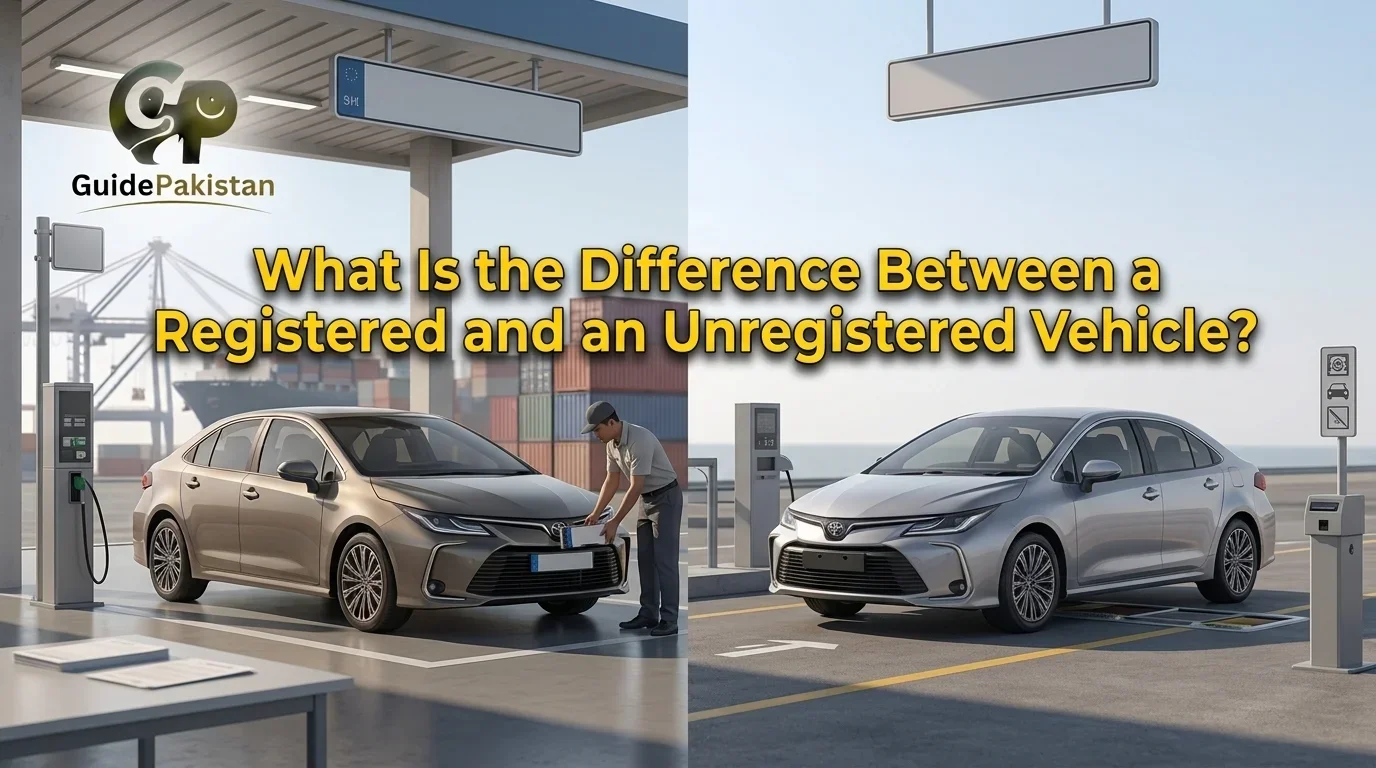
What Is the Difference Between a Registered and an Unregistered Vehicle in Pakistan?
When buying or selling a vehicle in Pakistan, one of the first things you may hear is that a car is registered or unregistered. Understanding this difference is important because registration affects the vehicle's legal record, number plate, ownership documentation, transfer process, taxes, and ability to be used on public roads.
In simple terms, a registered vehicle is a vehicle whose details have been officially recorded with the relevant government motor vehicle registration authority and for which registration documentation and a registration mark have been issued. An unregistered vehicle has not yet completed this registration process.
The distinction can apply to a brand-new vehicle purchased from a dealer, an imported vehicle that has completed customs formalities but has not yet been registered locally, or a vehicle that was previously registered but whose documentation or status requires further verification.
In Punjab, the Excise, Taxation & Narcotics Control Department provides motor vehicle registration services and maintains systems for registration and online verification of registered vehicles. The department's official guidance says that a registration certificate is issued by the registering authority and that prescribed number plates are issued for registered vehicles.
What Is a Registered Vehicle?
A registered vehicle is one that has been formally registered with the relevant provincial or territorial motor vehicle authority.
For example, when a vehicle is registered in Punjab, the registration process records the vehicle and owner information with the Excise & Taxation Department. The registered vehicle receives a registration mark and number plates, and the owner receives registration documentation.
The exact document format can change as governments introduce electronic registration systems. Punjab Excise has also introduced an electronic registration card system. Therefore, vehicle owners should not assume that registration always means having only a traditional paper registration book.
A registered vehicle normally has an identifiable government registration record that can be checked through the relevant official system where online verification is available.
What Is an Unregistered Vehicle?
An unregistered vehicle is a vehicle that has not yet been registered with the relevant motor vehicle registration authority.
This does not necessarily mean that the vehicle is illegal, stolen, or without ownership documents.
For example, a brand-new vehicle purchased from an authorized dealer may initially be unregistered. Punjab's official registration guidance specifically provides a procedure for the original purchaser of an unregistered locally manufactured vehicle. The required documents include the registration application, owner's CNIC, original sales certificate, original sales invoice, and proof of payment of applicable registration charges and taxes.
An imported vehicle may also be unregistered after import and customs clearance but before its local registration has been completed. Punjab Excise lists separate requirements for registration of imported vehicles, including customs-related documents showing payment of applicable duties and taxes.
Therefore, the word unregistered should not automatically be interpreted as meaning that the vehicle has no documents.
Registered vs Unregistered Vehicle: Main Difference
The easiest way to understand the difference is:
Registered vehicle: Government registration has been completed and the vehicle has an official registration record and registration mark.
Unregistered vehicle: The vehicle has not yet completed the applicable motor vehicle registration process.
The practical differences can be significant.
1. Official Registration Record
A registered vehicle has an official registration record maintained by the relevant authority.
Punjab Excise provides an online facility for verification of registered vehicles, allowing users to check registration information through its official services.
An unregistered vehicle does not yet have the same completed registration status.
2. Number Plate
A registered vehicle is assigned a registration mark and prescribed number plates.
Punjab's official explanation of the registration authority's powers states that the authority issues a certificate of registration and licence number plates for registered vehicles. It also states that the owner must display the number plates provided by the authority.
An unregistered vehicle has not yet received its permanent registration through the normal registration process.
Temporary registration arrangements can exist under applicable law, so the absence of permanent plates should not automatically be treated as proof of an illegal vehicle. The exact rules depend on the jurisdiction and circumstances.
3. Ownership Record
A registered vehicle has its ownership information recorded in the relevant motor vehicle registration system.
When the vehicle is transferred to another owner, the registration record can be updated through the prescribed ownership-transfer process.
Punjab Excise's transfer guidance requires documents including the prescribed transfer form, identification documents of the seller and buyer, and the original registration certificate, subject to the applicable vehicle category and circumstances.
An unregistered vehicle may instead be dealt with through the registration procedure applicable to an original purchaser or, in certain circumstances, through documentation relating to its sale before registration.
4. Vehicle Verification
A registered vehicle can generally be checked through the relevant official vehicle-verification system where that service is available.
Punjab Excise lists Online Verification of Registered Vehicles among its online services.
For an unregistered vehicle, the buyer should rely on the original sales, import, customs, and ownership documents and complete the required registration process rather than expecting the vehicle to appear as a normally registered vehicle in the verification system.
5. Transfer Process
The transfer process is different depending on whether a vehicle is already registered.
For a registered vehicle, ownership transfer normally involves updating the existing registration record.
For an unregistered vehicle, the situation can be different. Punjab Excise specifically provides a procedure for cases where the original purchaser disposes of an unregistered vehicle before registration. Its published requirements include the registration application, sales documents, a Transfer Order form, documents showing the sale, and identification documents.
This is why buyers should not assume that buying an unregistered vehicle is identical to buying a registered used car.
Can You Buy an Unregistered Vehicle?
Yes, an unregistered vehicle can be purchased in circumstances permitted by the applicable rules.
A common example is a new vehicle purchased from a dealer before its registration has been completed.
Punjab Excise explicitly recognizes both:
-
registration in the name of the original purchaser of an unregistered vehicle; and
-
disposal of an unregistered vehicle by the original purchaser before registration.
However, buyers should carefully examine the documents before purchasing an unregistered vehicle.
You should confirm:
-
who legally owns the vehicle;
-
whether the sales invoice is genuine;
-
whether the sales certificate is available;
-
whether the vehicle identification number matches the documents;
-
whether applicable taxes and duties have been paid;
-
whether customs documentation is available for an imported vehicle;
-
whether the vehicle can legally be registered in the intended jurisdiction; and
-
whether there are any outstanding issues preventing registration.
Can You Sell an Unregistered Vehicle?
An unregistered vehicle can, in circumstances recognized by the applicable rules, be disposed of before registration.
Punjab Excise has published a specific procedure for an original purchaser who disposes of an unregistered locally manufactured vehicle. It also provides a procedure for an importer who disposes of an imported vehicle while it remains unregistered.
This is important because people sometimes assume that a vehicle must first be registered in the seller's name before it can be sold. The official Punjab procedure demonstrates that there are circumstances in which an unregistered vehicle can be sold through prescribed documentation.
Nevertheless, the exact procedure and taxes can depend on the vehicle and transaction.
Are Unregistered Vehicles Legal?
The answer depends on the vehicle's circumstances and the applicable law.
A vehicle can be legitimately unregistered because it is newly purchased and its registration process has not yet been completed.
For example, Punjab's official registration documents specifically refer to new locally manufactured vehicles that are still unregistered.
However, driving an unregistered vehicle on public roads without complying with applicable registration or temporary-registration requirements can create legal problems.
Punjab Excise has publicly reported enforcement against unregistered vehicles and advised owners to register vehicles and pay applicable token tax on time.
Therefore, unregistered does not automatically mean illegal, but an owner should complete registration within the applicable requirements and should not assume that an unregistered vehicle can be freely driven indefinitely.
Registered Vehicle and Token Tax Are Not the Same Thing
Another important distinction is between registration and motor vehicle tax/token tax.
Registration establishes the vehicle's registration record. Taxes are separate government charges that may apply according to the vehicle and applicable law.
A vehicle can be registered but still have tax-related issues, such as unpaid token tax.
Punjab Excise publishes separate information for motor vehicle taxes and registration-related charges. Its current information also provides different rates and rules according to vehicle type, engine capacity and other factors.
This means that seeing a registration number alone is not enough to assume that every tax obligation has been satisfied.
When buying a used vehicle, buyers should verify both:
-
the registration and ownership record; and
-
the applicable tax/payment status.
What Happens When a New Car Is Purchased?
A typical new locally manufactured vehicle may initially be unregistered.
The purchaser receives sales documentation from the dealer or manufacturer and then completes the registration process according to the applicable provincial rules.
Punjab Excise lists the following basic documentation for registration in the name of the original purchaser:
-
registration application Form-F;
-
owner's CNIC;
-
original sales certificate;
-
original sales invoice; and
-
proof of payment of registration fee and other applicable taxes.
Some registration transactions may also be facilitated through authorized dealers under Punjab's Dealer Vehicle Registration System. The department states that participating dealers can collect the registration amount and complete the registration transaction through the system.
The exact process can change, so buyers should follow the current instructions of the relevant Excise authority.
What Happens With an Imported Unregistered Vehicle?
Imported vehicles have additional documentation requirements.
In Punjab, the official registration guidance for an imported vehicle includes documents such as:
-
Form-F;
-
owner's CNIC;
-
import permission issued by Customs authorities;
-
customs documentation showing payment of applicable duties and taxes;
-
invoice where applicable; and
-
Bill of Lading.
This demonstrates an important point:
Customs clearance and provincial vehicle registration are separate stages.
An imported vehicle may have completed customs requirements but still need registration with the relevant provincial authority before it can be treated as a locally registered vehicle.
Why Is Registration Important?
Vehicle registration provides an official government record connecting the vehicle with its recorded owner and registration details.
It is important for several reasons.
Legal identification
Registration provides the vehicle with an official registration mark.
Ownership records
The registration system records ownership information and allows subsequent ownership transfers to be processed according to the applicable procedure.
Verification
Registered vehicles may be checked through official vehicle-verification systems where available.
Number plates
Registration provides the official registration mark and number plates required under the applicable rules.
Tax administration
Registration and vehicle-tax systems are connected with government administration of motor vehicle taxes and related charges.
Sale and transfer
A properly registered vehicle generally has an established registration record that can be updated when ownership changes.
Risks of Buying an Unregistered Vehicle
Buying an unregistered vehicle is not automatically risky, especially when it is a new vehicle being sold through a legitimate dealer.
However, the buyer should perform additional checks.
1. Check the seller
Confirm that the seller is the person or business legally entitled to sell the vehicle.
2. Check the sales documents
Verify the original invoice and sales certificate.
3. Check the chassis and engine numbers
The vehicle identification details should match the documentation.
4. For imported vehicles, check customs documents
Make sure the customs documentation and evidence of applicable duty/tax payment are available.
5. Confirm registration eligibility
Before paying, determine whether the vehicle can be registered in the relevant province or jurisdiction.
6. Understand additional charges
Registration fees, taxes, number-plate charges and other applicable amounts may be payable.
7. Keep proof of payment
Keep receipts and official payment records.
Which Is Easier to Resell: Registered or Unregistered?
There is no universal answer because resale depends on the vehicle, buyer, price, documentation and local market conditions.
However, registration gives a vehicle an established registration record, which can make verification and subsequent ownership transfer more straightforward.
An unregistered vehicle can also be sold under circumstances recognized by the applicable rules, but the buyer may need to complete registration using the appropriate sales and transfer documents.
Punjab Excise specifically recognizes the sale of certain unregistered vehicles and provides documentation requirements for such transactions.
Can an Unregistered Vehicle Be Driven on the Road?
Do not assume that an unregistered vehicle can simply be driven on public roads because it has been purchased legally.
The owner must comply with the applicable registration, temporary registration, number-plate and road-use requirements.
Punjab Excise has taken enforcement action against unregistered vehicles, including road checking.
If a vehicle is newly purchased and its permanent registration is pending, the owner should follow the currently applicable procedure rather than relying on informal practices.
What Is the Difference Between an Unregistered and an Untaxed Vehicle?
These terms should not be confused.
An unregistered vehicle has not completed the applicable registration process.
An untaxed or tax-default vehicle may already be registered but have outstanding motor vehicle tax or another payment obligation.
For example, a registered car can have a valid registration record but still have unpaid token tax.
Punjab Excise publishes separate motor vehicle tax information and has also referred to enforcement against vehicles with registration and tax-compliance issues.
What Should You Check Before Buying a Registered Used Car?
Before buying a registered used vehicle, consider checking:
-
registration number;
-
registration certificate or electronic registration record;
-
owner's identity;
-
chassis number;
-
engine number;
-
vehicle make and model;
-
tax/token status;
-
ownership-transfer requirements;
-
any applicable outstanding dues;
-
physical condition of the vehicle;
-
authenticity of documents; and
-
official vehicle-verification information.
Where an official online verification service is available, use the relevant government portal rather than relying only on a seller's screenshot or verbal statement.
What Should You Check Before Buying an Unregistered Vehicle?
For an unregistered vehicle, document checking becomes particularly important.
Check:
-
original sales invoice;
-
original sales certificate;
-
seller's CNIC or business identity;
-
vehicle identification numbers;
-
customs documents for imported vehicles;
-
proof of payment of applicable duties and taxes;
-
import permission where required;
-
Bill of Lading for imported vehicles where applicable;
-
transfer or sale documents where the vehicle has changed hands before registration; and
-
registration eligibility and applicable charges.
Punjab's official requirements demonstrate that the documentation differs between locally manufactured and imported vehicles.
Does an Unregistered Vehicle Have a Number?
An unregistered vehicle may have a manufacturer's chassis/VIN number and engine number, but that is not the same thing as having a government-issued registration number.
The chassis/VIN identifies the vehicle itself.
The registration number is the official registration mark assigned through the government registration system.
These should never be treated as the same information.
Does Registration Prove That a Vehicle Is Completely Clear?
Registration is an important official record, but buyers should still conduct appropriate verification.
A registration record should not be treated as a substitute for checking:
-
ownership;
-
taxes;
-
vehicle identification numbers;
-
legal documents;
-
import/customs documentation where applicable;
-
transfer history;
-
physical condition; and
-
any other relevant official records.
For a used vehicle, buyers should compare the vehicle itself with the official documents before completing the transaction.
Registration Requirements Differ Across Pakistan
Pakistan does not have one single provincial Excise department for all vehicle-registration matters.
Vehicle registration is administered by the relevant authority according to the jurisdiction in which the vehicle is registered.
Therefore, a procedure published by Punjab Excise should not automatically be assumed to apply identically in Sindh, Khyber Pakhtunkhwa, Balochistan, Islamabad or other jurisdictions.
Fees, taxes, forms, online services, number-plate systems, biometric requirements and transfer procedures may differ.
Always check the latest official information for the relevant registration authority before making a payment or buying a vehicle.
Registered vs Unregistered Vehicle: Simple Example
Suppose Ahmed purchases a brand-new locally manufactured car from an authorized dealer.
Initially, the car may be unregistered.
Ahmed has the sales invoice and sales certificate but has not yet completed the government registration process.
After completing the required registration procedure and paying the applicable charges, the vehicle is entered into the registration system and receives its official registration mark and number plates.
At that point, the vehicle becomes a registered vehicle.
If Ahmed later sells the car, the transaction normally involves the prescribed ownership-transfer procedure and updating the official registration record.
This example shows why registration is more than simply receiving a number plate from a seller. It is an official government registration process.
Quick Comparison
A registered vehicle has completed the applicable government registration process, has an official registration record and is assigned a registration mark.
An unregistered vehicle has not yet completed that process.
A registered vehicle is normally easier to verify through the relevant official vehicle-verification system where available.
An unregistered vehicle requires careful examination of sales, import, customs and ownership documents.
A registered used vehicle is normally transferred by updating the existing registration record.
An unregistered vehicle may, under applicable rules, be sold before registration, but additional documents and procedures can apply.
Final Advice for Buyers
Whether you are buying a registered or unregistered vehicle, do not make a purchase based only on a number plate, photocopy, seller's statement or online advertisement.
Check the vehicle's identification numbers and original documents. For imported vehicles, examine the customs and import documentation. For registered vehicles, verify the registration record through the relevant official authority where possible.
If the vehicle is unregistered, find out exactly why it is unregistered and whether there is any obstacle to registration.
Also remember that registration, ownership transfer, customs clearance and tax payment are related but separate matters. Completing one does not necessarily mean that all other requirements have been completed.
For Punjab, the official Excise & Taxation Department provides registration, transfer, tax and online vehicle-verification services. Its published requirements should be checked for the latest applicable procedure and charges before submitting an application.
Because vehicle fees, taxes, procedures and digital services can change, always verify the latest information from the relevant provincial or territorial Excise & Taxation authority before buying, selling or registering a vehicle.
Guide Information
Eligibility
Vehicle registration eligibility depends on the type of vehicle, ownership, jurisdiction and applicable provincial or territorial motor vehicle rules. New locally manufactured and imported vehicles can have different documentation requirements. In Punjab, official registration guidance covers both locally manufactured and imported vehicles. Verify the latest requirements with the relevant Excise & Taxation authority.
Required Documents
Documents vary by vehicle and registration circumstances. For a new locally manufactured vehicle in Punjab, commonly required documents include Form-F, owner's CNIC, original sales certificate, original sales invoice and proof of applicable registration fees/taxes. Imported vehicles may additionally require customs import permission, customs documentation showing payment of duties/taxes, invoice and Bill of Lading. Additional documents can apply when an unregistered vehicle is sold before registration.
Fees
Registration fees, number-plate charges, motor vehicle taxes, withholding taxes and other applicable charges vary according to vehicle type, engine capacity, jurisdiction and current government rates. Punjab Excise publishes current motor vehicle tax and registration-related rates. Verify the latest amount before payment.
Processing Time
Processing time varies according to the registration authority, vehicle type, documentation, verification and registration method. Authorized dealer registration services may provide faster processing in eligible cases. Confirm the current processing time with the relevant Excise authority or authorized dealer.WHEN TO APPLY: Registration should be completed according to the applicable legal deadline after purchase, import, customs clearance or release of the vehicle. Punjab Excise currently lists additional registration fees where certain vehicles are not registered within the prescribed period.
Application Method
Apply through the relevant provincial or territori
Validity Period
Vehicle registration itself is not the same as annual token tax or other recurring vehicle obligatio
Step-by-Step Process
- Identify whether the vehicle is registered or unregistered.
- Determine the province or jurisdiction where the vehicle will be registered.
- Confirm the vehicle's make, model and type.
- Record the chassis or VIN number.
- Record the engine number where applicable.
- Check the seller's identity and authority to sell the vehicle.
- For a new vehicle, obtain the original sales invoice.
- Obtain the original sales certificate where applicable.
- Check that the vehicle identification numbers match the documents.
- Determine whether the vehicle is locally manufactured or imported.
- For an imported vehicle, obtain the relevant customs documentation.
- Confirm that applicable customs duties and taxes have been paid.
- Obtain import permission or other customs documents where required.
- Check the Bill of Lading for an imported vehicle where applicable.
- Confirm whether the vehicle has already been registered.
- If registered, verify its registration record through the official system where available.
- Check the recorded owner's details.
- Check the vehicle's tax or token status where the official system provides it.
- If unregistered, determine why registration has not yet been completed.
- Confirm that the vehicle is eligible for registration.
- Obtain the applicable registration application form.
- Prepare the owner's CNIC or other required identification.
- Prepare the original vehicle sales documents.
- Prepare customs documents for an imported vehicle.
- Pay the applicable registration charges and taxes.
- Submit the application and supporting documents to the relevant authority or authorized registration channel.
- Complete vehicle inspection or verification if required.
- Complete biometric or other identity verification if required by the current procedure.
- Obtain confirmation that the registration transaction has been processed.
- Receive the official registration record or registration card/certificate.
- Obtain the prescribed registration number and number plates according to the applicable procedure.
- Install and display the prescribed number plates as required.
- Check that the registration information is correct.
- Keep the original registration and ownership documents safely.
- If the vehicle is sold later, complete the prescribed ownership-transfer process.
- Keep proof of applicable tax and fee payments.
- Use the official vehicle-verification service periodically where available.
- Check the latest Excise instructions before making future transfers or registration changes.
Official Information
Official Website: https://excise.punjab.gov.pk/
Contact: For Punjab vehicle-registration matters, consult the official Excise, Taxation & Narcotics Control Department of Punjab. The department currently lists helpline 1035 and online vehicle services on its official website.
Frequently Asked Questions
A registered vehicle is one whose details have been officially recorded by the relevant motor vehicle registration authority and which has been assigned an official registration mark.
An unregistered vehicle is one that has not yet completed the applicable government vehicle-registration process.
No. A new vehicle can legitimately remain unregistered while its registration process is pending, but the owner must comply with applicable registration and road-use requirements.
In circumstances recognized by the applicable rules, an unregistered vehicle can be disposed of before registration. Punjab Excise publishes procedures for certain such transactions.
A new vehicle may initially be unregistered until the applicable registration process is completed.
Registration normally results in assignment of a registration mark and issuance of prescribed number plates under the applicable rules.
It is the official registration document issued by the registering authority for a registered vehicle.
Where an official online verification service is available, vehicle-registration information can be checked through the relevant government system. Punjab Excise provides online verification of registered vehicles.
No. A chassis or VIN identifies the vehicle itself, while a registration number is the government-assigned registration mark.
No. The engine number identifies the engine, while the registration number identifies the vehicle's government registration record.
Yes. An imported vehicle may require local registration after the applicable customs and import formalities have been completed.
No. Customs clearance and motor vehicle registration are separate processes.
Punjab Excise lists Form-F, the owner's CNIC, original sales certificate, original sales invoice and proof of applicable registration payments among the requirements.
Requirements can include Form-F, owner's CNIC, customs import permission, customs documentation showing payment of duties and taxes, invoice where applicable and Bill of Lading.
You should not assume that an unregistered vehicle can be driven indefinitely. Applicable registration, temporary-registration, number-plate and road-use requirements must be followed.
Yes. Registration and ongoing motor vehicle tax obligations are separate matters.
Token tax is a motor vehicle tax administered under the applicable provincial motor vehicle taxation framework.
No. Registration establishes the vehicle's registration record, while token tax is a separate tax obligation.
Not necessarily. Buyers should verify applicable tax and payment status separately.
Not necessarily. The purchase price may be affected by registration charges, taxes, dealer arrangements and market conditions.
It can involve additional document and registration checks, especially if the vehicle has already changed hands before registration.
Check the seller, invoice, sales certificate, chassis/VIN, engine number, tax documents, customs documents where applicable and registration eligibility.
Check the registration record, ownership, tax status, chassis and engine numbers, documents, transfer requirements and physical condition.
Yes. The ownership should be transferred through the prescribed procedure of the relevant registration authority.
No. Transfer generally updates ownership of an already registered vehicle, while new registration establishes the vehicle's registration record.
No. Vehicle registration is administered by the relevant provincial or territorial authority, and requirements can differ.
The answer depends on the applicable registration and jurisdiction rules. Confirm the current requirements with the relevant authority.
Additional charges or other consequences may apply depending on the jurisdiction and length of delay. Punjab Excise publishes additional registration fees for certain delayed registrations.
In Punjab, eligible dealers can participate in the Dealer Vehicle Registration System and process certain new vehicle registrations.
Registration records the owner recognized in the motor vehicle registration system, but buyers should still examine the underlying ownership and sale documents.
Treat this as a significant document-verification issue and do not rely solely on photocopies or verbal assurances. Confirm the vehicle's status with the relevant authority before completing the transaction.
Punjab Excise provides official online services including registered-vehicle verification, motor vehicle tax information and registration-related services.
Check the latest official Punjab Excise & Taxation Department fee and tax information before payment because rates can change.
Imported vehicles generally require relevant customs and import documentation for registration, and Punjab's published requirements include customs-related documents.
Yes. Verify the vehicle, documents, ownership and registration or customs status before completing the transaction.